Introduction to Haworthia cooperi and cultivation tips to help you grow it into a plump, translucent state
Haworthia cooperi is an ornamental plant for home cultivation. The small windows of the Haworthia cooperi plant are crystal clear, the leaves are emerald green, and the leaf tips have a slender cilium. The whole plant closes toward the leaf center, and the windows on the leaves are relatively small. Now, let us take a look at Haworthia cooperi.
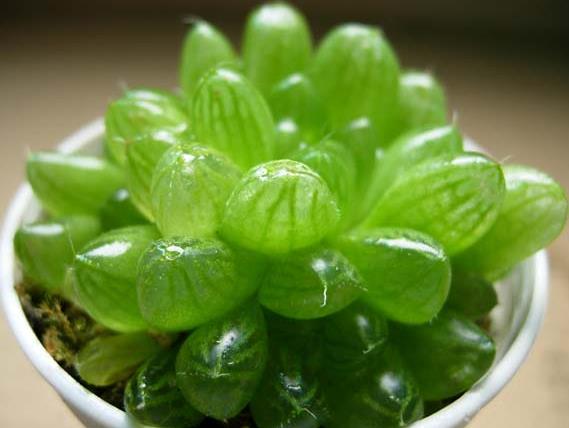
I. Introduction to Haworthia cooperi
Haworthia cooperi is a succulent plant in the genus Haworthia of the family Asphodelaceae. It is small and cute and will not grow very large, but it easily forms clumps. Haworthia cooperi is a succulent plant in the genus Haworthia of the family Liliaceae, also called Crystal Palace, and is a natural variety of Haworthia cymbiformis. It likes semi-shade and easily grows side shoots. The small windows of the plant are crystal clear, the leaves are emerald green, and the leaf tips have a slender cilium. The whole plant closes toward the leaf center, and the windows on the leaves are relatively small. The leaves are crystal clear, year-round emerald green or yellow-green, and may turn dark green if exposed to too much sun; during dormancy they are green. For Haworthia cooperi, you can insert a toothpick into the soil, and if it comes out with moisture on it, postpone watering. Place it in a bright place without direct sunlight for care; if the light is too strong, the leaves will turn gray. During the spring and autumn growing seasons, water thoroughly after the soil has completely dried out. In the hot summer, reduce watering, or only mist the leaves. In winter, place it indoors in a sunny spot, water less and mist more. Haworthia cooperi blooms in spring. Haworthia cooperi likes a cool, semi-shaded environment. Its main growing period is in spring and autumn. It is drought-tolerant, not cold-tolerant, and avoids high temperature, humidity, and blazing sun. It is afraid of deep shade and also afraid of waterlogged soil. Haworthia cooperi likes a cool, semi-shaded environment. Its main growing period is in the relatively cool spring and autumn seasons, and it requires a certain amount of air humidity. It is drought-tolerant, not cold-tolerant, and avoids high temperature, humidity, and blazing sun. It is afraid of shade and afraid of waterlogged soil. In production, it is generally grown in pots in greenhouses or planted in seedbeds in the ground.
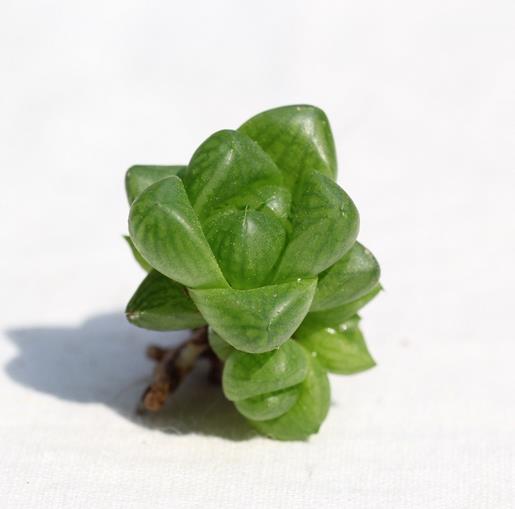
II. Cultivation techniques for Haworthia cooperi
1. Temperature and light
Haworthia cooperi likes light. Normally it should be placed in a bright place without direct sunlight for care. If it is too shaded, the plant shape will become loose and not compact, the leaves will be thin and long, and the transparency of the "windows" will be poor. If the light is too strong, the leaves will grow poorly and become light reddish-brown, and sometimes strong direct sunlight will scorch the leaves, leaving ugly marks. Plants grown in semi-shade have thick, plump leaves and high transparency.
During the summer dormant period, because the temperature is too high, the plant basically grows slowly or stops growing, and the lower leaves will also gradually dry up. Throughout summer, keep the potting soil moderately dry, and give a little water around the edge of the pot each month. Do not get water into the leaf center; high temperatures easily cause rot in the core and roots. (Kite once accidentally got water into the leaf center, and the roots of a large clump rotted.) Maintain the amount of water needed for the root system to grow slowly or stop growing. You cannot just let it go dormant because of high temperature and give no water at all; if you do, it will take a very long time to wake up, and the roots will all dry up. During dormancy, it easily consumes the water and nutrients of some leaves, causing the lower leaves and even the whole plant's leaves to dry out, shrivel, and shrink. In summer, because growth is slow and the temperature is high, the whole plant's leaves basically close up and shrink, not plump. Each season has the beauty of each season. In winter, you can cover it with a transparent plastic cover, keep the potting soil slightly moist, and give a little water once a month. This keeps it warm and increases humidity. Daytime sunlight can raise the temperature somewhat, and the air humidity is also high. At this time, the leaves are especially plump, beautiful, and charming.
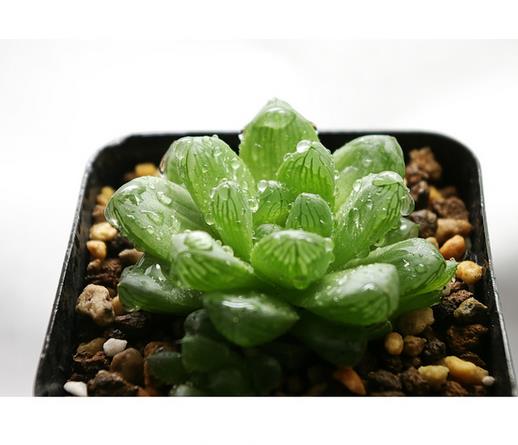
2. Watering
During the spring and autumn growing seasons, water thoroughly after the soil has completely dried out. In the hot summer, reduce watering, or only mist the leaves. In winter, place it indoors in a sunny spot, water less and mist more.
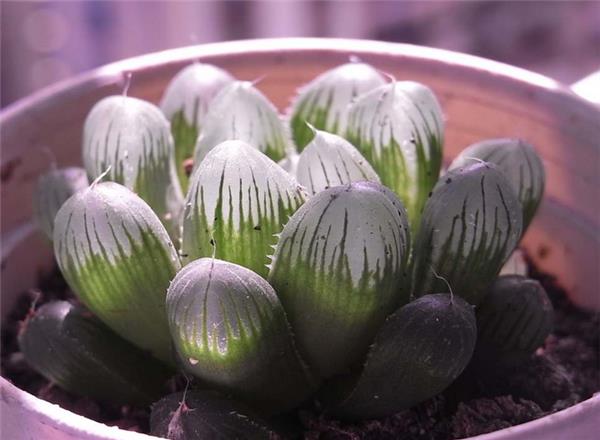
During the growing season of Haworthia cooperi, the whole plant looks very beautiful. During the growing period, keep the potting soil slightly moist the whole time, because they like high humidity, but this humidity applies when the root system has grown well. What flower lovers need to note is that if the roots have not grown well and the soil is kept moist all the time, the roots will rot. The specific rooting method is: keep the soil slightly moist, plant the plant after the wound has dried in the air, and place it in a cool, ventilated place to wait for new roots. Only after new roots appear can you gradually give water, while increasing light. If it is kept in shade for too long, the plant will become deformed and leggy. Once it becomes leggy, it will take a very long time to restore it. However, Haworthia cooperi leaves are not very prone to becoming leggy.
The above is the relevant knowledge about Haworthia cooperi. I hope it can help you.