Basic Introduction to the California Poppy and How to Grow It
The California poppy is a beautiful flower, with tender green stems and leaves tinged with gray, and bright, eye-catching blooms that make it very appealing. At the turn of spring and summer, clumps of California poppies are often seen on lawns in front of houses; some are also planted as flower borders or flower ribbons, adding a touch of vibrant life to the buildings. Now let us take a look at the California poppy.
I. Introduction to the California Poppy
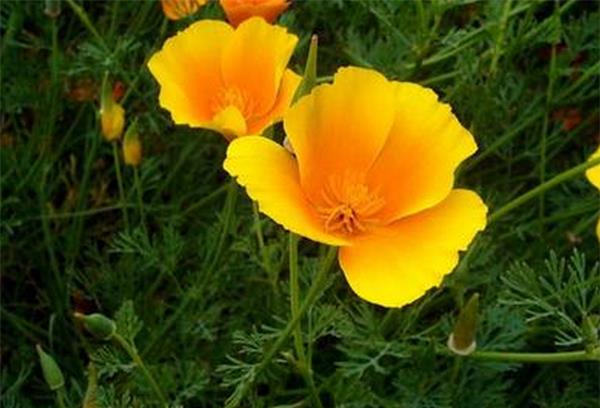
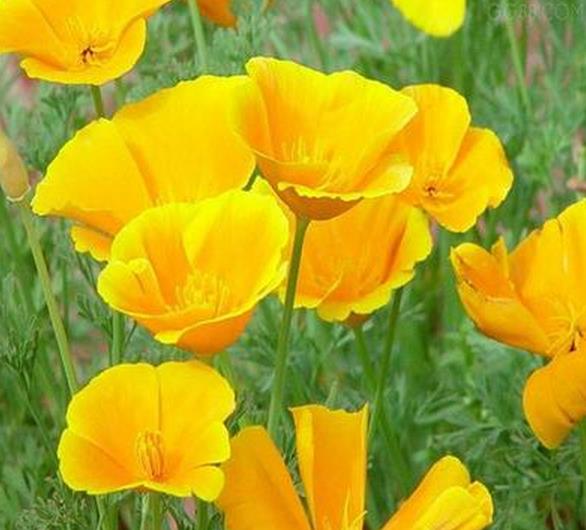
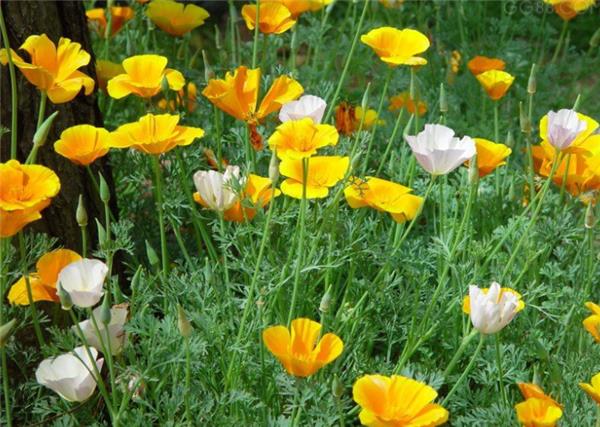
The California poppy is a perennial herbaceous plant, often grown as an annual or biennial. It has fairly strong cold tolerance and prefers a cool, dry climate; it cannot tolerate heat and humidity, and in hot summers it enters a semi-dormant state, often dying back, then sprouting again after autumn. The California poppy has tender green, gray-tinged stems and leaves, and bright, eye-catching flowers, making it a good material for flower borders, flower paths, and potted plants, and it can also be planted in clumps on lawns. The California poppy is native to California, USA. It is relatively cold-tolerant and prefers a cool, dry climate; it does not tolerate heat and humidity, and it likes loose, fertile, well-drained sandy loam with a deep top layer, though it also tolerates poor soil. As a perennial herbaceous flower, it is often grown as an annual or biennial. The California poppy is the state flower of California, USA, and is also called the California poppy; it is additionally known as ginseng flower and golden flower. The flowering period runs from spring until early summer, and the flowers open on sunny days and close on cloudy days or in the evening. Flower colors include scarlet, rose red, milky white, orange, pale yellow, and so on. It has four petals, with visibly wavy outer edges. Wild California poppies mostly bear pale yellow, orange, or cream-colored flowers. When you face vast stretches of California poppies blooming like a sea across an almost endless wilderness, you will surely praise them uncontrollably, and a delightful poetic feeling of breathtaking beauty will rise in your heart.
II. Cultivation Techniques for the California Poppy
1. Key Points for Growing
When growing the California poppy, pay attention to:
① The California poppy has fleshy roots and prefers dry conditions, fearing waterlogging. In the rainy season, field-grown plants need timely drainage, and potted plants should be watered moderately; it is better to keep them dry than wet, to avoid the root crown turning black and rotting.
② Because the California poppy is a taproot plant with a long main root, it does not transplant well, so seeds should be sown directly in pots.
③ Plants sown in spring bloom in summer, but both growth and flowering are usually not as good as with autumn sowing. Therefore, sowing should preferably be done in August-September, with an optimum germination temperature of 15-20°C. If germination is uneven and seedlings come up too densely, proper thinning is needed. The planting spacing is 20-30 cm, and the planting site should be high and dry with good drainage. During the growing period, loosen the soil and remove weeds, and take cold-protection measures for overwintering in the open field.
④ After the fruit skin turns yellow, harvest promptly in the early morning, otherwise the capsule will split open on its own and cause the seeds to scatter.
2. Daily Management
Autumn
After the sown seedlings are potted and have recovered for a period, fertilizer and water management should be stepped up quickly. Fertilizer and water management follows the cycle "Huabao" - "Huabao" - clear water - "Huabao" - "Huabao" - clear water, with an interval of about 1-3 days; in winter and spring, the interval is shorter on sunny days or during high temperatures, and longer or no watering on rainy days or during low temperatures.
Winter
Although it is still growing, the relatively low temperature will slow its growth rate, and its demand for fertilizer and water is not high, so fertilizer and water may even need to be restricted. Fertilizer and water management follows the cycle "Huabao" - clear water - clear water - "Huabao" - clear water - clear water, with an interval of about 4-7 days; watering should be done as much as possible at noon on sunny days when the temperature is higher.
Spring
After the temperature rises, growth recovers quickly and gradually enters the flower bud differentiation stage and flowering stage, with a high demand for fertilizer and water. Fertilizer and water management follows the cycle "Huabao" - clear water - "Huabao" - clear water, with an interval of about 2-4 days; the interval is shorter on sunny days or during high temperatures, and longer or no watering on rainy days or during low temperatures. After entering the seed-setting stage, stop fertilizer application.
3. Pruning
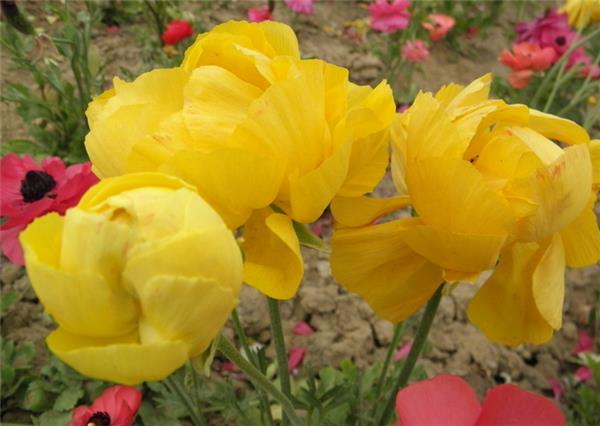
During the flowering process, cutting off spent flowers together with three leaves can extend the flowering period.
4. Fertilizer and Water Management
Like other herbaceous flowers, it has a relatively high demand for fertilizer and water, but it is most afraid of careless fertilization, concentrated fertilizer, and one-sided application of nitrogen, phosphorus, or potassium fertilizer. It should follow the two fertilization (and watering) principles of "apply dilute fertilizer frequently, use small amounts but more often, and keep nutrition complete" and "alternate dry and wet; when dry, dry thoroughly; do not water if not dry; when watering, water thoroughly," and after fertilizing, keep the leaves and flowers dry at night.
The above is the relevant knowledge about the California poppy. I hope it can help you.