Introduction to Green Hygrophila and Cultivation Tips: Create a Green Jungle in Your Fish Tank
Green Hygrophila is an ornamental aquatic plant. Because of its varied forms and high adaptability, it is deeply loved by people. Below, let's take a look at some knowledge about Green Hygrophila.
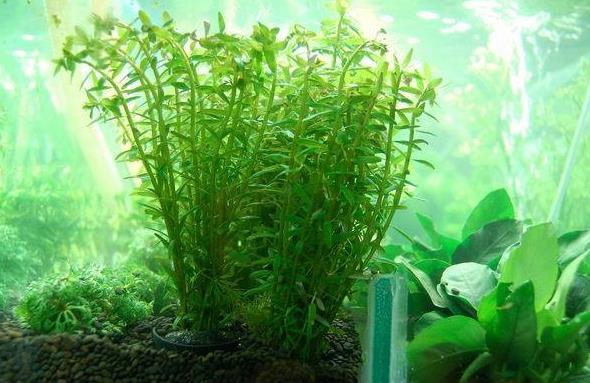
I. Introduction to Green Hygrophila
Hygrophila is an ornamental aquatic plant that is very easy to arrange. It has high adaptability, and in soft water, hard water, strong light, weak light, heavy fertilizer, and light fertilizer environments, the forms it presents are all different. It can be used in foreground, midground, and background applications according to aquascaping needs. Many aquatic plant enthusiasts, when first getting into plant keeping and first getting into aquascaping, also choose what we commonly call the Hygrophila-type plants as the plants for setting up a new tank. It grows quickly, has a beautiful form, spreads its leaves gracefully, and is easy to keep alive, so it is deeply welcomed by people. Hygrophila is an annual herb, fond of growing on wet ground; leaves are opposite or whorled, rarely alternate, sessile or nearly sessile; flowers are small, actinomorphic, solitary or clustered in leaf axils or forming terminal spikes or racemes. The calyx has 3-6 lobes, with no appendages or bristle-like appendages between the lobes; petals are small, 3-6 or absent; stamens 1-6. The ovary is sessile or nearly sessile, 2-5 locular, with numerous ovules, the style absent or slender; the capsule dehisces loculicidally into 2-5 valves, and under a magnifying glass the fruit wall can be seen to have dense transverse striations.
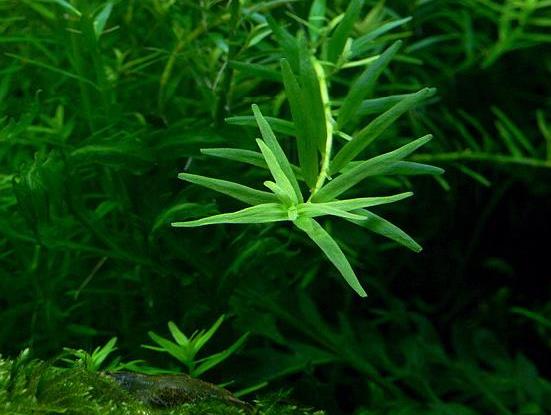
II. Cultivation Methods for Green Hygrophila
1. Oxygen
In the early stage of setup, if there are no plants with high oxygen demands, the oxygen output does not need to be too large. Green Hygrophila actually likes to grow out of the water, that is, above the water surface, lying across the water surface. You can consider water lilies. Water lilies will grow out of the water when oxygen is insufficient; if oxygen is sufficient, they will produce submerged leaves and are not easy to flower. Green Hygrophila follows the same principle.
2. Light
All aquatic plants have phototropism, there is no doubt about that. Green Hygrophila's phototropism is actually quite strong as well, and dealing with lodging can be considered by making use of phototropism. In a tank without other aquatic plants, if the light is too strong, control the light; do not raise the light too high. The method of controlling light: after Green Hygrophila has clearly grown, raise the light higher.
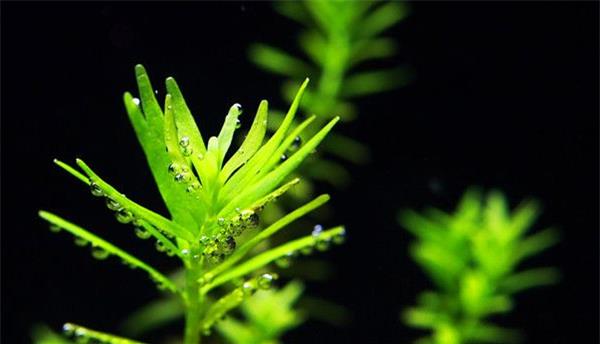
3. Dense Planting
Actually, dense planting follows the same principle as light control, but the first requirement of dense planting is sufficient base fertilizer. Base fertilizer is a must, otherwise root rot will soon occur; also, water permeability must be good, otherwise root rot will also occur. In the early stage of planting, there should be more shrimp, because many leaves of the plants behind will rot.
4. Liquid Fertilizer
Green Hygrophila is the same as other green plants; it needs a large amount of iron fertilizer to synthesize chlorophyll. And for iron fertilizer, having only base fertilizer is still not enough. Regularly spraying iron fertilizer can make it more luxuriant. After trimming the tops, everyone can notice that the buds grow rapidly. At this stage, the amount of iron fertilizer used can be increased. Competing with algae actually makes use of this characteristic. If there are not many living creatures, then it is mainly green algae that give people headaches. Green algae consume iron fertilizer, and so does Green Hygrophila.
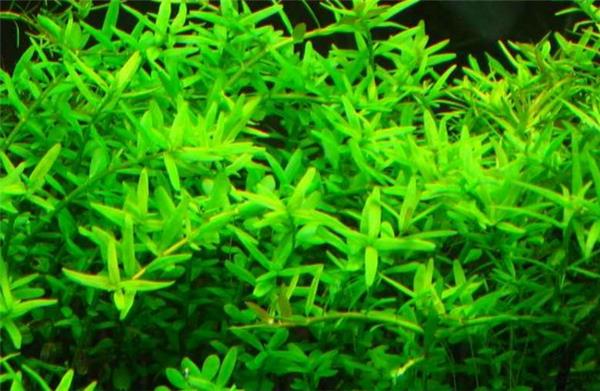
5. Pruning
Prune in a stepped manner. For example, for a width of 30 cm, the back 10 cm is the highest, then the middle 10 cm is slightly lower, and then lower still. In this way, after pruning, they can receive your liquid fertilizer and light over the largest area.
6. Topping
Topping is not cutting them all to the same height. There will be buds in the middle of each node of leaves. The cutting point is basically about 0.5 cm above them. It is impossible for there to be no rot; it is only a question of how much rot there is. Then from below the cutting point to the position of the bud, there will still be rot. If it happens to be summer and the water temperature is still high, the rot will be even faster.
The above are the cultivation methods for Green Hygrophila. I hope they can help you.