How to Grow Potted Lilies? A Complete Guide to Care Methods
Lilies have a light, delicate fragrance and are very suitable for home decor arrangements. Next, I will recommend planting methods for potted lilies.
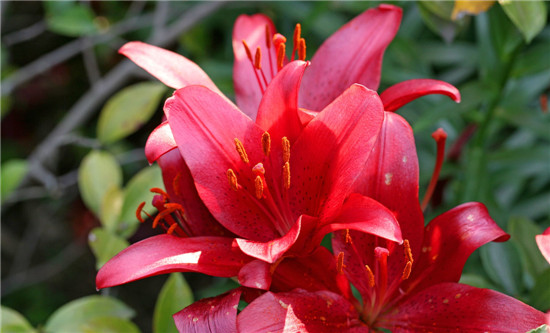
Basic information about Oriental lilies:
The Oriental lily is a type of lily, also known as Casablanca and "lily of the heavens." Its native origins are the Himalayan region and Australia. The Oriental lily is the queen among lilies; its petals have no blemishes or spots, and its open posture is very imposing. The flower language of the Oriental lily is "great and pure love."
Growth habits: It prefers moist conditions, light, and requires fertile, humus-rich, deep, and extremely well-drained sandy soil. Most varieties are suitable for growing in slightly acidic to neutral soil. Specifically, there are the following points:
Lilies prefer cool and humid environments. Places with ample sunlight and slightly shaded environments are more suitable for lilies. They are averse to drought and extreme heat, and their cold tolerance is somewhat poor.
The growth and flowering temperature is 16-24°C. Below 5°C or above 30°C, growth almost stops. Only above 10°C do plants grow normally. Above 25°C, growth stalls again. If the winter nighttime temperature is below 5°C for 5-7 consecutive days, flower bud differentiation and bud development will be severely affected, delaying flowering or even causing blind flowers and split flowers.
It prefers fertile, deep soil rich in humus and especially dislikes hard clay; well-drained, slightly acidic soil is best, with a soil pH of 5.5-6.5.
The materials needed for planting lilies are as follows:
1. Soil: Lilies are not very strict about soil, as long as it does not waterlog. Ordinary garden soil is generally suitable too; of course, nutrient soil is even better, and if you want to make do, peat is also fine.
2. Pot: This needs attention. Lily roots are relatively developed, so a relatively deep and large pot is suitable; small pots are not suitable! In the case below, a 2-gallon pot is used.
3. Location choice: Some flower lovers may ask, can I keep it on my balcony with no light? Can I plant it on the rooftop terrace? Here it should be said that lilies prefer cool and humid environments. Places with ample sunlight and slightly shaded environments are more suitable for lilies. They are averse to drought and extreme heat, and their cold tolerance is somewhat poor. The growth and flowering temperature of lilies is 16-24°C. Below 5°C or above 30°C, growth almost stops. Only above 10°C do plants grow normally. Above 25°C, growth stalls again. If the winter nighttime temperature is below 5°C for 5-7 consecutive days, flower bud differentiation and bud development will be severely affected, delaying flowering or even causing blind flowers and split flowers.
Cultivation methods for Oriental lilies:
1. Soil: Oriental lilies prefer fertile, deep soil rich in humus and especially dislike hard clay; well-drained, slightly acidic soil is best, with a soil pH of 5.5-6.5.
2. Watering: Watering only needs to keep the potting soil moist. The potting soil should not be too wet, otherwise the bulbs rot easily.
3. Light: Potted lilies have different requirements for light intensity at different growth stages. During the bud stage, shading treatment is needed. If the leaf temperature is too high, appropriate shading should also be provided. During other growth periods, light should be increased, especially during flower development.
4. Temperature: The growth and flowering temperature of Oriental lilies is 16-24°C. Below 5°C or above 30°C, growth almost stops. Only above 10°C do plants grow normally. Above 25°C, growth stalls again. If the winter nighttime temperature is below 5°C for 5-7 consecutive days, flower bud differentiation and bud development will be severely affected, delaying flowering or even causing blind flowers and split flowers.
5. Fertilizing: Lilies have a relatively high demand for nitrogen and potassium fertilizers, and should be fertilized once every 10-15 days during the growing period. However, phosphorus fertilizer should be limited because too much phosphorus fertilizer can cause yellowing leaves. (During the flowering period, phosphorus fertilizer can be added for 1-2 days.)
6. Pests and diseases:
(1) Gray mold: Use Captan, Topsin, or Zineb at 500 times dilution for control.
(2) Damping-off: Before planting, soak in 500 times diluted Formesan solution or 50 times diluted 40% formaldehyde for 15.
(3) Root rot: Remove diseased plants, then disinfect the soil with Dexon.
(4) Insect pests: For aphids, mites, grubs, and cutworms, use omethoate, dicofol, and poison bait for control.
7. Pruning: To make the bulbs plump, lilies can be cut off at the base after flowering to reduce nutrient consumption, because flowering has already consumed a lot of nutrients from the bulbs. If you want to keep the bulbs for continued planting, you must continue fertilizing to replenish the bulbs' nutrients. After one month, the bulbs can be dug out, the fibrous roots cut off, and placed in the refrigerator for cold storage for a period to break dormancy before planting again, but the flower quality will decline.
The above is all the content I have summarized for you on how to grow potted lilies. I hope this article can help everyone. Please also continue to follow us.
Please also continue to follow us.