Snow-on-the-Mountain: Introduction and Care Tips
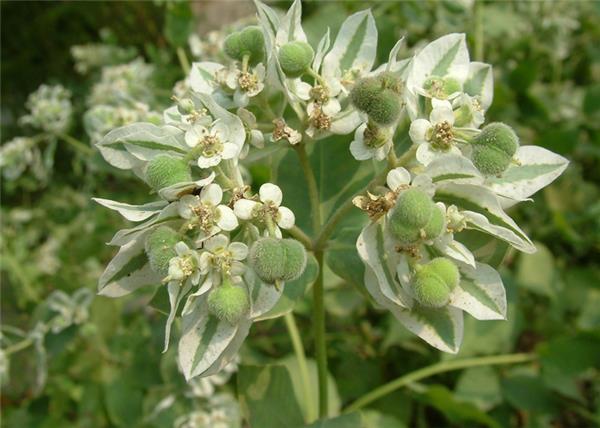
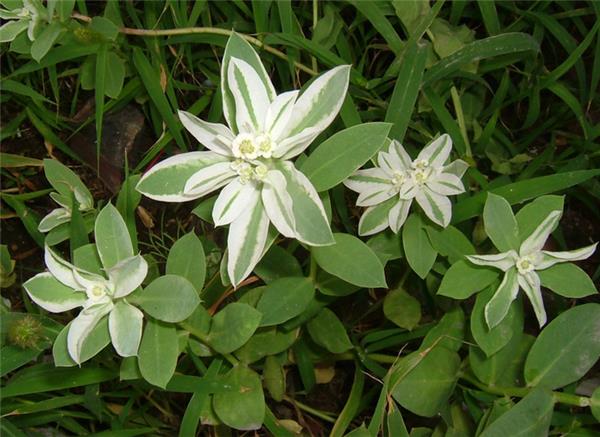
Snow-on-the-Mountain has elegant, understated flowers, like the girl next door. Its top leaves are silvery white and contrast with the green leaves below, looking like snow on green mountains. In the home, when arranged with flowers of other colors, its beauty of color can be brought out even more. At the same time, Snow-on-the-Mountain is also a good background material for flower beds and a foliage material for flower arrangements. Let's take a look below.
I. Introduction to Snow-on-the-Mountain
Snow-on-the-Mountain can be planted in scenic areas, parks and gardens to arrange flower beds, flower borders and flower clumps, and can also be used in forest-edge areas and as potted plants, or as cut flower material. The top leaves of Snow-on-the-Mountain are silvery white and contrast with the green leaves below, just like snow on green mountains. When arranged with flowers of other colors, its beauty of color can be brought out even more. It is a good background material for flower beds and can also be used as foliage in flower arrangements.
II. Morphological Characteristics of Snow-on-the-Mountain
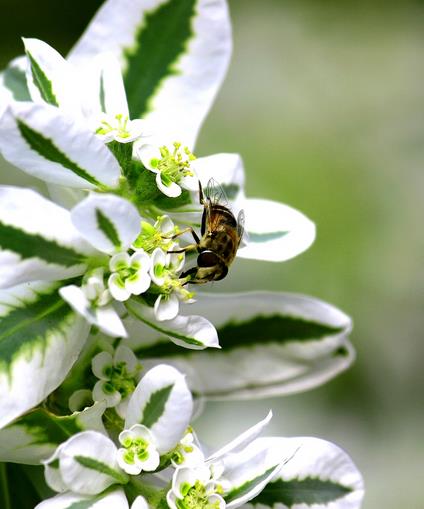
Annual herb, plant height 50-70cm, stem height 60-80cm, stems upright, with milky sap inside the stems, the whole plant covered with soft hairs. Forked branching, single leaves alternate, ovate or elliptic-lanceolate, the leaves at the top of the stem are whorled. After autumn begins, the leaf margins at the top or the entire leaves turn white, just like layer upon layer of accumulated snow. Cup-shaped inflorescences grow in the leaf axils of the upper branches, with white petal-like appendages. The flowers are small, unisexual, without a perianth. The female flower is borne singly in the center of the inflorescence, and the ovary has a long stalk that clearly extends outward. The flowering period is June-September. The capsule is flat and round, silvery white, and the fruit ripening period is July-October. The seeds have tuberculate protrusions.
III. Cultivation Techniques for Snow-on-the-Mountain
Snow-on-the-Mountain likes a warm, dry environment with plenty of sunlight. It is not cold-tolerant but is drought-tolerant, and it is best grown in loose, fertile, well-drained sandy loam. In the north it is grown in pots, while in central China it is propagated by spring sowing in the open field, serving as a companion plant for summer and autumn forest edges and the edges of shrub thickets. Whether grown in the ground or in pots, the soil must be loose, fertile and well drained. Because Snow-on-the-Mountain has a taproot, transplanting or final planting should be done as early as possible. The plant spacing is generally set at about 30cm. Apply sufficient base fertilizer before planting. After planting, water thoroughly 1-2 times in time; afterward it can be determined according to weather conditions, as long as the pot soil is kept moist. During the growing season, apply liquid fertilizer 2-3 times. After rain, drain promptly to prevent waterlogging, so that soil water accumulation does not cause the plant to become waterlogged and die. If the surrounding environment is too humid, plus poor ventilation, it is prone to pests and diseases, and pesticides should be sprayed promptly for control. When the plant is tall, a support should be set up to prevent lodging.
Potting up or transplanting: When potting small seedlings, first place a 2-3 cm thick layer of coarse-grained substrate or ceramsite at the bottom of the pot as a drainage layer, sprinkle a layer of fully decomposed organic fertilizer on top as base fertilizer, about 1-2 cm thick, then cover with another layer of substrate about 1-2 cm thick, and then place the plant in, so as to separate the fertilizer from the roots and avoid burning the roots. For the potting substrate, one of the following can be chosen. Vegetable garden soil: cinder = 3:1; or garden soil: medium-coarse river sand: sawdust (mushroom residue) = 4:1:2; or one of paddy soil, pond mud, or leaf mold. Or peat + perlite + ceramsite = 2 parts + 2 parts + 1 part; vegetable garden soil + cinder = 3 parts + 1 part; peat + cinder + ceramsite = 2 parts + 2 parts + 1 part; sawdust + vermiculite + medium-coarse river sand = 2 parts + 2 parts + 1 part. After potting up, water thoroughly once and place in a slightly shaded environment for one week of care. When transplanting small seedlings, first dig the planting hole, sprinkle a layer of organic fertilizer at the bottom of the planting hole as bottom fertilizer (base fertilizer), about 4-6 cm thick, then cover with a layer of soil and place the seedling in, so as to separate the fertilizer from the roots and avoid burning the roots. After placing the seedling in, backfill the soil, cover the root system, and press the soil firm with your foot, then water thoroughly once.
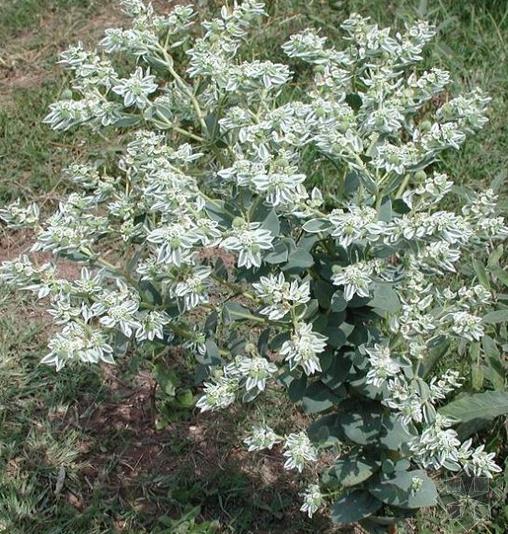
Pinching: Before flowering, generally pinch twice to encourage more flowering branches to sprout: one to two weeks after potting up, or when the seedlings are 6-10 cm tall and have more than six leaves, remove the top shoot and keep the lower 3-4 leaves to encourage branching. Three to five weeks after the first pinching, or when the side branches grow to 6-8 cm long, carry out the second pinching, that is, remove the top shoots of the side branches and keep the 4 leaves below on the side branches. After two pinchings, the plant shape will be more ideal and the number of flowers will also be greater.
Let's take a look below at the related knowledge about Snow-on-the-Mountain.