What are the effects and functions of lilies? Read this one article to understand
The lily is a flower we commonly see. It not only has high ornamental value, but its medicinal value is just as outstanding as its ornamental value. Next, let us take a look at the effects of lilies.
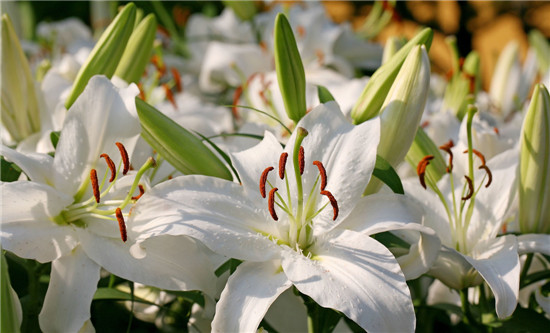
What nutritional value do lilies have
The lily is sweet in taste with a slight bitterness, neutral in nature, and enters the heart and lung meridians. Medicinally, it has the effects of moistening the lungs and stopping cough, nourishing yin and clearing heat, and calming the heart and soothing the mind. Whether decocted alone as a single herb or mixed with other foods and medicines, it can exert its effects.
In addition to containing nutrients such as starch, protein, fat, and calcium, phosphorus, iron, vitamin B1, B2, C, pantothenic acid, and carotene, lilies also contain some special nutritional components, such as colchicine and various other alkaloids. These components act comprehensively on the human body, not only having a good nutritional tonic effect, but also having a certain preventive and therapeutic effect on various seasonal diseases caused by the dry autumn climate.
In traditional Chinese medicine, lilies are used as medicine, mainly for chronic lung diseases, such as chronic bronchitis or emphysema in people who often cough or have prolonged coughing. The lily is sweet in taste with a slight bitterness, and neutral in nature. According to the records in "Bie Lu", it is "non-toxic". Main indications: moistening the lungs and stopping cough, calming the heart and soothing the mind. It treats chronic cough due to pulmonary tuberculosis and coughing up blood-streaked phlegm. After febrile disease, when residual heat has not been cleared, it treats deficiency vexation, palpitations, and mental confusion. It also treats beriberi and edema. According to the records in "Bie Lu": it eliminates edema and abdominal distension, splenic fullness, alternating chills and fever, generalized pain, and breast and cough impediment, and stops tears. It can be used to treat lung heat, dry lung cough, consumptive cough with hemoptysis, low fever with deficiency vexation, and palpitations with insomnia.
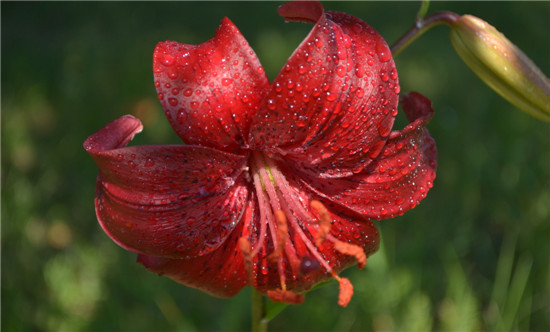
Effects of lilies:
Lilies have the effects of moistening the lungs and stopping cough, and calming the heart and soothing the mind, and fresh lilies in particular are sweeter and more delicious. Lilies are especially suitable for people who need to nourish the lungs and nourish the stomach, such as patients with chronic cough, pulmonary tuberculosis, mouth and tongue sores, dry mouth, and bad breath. Some patients with palpitations can also consume them in moderation. However, because lilies tend toward a cool nature, patients with stomach cold should use them sparingly. For cough and hemoptysis due to dry lungs or yin deficiency, it is often combined with Fritillaria cirrhosa. For unclear residual heat after febrile disease, deficiency vexation and insomnia, and mental confusion, it is often combined with Rehmannia.
Aliases: Lilium tenuifolium, Lilium lineare, Lilium candidum, Lilium speciosum, white-flowered lily, white lily, medicinal lily, mountain lily, domestic lily, wild lily, vegetable lily, dried lily, Sichuan lily, sweet lily, large lily, new lily, rock lily, red rock lily, lily garlic, garlic preserved potato, trumpet tube root, chive foreign, Chongmai, Chongxiang, Chongxiang, Zhongting, Moluo, Qiangqu, Qiangchou, Zhongfenghua, night-closing flower root, curled lotus flower root, lantern umbrella flower root, scattered lotus flower root, Du lily, red lily, Fenghua. Nature and taste: sweet; slightly bitter; slightly cold.
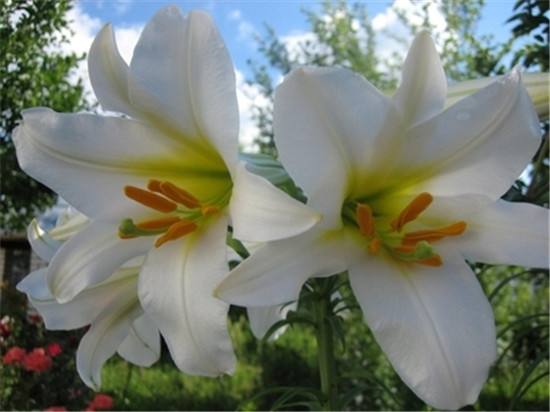
Meridians entered: heart meridian; lung meridian.
Effects: nourishing yin and moistening the lungs; calming the heart and soothing the mind.
Main indications: prolonged cough due to yin deficiency; blood-streaked phlegm; the later stage of febrile disease; uncleared residual heat, or deficiency vexation, palpitations, insomnia and frequent dreams, and mental confusion caused by emotional frustration; carbuncle and swelling; eczema.
Usage and dosage: oral administration: decocted in soup, 6-12g; or made into pills or powders; it can also be steamed and eaten, or cooked into porridge. External use: appropriate amount, pounded and applied.
Functions of lilies
1. Antitussive and expectorant effects
1. Antitussive effect: mice were induced to cough with the SO2 method, and its antitussive effect was observed. All showed obvious antitussive effects.
2. Expectorant effect: using the phenol red colorimetric method, the trachea was finally flushed with 0.5ml NaHCO3, the absorbance was measured at 546nm, and the amount of phenol red excreted from the trachea was calculated from the phenol red standard curve. The results are shown in Table 3. All showed significant expectorant effects.
2. Sedative effect
After mice were fasted for 8 hours, they were respectively given ig lily 20g/kg, with sour jujube seed as the positive control and normal saline for the blank group. Thirty minutes after administration, pentobarbital sodium 40mg/kg was injected ip, and the time from loss of the righting reflex to its recovery was used as the sleep index. At the same time, the effect on the sleep rate at a subthreshold dose of pentobarbital sodium was observed. All significantly increased the sleep time and the sleep rate at a subthreshold dose of pentobarbital sodium, suggesting an obvious sedative effect.
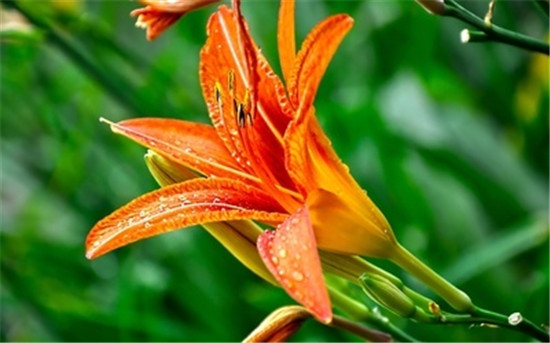
3. Effects of nourishing yin and moistening the lungs
1. A swimming experiment using a lung qi deficiency model showed that lily and Lilium lancifolium, given to mice by ig at a dose of 10g/kg and compared with astragalus (10g/kg), significantly prolonged swimming time, and the P values of all three were<>
2. In a hypoxia tolerance experiment using a hyperthyroid yin deficiency model, a mouse model was made with thyroxine 0.3mg per mouse. The results showed that the lily plus thyroxine group and the Lilium lancifolium plus thyroxine group significantly prolonged the hypoxia tolerance of mice, with their P values being P<><>
3. In a loaded swimming experiment on a yin deficiency model caused by adrenal cortical hormone, male mice were taken and divided into a normal saline group, a prednisolone (40mg/kg/time) modeling group, and a drug (ig10g/kg) plus prednisolone group. The results showed that lily had a significant protective effect on adrenal cortical insufficiency (P<>
The above is all the content I have summarized for everyone on what the effects and functions of lilies are. I hope this article can help everyone. Please also continue to follow us.
I hope this article can help everyone. Please also continue to follow us.