What Are the Benefits and Effects of Lilies? A Detailed Explanation
The lily is a plant especially suitable for drinking in summer that can clear heat and reduce internal fire. It not only has ornamental value but is also beneficial to the human body. Next, let us take a look at the benefits of the lily flower.
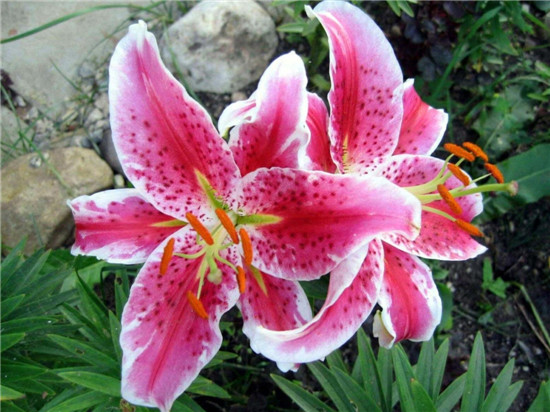
The lily is a perennial herbaceous bulbous flower, with a plant height of 40-60 cm, and some reaching over 1 m. It prefers moist conditions and light, and requires fertile, humus-rich, deep sandy soil with extremely good drainage, and dislikes hard clay most of all; most varieties are suited to growing in slightly acidic to neutral soil, with a soil pH of 5.5-6.5. Lilies prefer cool, humid environments; places with ample sunlight and slightly shaded environments are more suitable for lilies. They dislike drought and extreme heat, and their cold tolerance is somewhat poor.
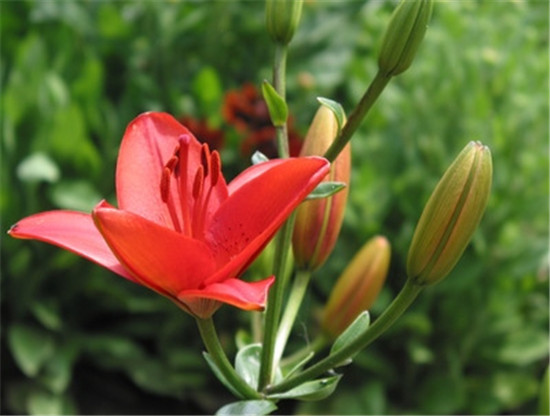
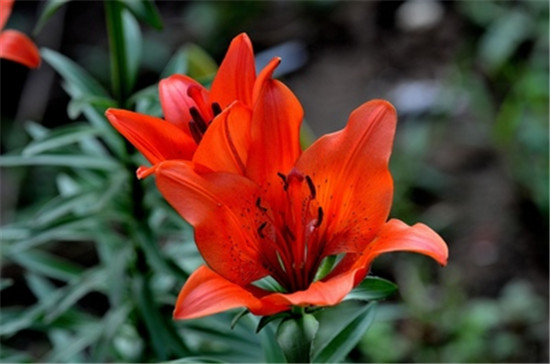
The lily's stem is upright, unbranched, grass-green, with the base of the stalk bearing red or purplish-brown spots. Underground it has a bulb, and the bulb is formed by broad ovate or lanceolate fleshy scales, white or pale yellow, 6-8 cm in diameter, clasped together into a spherical shape, with a membranous layer on the outside. Most fibrous roots grow from the base of the bulb. The leaves are simple, alternate, narrowly linear, without petioles, directly clasping and growing on the stalk, with parallel veins. The flower color of lilies varies with the variety, mostly yellow, white, pink, or orange-red, and some have purple or black spots. Some petals are flat and spreading, while others curl outward, hence the fine name "juan dan" (tiger lily). Some flowers are strongly fragrant, hence the name "musk lily." After the flowers fall, they form long elliptic capsules.
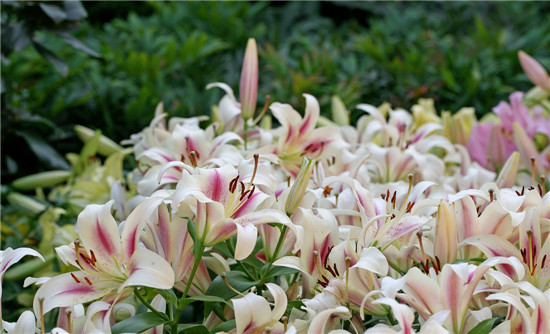
The main application value of lilies lies in ornamental use. Their bulbs are rich in starch, and some varieties can be eaten as vegetables. Lilies can also be made into dried lily and lily powder, which command high prices on the international market. To date, lilies remain a commonly used medicinal material in traditional Chinese medicine. Traditional Chinese medicine holds that lilies are slightly cold and neutral in nature, with the effects of clearing fire, moistening the lungs, and calming the mind. Both their flowers and scaly stems can be used as medicine, making them a flower that serves as both medicine and food, such as white fungus, lotus seed, and lily soup.
Lilies have traditionally been regarded as an excellent tonic. Most of their nutritional components are starch, protein, and fat, along with alkaloids. These components work together on the human body with good nutritional and tonic effects, and can effectively treat insomnia and cough. Fresh lilies are rich in mucilage and vitamins, which are beneficial to the metabolism of skin cells. Eating lilies regularly also has a certain beauty effect. People with oily skin benefit especially from eating more lilies. In addition, the various alkaloids contained in lilies have a preventive effect on leukopenia, can raise blood cell counts, and in the body can also promote and enhance the mononuclear phagocyte system and phagocytic function, improve the body's humoral immune capacity, and have fairly good preventive and therapeutic effects on many kinds of cancer.
The Medicinal Value of Lilies
Lilies can actually also be regarded as a traditional Chinese medicinal material, with certain health-preserving and disease-treating effects. Today we will not talk about their beauty or nobility, but only discuss how the benefits and effects of lilies are also shown in their medicinal value. Their taste is sweet and their nature is slightly cold, with the effects of clearing the heart and calming the mind, nourishing yin and moistening the lungs, and tonifying essential blood. They also have certain conditioning effects on symptoms such as dysphoric restlessness, palpitations, and mental absentmindedness, and can also be made into Chinese patent medicines such as Baihua Gao and Baihe Gujin Wan. Nature, flavor, and meridian tropism: lily is sweet in flavor and slightly cold in nature. It enters the heart and lung meridians.
Functions and indications: nourish yin and moisten the lungs, clear the heart and calm the mind. Used for chronic cough due to yin deficiency, blood-streaked phlegm, dysphoric restlessness and palpitations, insomnia and frequent dreaming, and mental absentmindedness.
It has the effect of nourishing yin, moistening the lungs, and relieving cough, and is used for dry-heat cough due to lung yin deficiency with blood-streaked phlegm, such as Baihua Gao. It treats chronic cough due to lung deficiency and cough with blood-streaked sputum from overstrain, such as Baihe Gujin Tang.
It has the effect of clearing the heart and calming the mind, and is used for residual heat from febrile disease not yet cleared, dysphoric restlessness and palpitations, insomnia and frequent dreaming, etc. When used medicinally, it is decocted and taken, 10-30 g. For clearing the heart it is best used raw, and for moistening the lungs it is honey-fried.
Effects: nourish yin and clear heat, tonify essential blood.
Indications: suitable for symptoms such as low fever, night sweats, and weight loss in pulmonary tuberculosis.
Usage and dosage: 6 g-12 g.
The above is all the content I have summarized for everyone on the benefits and effects of lilies. I hope this article can help everyone. Please also continue to follow us.