An Introduction to the Dwarf Cherry and Its Cultivation Tips: Taking You into a World of Red in the Green Wilderness
The dwarf cherry is an ornamental flowering plant. Its flowers are beautiful and its branches and leaves are gracefully spread, giving a feeling of flourishing foliage and blossoms. It is a favorite among flower lovers. Let us take a look now.
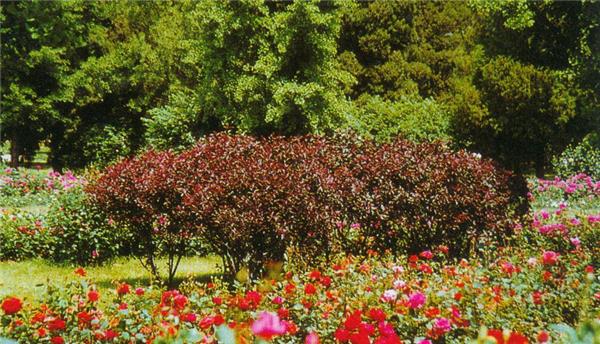
I. An Introduction to the Dwarf Cherry
The dwarf cherry is a deciduous shrub or small tree. The plant height is 1.8 m to 2.5 m, and the crown width is 1.5 m to 2.8 m. The branches are purplish brown when young, and old branches have lenticels. The dwarf cherry has a good ornamental effect, grows quickly, propagates easily, tolerates pruning well, and has strong adaptability, among many other advantages. The dwarf cherry is generally propagated by grafting and cuttings. The rootstock for grafting is generally mountain apricot or mountain peach, with apricot rootstock being the best. It has strong sprouting ability, so in garden cultivation it is easy to train into a ball shape or a hedge. Through repeated pinching, multiple branches are formed. Before winter, remove miscellaneous branches and heavily shorten vigorous shoots, which is for cultivation and ornamental purposes. The hybrid varieties of the dwarf cherry include the leaf plum and the dwarf cherry. Habits of the dwarf cherry: it likes a sunny, well-ventilated environment. It requires fertile, loose soil that drains well and is rich in organic matter. It is cold-resistant and drought-resistant, and dislikes waterlogging. The dwarf cherry has strong adaptability and is not strict about soil requirements. It grows well in well-drained, fertile sandy loam and mildly clayey soil. It rarely suffers from pests and diseases, is extremely tolerant of pruning, and can still maintain its purplish red color under semi-shaded conditions. Its root system is especially well developed with strong absorption capacity, and it is not strict about water and fertilizer requirements. It can grow normally under arid, barren, and coal gangue soil conditions.
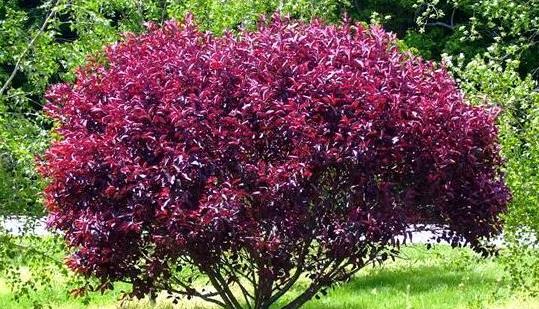
II. Propagation Methods of the Dwarf Cherry
Sowing, cuttings, and layering propagation are usually carried out in spring and summer.
1. Selection of Cuttings
In mid-to-late March, select healthy 1- to 2-year-old branches with a diameter of 0.5 to 0.8 cm, cut them, and store them in a sand pit. One layer of sand and one layer of cuttings, and the pit opening must be sealed well to prevent the temperature from being too high, which could cause the branches and buds to sprout, or cause air leakage and water loss, affecting the quality of the cuttings.
2. Timing of Cuttings
It is best in early to mid-May. At this time the temperature has already risen, the temperature inside a cold shed can reach 25°C, the ground temperature at night can reach 18°C, and during the day it can reach 20°C, which is favorable for the cuttings to take root.
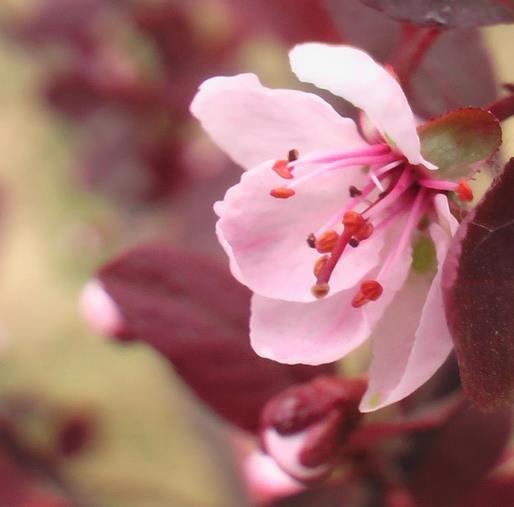
3. Cutting Method: First, prepare the cutting bed well
Inside a cold shed, dig a sand pit 1 m wide, 2 to 3 m long, and about 25 cm deep (the length and width can be determined according to the size of the cold bed and whether the operation is convenient). Sieve the sand, rinse it with clean water, disinfect it, place it in the sand pit, spread it evenly, and press it firm, with a thickness of about 20 cm.
Then take out the cuttings stored in the sand pit and cut off 2 cm from each end. Starting from the base of the branch, cut the cuttings, about 15 cm long. The base should preferably use a horseshoe-shaped slanted cut, enlarging the contact area between the cutting wound and the soil as much as possible, which is beneficial for the absorption of water and oxygen and improves the survival rate. Place the base of the prepared cuttings into a 10x mixed solution of 10% B-indoleacetic acid and B-indolebutyric acid, dip for 12 seconds, then take them out and let them dry before inserting (a rooting agent can also be used).
Insert the treated cuttings straight into the sand bed to a depth of 4 to 6 cm; it must not be too shallow, otherwise it will affect rooting. Keep 2 to 3 healthy buds at the upper end, with a spacing of no less than 5 cm. After inserting, water thoroughly with 35°C warm water and shade them.
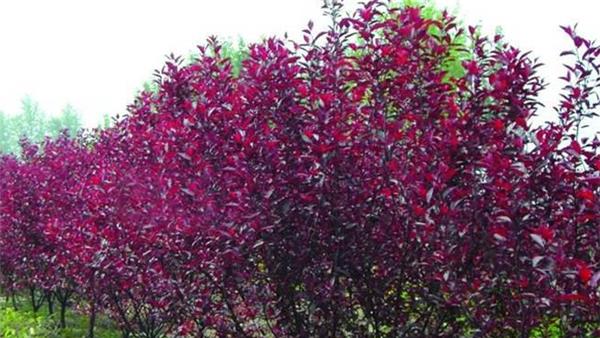
4. Management After Inserting
After cuttings are inserted, shading must be done well, so that light is visible but direct sun is not, and the light intensity should preferably be about 30%. Increase temperature and maintain moisture inside the shed; if conditions do not allow, add a plastic arch shed. The temperature is best controlled between 20 and 28°C, and the humidity at about 80%. If the temperature is too high, use ventilation or watering inside the shed to lower the temperature in the shed. When humidity is too high, ventilate to reduce humidity. When the soil temperature is 3 to 5°C higher than the air temperature, it is extremely favorable for rooting. When watering, often use 35°C warm water to raise the soil temperature, watering once each in the morning and evening every day. To prevent mold from developing on the substrate and cuttings, regularly spray antifungal agents, such as Junmeiling and Topsin. Four to five weeks after inserting, root nodules are basically formed. At this time the temperature has already risen, and there is little rain during the drought, so the ventilation time should be extended and the number of waterings increased to control temperature and humidity. After another 2 to 3 weeks, the root system is basically formed, and the young roots can grow to 1 to 3 cm; at this point, transplant into pots. It is best to transplant into simple thin-walled soft plastic pots. The soil in the pots should be pressed firm so that the soil in the pots can form a clump when planted. Shade and water, place under a shade shed, and after 1 week they can be planted.
The dwarf cherry is generally propagated by grafting and cuttings. The rootstock for grafting is generally mountain apricot. Mountain peach, with apricot rootstock being the best. In spring and autumn, use cut grafting; in summer and autumn, use bud grafting. The rooting rate of cuttings reaches 85%, and the survival rate can reach 80%. The purple-leaf dwarf cherry has the general biological characteristics of Rosaceae plants and strong sprouting ability, so in garden cultivation it is extremely easy to train into a ball shape or hedge. Through repeated pinching, multiple branches are formed. Before winter, remove miscellaneous branches and heavily shorten vigorous shoots. After potted flowers fade, repot, shorten the flowering branches, leaving only 2-3 buds at the base. The truncation-and-branch-storage method can be used for shaping, and the main trunk and leading branches should be tied and trained in time, with more sunlight. In late June, control water and fertilizer for potted plants, pay attention to shaping, and promote the fullness of the branches. In fact, as long as the time is after leaf drop and before bud break, it is all right; the key is temperature.
The above is the relevant knowledge about the dwarf cherry. I hope it can help you.
Through repeated pinching, multiple branches are formed. Before winter, remove miscellaneous branches and heavily shorten vigorous shoots. After potted flowers fade, repot, shorten the flowering branches, leaving only 2-3 buds at the base. The truncation-and-branch-storage method can be used for shaping, and the main trunk and leading branches should be tied and trained in time, with more sunlight. In late June, control water and fertilizer for potted plants, pay attention to shaping, and promote the fullness of the branches. In fact, as long as the time is after leaf drop and before bud break, it is all right; the key is temperature.The above is the relevant knowledge about the dwarf cherry. I hope it can help you.