How to grow a Cryptanthus? Cultivation tips and species introduction
Cryptanthus is an ornamental plant with pale red leaves that spread outward flat, showing vibrant vitality, and it is a must-have plant in many flower growers' homes. Now, let us take a look at some knowledge about Cryptanthus.
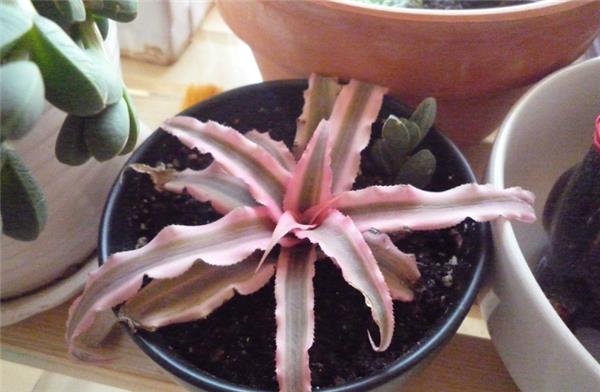
I. Introduction to Cryptanthus
Cryptanthus bromelioides, also known as the small-flowered Cryptanthus. The leaves are long, elliptical and lanceolate, with relatively long petioles; the leaf surface is greenish-brown with pale green stripes; the flower scape extends from between the leaf axils, and the flowers are small and white.
II. Morphological characteristics of Cryptanthus
Perennial evergreen herbaceous plant. The underground part has a tuberous rhizome, while the aboveground part has almost no stem. Leaves grow densely in clusters from the rhizome, with several leaves per cluster, extending horizontally in a rosette shape; the leaves are hard, with wavy edges and soft spines, strap-shaped, with acuminate tips; the underside of the leaves has white scale-like substances, the mesophyll is thick and leathery, and the surface is greenish-brown. Flowers are bisexual, white, monoecious; the flower scape is drawn out from the leaf cluster, short and columnar; the inflorescence is rosette-shaped, with 4 triangular involucral bracts, white and leathery.
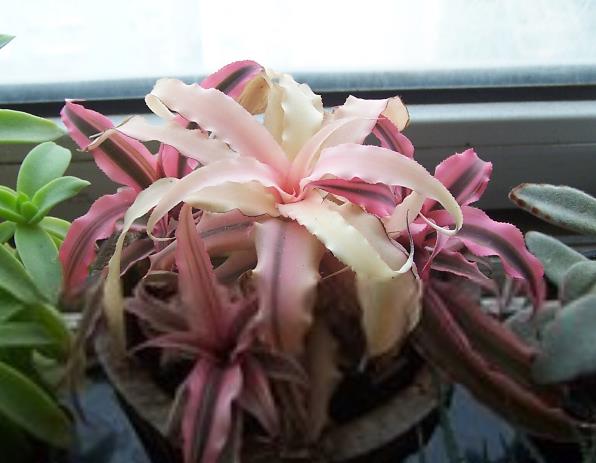
III. Species classification of Cryptanthus
1. Cryptanthus bromelioides
Also known as the small-flowered Cryptanthus. The leaves are long, elliptical and lanceolate, with relatively long petioles; the leaf surface is greenish-brown with pale green stripes; the flower scape extends from between the leaf axils, and the flowers are small and white.
2. Cryptanthus bivittatus
Also known as the two-striped Cryptanthus. The leaf surface is green with red and yellow longitudinal stripes.
3. Cryptanthus zonatus
Leaves grow in clusters, with the middle leaves larger; the leaves have alternating horizontal stripes of red, yellow and white, resembling tiger stripes.
4. Cryptanthus acaulis
The leaves are relatively short, alternating red-yellow or red-brown.
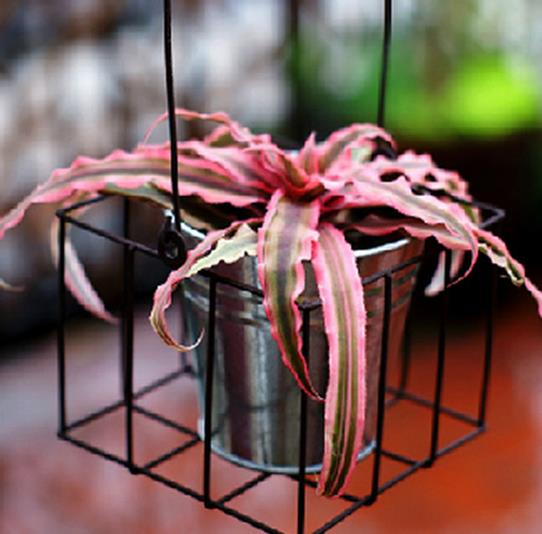
IV. Propagation methods of Cryptanthus
Cryptanthus is propagated by seeding, cuttings and division.
1. Seeding method
Seeds require artificial pollination to be obtained. Sow indoors in pots from late April to mid-May in spring. At 25°C, germination takes 1-2 weeks, but seedlings grow slowly and can only become mature plants after 3 years.
2. Cutting method
Cut off the leaf axis growing beside the mother plant from the base, keep the 3 small leaves at the tip, insert into a sand bed, shade and maintain, keeping relatively high humidity. At a temperature of around 30°C, roots can form in about 3 weeks, and after 7 weeks the seedlings can be separated.
3. Division method
This is a commonly used method, carried out together with repotting in spring. Separate the offsets between the leaves of the flowering mother plant, cut them apart with the rhizome and plant them, shade and maintain, and they are extremely easy to establish. The division propagation method is mainly suitable for herbaceous flowers with clustering characteristics.
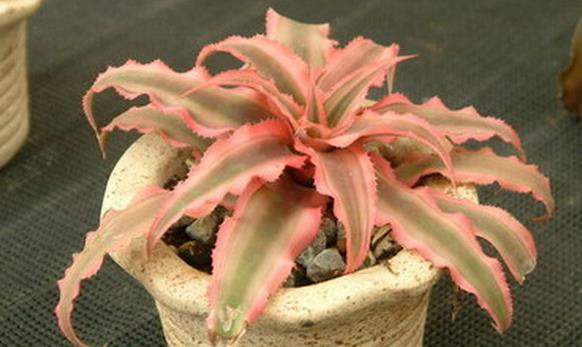
4. Division time
It is best to do this in early spring (February, March) after the soil thaws.
5. Division method
Take the mother plant out of the flower pot, shake off excess potting soil, separate the tangled root system as much as possible, and cut it open with a sharp small knife into two or more plants. Each divided plant must carry a considerable amount of roots, and its leaves should be properly pruned to help it survive.
6. Potting and disinfection
Soak the divided small plants in a 1500-fold chlorothalonil solution for five minutes, then take them out and let them dry before potting. You can also drench the roots with chlorothalonil immediately after potting.
7. Management after division
After dividing and potting, drench the roots or water thoroughly once. Because its root system is greatly damaged and its water absorption capacity is very weak, it takes about 3-4 weeks to recover and sprout new roots. Therefore, within 3-4 weeks after division, watering should be controlled to avoid root rot, but the transpiration of its leaves is not affected. In order to maintain the water balance of the leaves, the leaf surface needs to be misted 1-3 times a day (mist more when the temperature is high, and less or not at all when the temperature is low). Do not apply fertilizer during this period either. After division, also pay attention to excessively strong sunlight; it is best to keep it in a shade shed for maintenance.
The above is relevant knowledge about Cryptanthus. I hope it can help you.