Is the poinsettia potted plant toxic? Understand clearly before you grow it
The poinsettia is often used by people as a plant for celebrating Christmas and carrying beautiful meanings, so who actually knows whether the poinsettia is toxic or not? Next, let us go and take a look together!
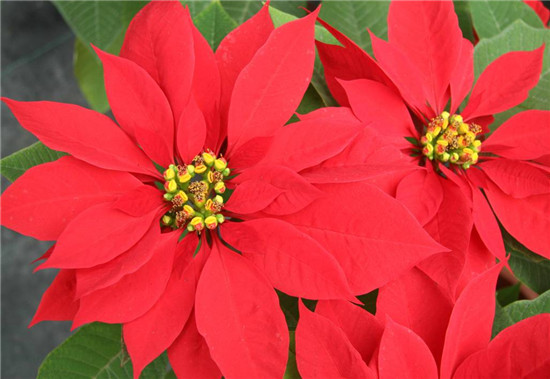
The poinsettia belongs to the Euphorbiaceae family, and we also call it the Christmas flower, because it is a red flower used for decoration at Christmas. Its topmost layer is flame red, or red and white, so it is often mistaken by people for the flower, while its true flower is in the middle part of its leaf cluster. Its flowering period can also last from December all the way to February of the following year, and its flowering period happens to fall at Christmas and New Year's Day, so it is very suitable for the festive and joyful atmosphere of the holidays.
The optimal growing temperature for the poinsettia is between 18-25 degrees, and in winter it must not go below 10 degrees, otherwise it will cause its bracts to run rampant, and the leaves at its base will also easily turn yellow and fall off, and a bare-leg phenomenon will also form. When the temperature in spring begins to rise, it will continue to sprout new branches from its stems.
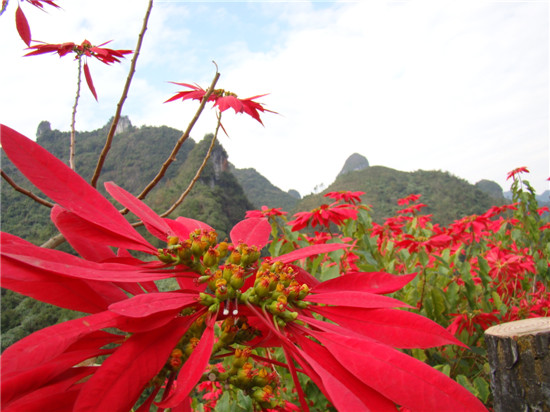
The poinsettia is very sensitive to water. During its growth period, as long as its water supply is sufficient, the growth of its stems and leaves will be very rapid, and sometimes leggy growth with elongated internodes and narrow leaves will also appear. Of course, on the contrary, if the potting soil lacks water, or is sometimes dry and sometimes moist, it will also cause yellowing and falling of the leaves. So we must pay close attention to these things; water control is also directly related to the growth and development of the poinsettia.
As to whether the poinsettia is toxic, there are two views in science. Some experts believe that the whole poinsettia plant is toxic, and the white milky sap in its stems contains a variety of toxic alkaloids, which will irritate the skin. If the skin comes into contact with it, it easily causes allergic symptoms such as redness, swelling, heat, intense itching and localized papules. If the stems and leaves are eaten by mistake, mild cases cause gastrointestinal reactions and nervous disorders, and severe cases can very easily lead to poisoning and death.
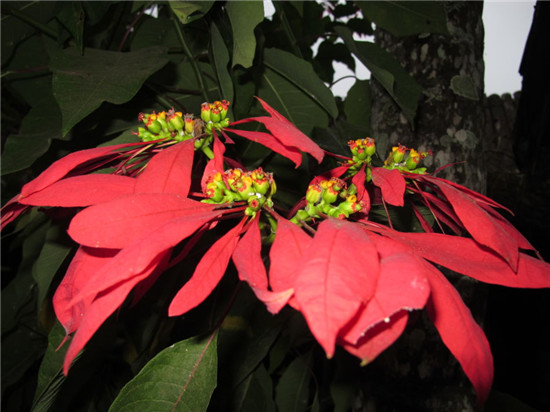
There are also experts who believe that saying it is toxic has no scientific basis. They once conducted a special study on the toxicity of the poinsettia and found that after white mice ate an extremely large dose of poinsettia leaves, their diet and daily behavior showed absolutely no abnormality, and there were even no symptoms such as death or poisoning. There is also research proving that a child weighing 50 jin who ingests 500-600 poinsettia leaves will not experience poisoning at all. In addition, according to a survey by the American Medical Association, no cases of death from poisoning after ingesting poinsettia have been found.
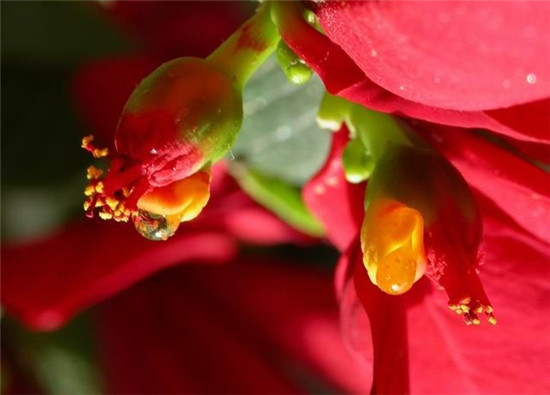
Some people believe that the whole poinsettia plant is toxic, and the white sap in the stems and leaves will irritate the skin, may make the skin red and swollen, and cause allergic reactions. If the stems and leaves are eaten by mistake, there will be vomiting, abdominal pain, and even the danger of poisoning and death. But facts prove that the poinsettia is not as toxic as some media say. Moreover, like other flowers, the poinsettia is for people to admire, not for people to eat! Therefore, when buying or caring for a poinsettia, you can completely eliminate your worries and fully enjoy the festivity and joy that the poinsettia brings.
The above is all the content I have summarized for you on whether the poinsettia potted plant is toxic. I hope this article can help everyone. Please also continue to follow us.