How to Grow Pomegranate Flowers? A Detailed Guide to Daily Cultivation and Management
Pomegranate flowers are often grown by people as ornamental plants because of their beautiful appearance, and they are awaited to bloom and mature into fruit. Next, let us take a look at the daily planting and management of pomegranate flowers.
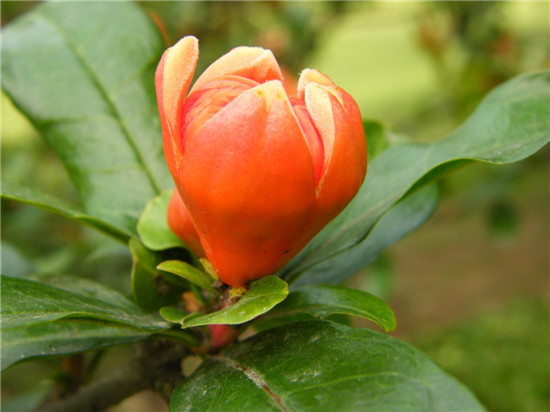
Pomegranate flowers can be enjoyed both for their blooms and their fruit. Small potted plants are used for display on windowsills, balconies and in living rooms, while large potted plants can be used to decorate public places and meeting venues. Field-planted pomegranates are suitable for landscaping in scenic areas. Pomegranate has a long history of medicinal use, and it is recorded in various ancient medical texts. Through clinical practice, physicians of past dynasties held that pomegranate is cool in nature and has effects such as clearing heat, detoxifying, strengthening the stomach, moistening the lungs, astringing the intestines and stopping bleeding.
Among its parts, pomegranate peel is used most often medicinally, usually after being stir-fried. Pomegranate flowers can stop nosebleeds, vomiting of blood and bleeding from external injuries, and can also treat excessive vaginal discharge. Used externally, they can treat otitis media. Tender pomegranate leaves strengthen the stomach and regulate the intestines, dissolve food accumulation and aid digestion; used externally, they can treat eye diseases and skin diseases.
Modern medical research holds that pomegranate peel contains "pomegranate root bark alkaloid", which has an inhibitory effect on various bacilli and skin fungi. Sour pomegranate contains relatively more tannins, has an astringent and sterilising effect, can treat diarrhoea and dysentery, and can also stimulate the appetite and aid digestion. The root bark of the pomegranate tree contains tannins and has the effect of expelling tapeworms and roundworms.
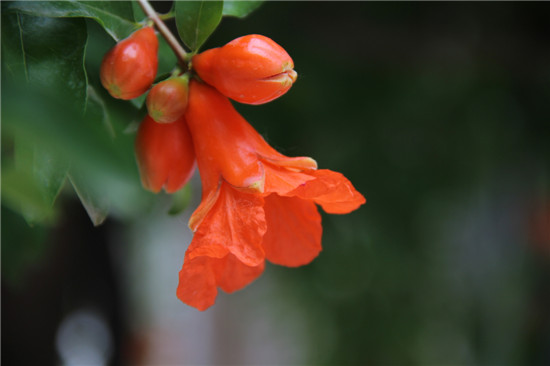
How to Grow Pomegranate Flowers
1. Planting
Pomegranate can be planted in all four seasons, with early spring and autumn being the best. It is said that in the north it is planted in spring, and in the south in autumn. When planting, it is advisable to select high-quality seedlings with complete root systems, plump buds and smooth stems. The soil can be turned and mixed until it is matured, debris removed, and then replaced with new soil. Dig to 50 cm, bury it deeply, with a length of 0.6-0.8 m, and apply 25-50 kg of organic fertiliser, mixing it thoroughly with the topsoil before backfilling.
2. Water and Fertiliser Management
(1) Water
There is a saying of irrigation and drainage, that is, irrigation treatment is needed during the key periods of the pomegranate, and soil moisture of 60-80% is more suitable, while during other periods it also needs to be controlled flexibly. These three key periods are the budding period, the fruit swelling period and before leaf fall. Because pomegranate is drought-tolerant but not waterlogging-tolerant, attention must also be paid to drainage treatment to prevent poor pomegranate growth caused by waterlogging damage.
(2) Fertilising
In the year of planting, additional fertiliser is needed, using 1-2 kg of decomposed manure water plus a small amount of urea, applied to the soil. Fertiliser is also needed before leaf fall in autumn; the usual practice is to dig a ring-shaped trench and apply 20-30 kg of topdressing. Fertiliser is also needed during the full fruiting period, applying decomposed manure water 3-4 times in holes around the tree basin. Attention should also be paid to topdressing during the growing season; at this time, nitrogen fertiliser is usually applied first, and then phosphorus and potassium fertiliser, taking care to control the fertiliser concentration.
3. Shaping and Pruning
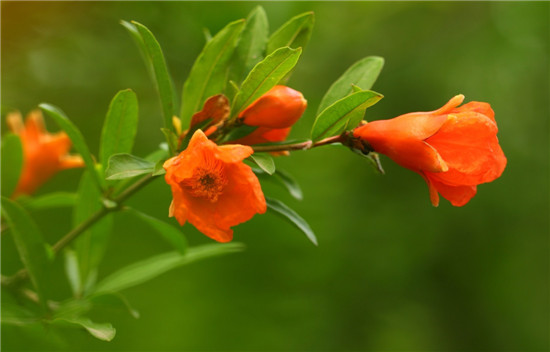
Pomegranate likes light, so its light transmission performance must be considered; besides this, of course, attention must also be paid to ornamental value. Therefore, when shaping and pruning, care should be taken to ensure a certain form, such as the natural open-centre form, the "V" shape, and so on.
The principle of pomegranate pruning is: a shaped tree should not die, an unshaped one should not be left in disorder. Therefore, these branches and leaves should be handled according to this principle, so that the vigorous branches have space to grow, while those with no usable space should be dealt with in good time.
Cultivation and Management Methods for Pomegranate Flowers
1. In spring, before the buds sprout in early spring, repot the plant. Pomegranate is not strict about soil and can adapt to all soils except heavy clay. For the potting soil, it is best to use fertile, loose, well-drained soil. Pomegranate is generally repotted once every 2-3 years. Carry out appropriate pruning before repotting. Water once before the buds sprout, and after sprouting, grow it in sunlight and water appropriately. Apply fertiliser appropriately when growth is vigorous, and when it blooms, place it in a spot with light for viewing. Pomegranate can produce 2-3 flushes of new shoots a year and can bloom 2-3 times; after each bloom, pinch out the tips appropriately, which helps the formation of new flower buds. If it is a fruiting pomegranate, the tubular flowers (non-fruiting flowers) should be thinned out, leaving the bell-shaped flowers. Double-petalled pomegranate flowers mostly do not bear fruit, so there is no need to thin the flowers.
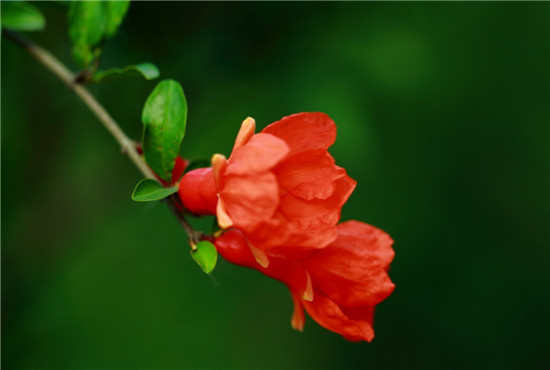
2. In summer, pomegranate tolerates high temperatures and hot sun. It should be placed on a sunny balcony for viewing, maintaining sufficient light. Because water evaporation is high when the weather is hot, it should be watered in good time. When watering pomegranate in summer, do not spray water on the leaves or around the plant; a dry environment should be maintained, otherwise it is easy to cause poor pollination and sparse fruiting in pomegranate.
3. In autumn, a fruiting pomegranate is laden with fruit, red and attractive. It can be placed in a semi-shady or brightly lit spot, keeping the potting soil on the dry side. Non-fruiting potted and bonsai pomegranates should be grown in sunlight, and after the temperature gradually turns cool, keep the potting soil on the dry side to let them go dormant.
4. Winter dormancy. After dormancy, pomegranate is relatively cold-tolerant. For non-fruiting potted and bonsai pomegranates, care should be taken to prevent the roots from freezing; they can be placed in a closed balcony at around 0°C to overwinter, keeping the potting soil dry but not parched. For fruiting pomegranates, care should be taken to maintain a certain temperature and appropriate light, which can extend the viewing period.
The above is all the content of the daily cultivation and management methods for pomegranate flowers that I have summarised for you. I hope this article can help you. Please also continue to follow us.