How to Grow Anemone coronaria? A Complete Guide to Introduction and Cultivation Tips
Anemone coronaria is a beautiful ornamental plant with delicate colors and an elegant style, like dancing colorful butterflies. Let's take a look at the relevant knowledge below.
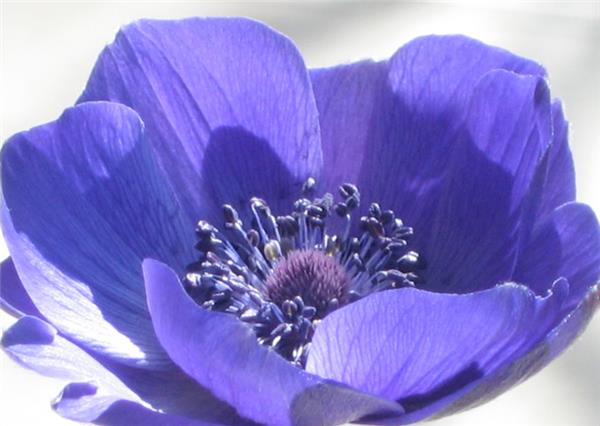
I. Introduction to Anemone coronaria
Anemone coronaria has one- to two-pinnate trifoliolate compound leaves with long petioles. Flower stems emerge from the leaf cluster, with flowers in white, red, pink, blue-purple, etc. There are many horticultural varieties. The flowering period is from March to May.
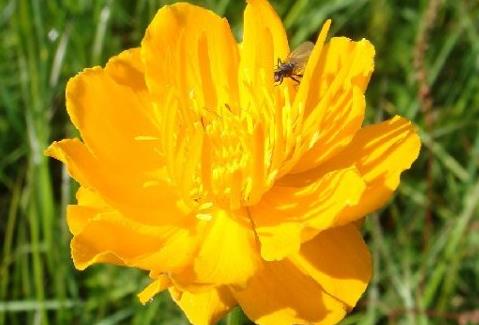
II. Morphological Characteristics of Anemone coronaria
The plant height is 25 cm to 40 cm, with underground tubers. The leaves are basal leaves, 3-lobed, forming palmate deep lobes. Flowers are solitary at the top of the stem, in bright red, purple-red, pink, blue, orange, white and bicolor, with a flower diameter of 4 cm to 10 cm. According to relevant sources, there are more than 200 horticultural varieties of this flower worldwide.
III. Ecological Habits of Anemone coronaria
It prefers a cool climate and fears extreme heat. It requires relatively high air humidity and sufficient sunlight. It is suitable for planting in loose, well-drained sandy loam soil. It likes warmth and is also cold-tolerant, but stops growing when the temperature is below 0 degrees. It fears heat and dryness, and enters dormancy and forced dormancy stages every summer and winter. This flower requires sufficient sunlight, and soil rich in humus and slightly clayey.
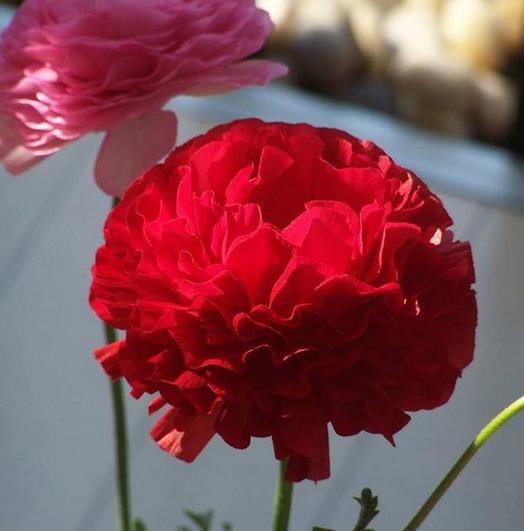
IV. Distribution Area of Anemone coronaria
Native to the Mediterranean region.
V. Garden Uses of Anemone coronaria
The flowers are large and brilliantly colorful, with white, yellow, orange, pink, red and purple colors, as well as double-flowered and semi-double-flowered varieties. The flower shape resembles a poppy. It is suitable for decorating rock gardens and flower beds, and can also be used for potted plants and cut flowers.
Garden uses: flower bed and flower border arrangement or potted ornamental display, and can also be used as cut flowers.
VI. Propagation Methods of Anemone coronaria
It is an autumn-planted bulbous flower, propagated by dividing tubers. Commonly used methods are tuber planting and seed sowing. Tubers are dug out in June and stored in dry sand in a cool place. Plant in October. Soak the tubers in wet sand or water first so they fully absorb water and sprout evenly. For seed propagation, seeds mature in June; sow immediately after harvesting. Seedlings emerge 10-15 days after sowing, and can bloom the following spring.
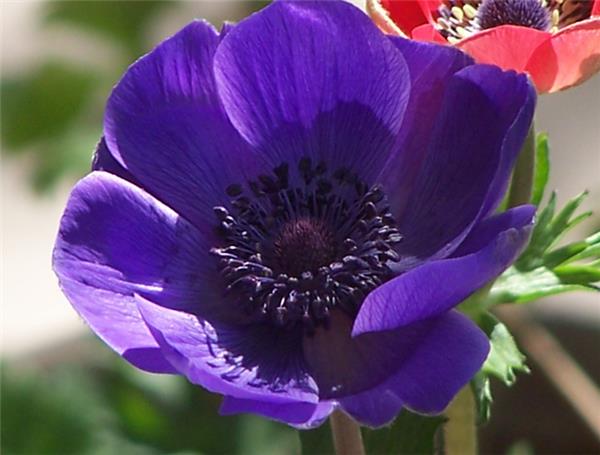
VII. Cultivation Techniques of Anemone coronaria
Planting requires sufficient base fertilizer. For potted plants, 2-3 tubers can be selected, with a planting depth of 1.5 cm. Planting is usually carried out in late September when the temperature is below 20 degrees. Before planting, soak the tubers in water for 1-2 days to allow them to absorb water and swell. Use a potting soil mix of 3 parts garden soil, 1 part leaf mold and 1 part rice husk ash. Add 1 handful of decomposed compost or chicken manure per pot. In a pot with a diameter of 20 cm, 3-5 bulbs can be planted. When planting, the pointed end of the tuber must face downward and must not be inverted. After planting, water thoroughly and place in a sunny spot; new leaves can grow in about 20 days. In winter, place in a greenhouse or conservatory and keep above 5 degrees to continue growing, and flower buds can form for earlier blooming. However, at this time, due to the lower temperature and lower water consumption, watering should be controlled so the potting soil does not become too wet, to prevent tuber rot. Depending on the humidity level, water about once every 3 days or so; if the temperature is low, water even less. Apply fertilizer once every half month with 10% cake fertilizer water. For open-field cultivation, it can overwinter safely as long as the temperature is not below -10 degrees. In early spring of the following year, growth begins around mid-February. With light and frequent fertilizing, it can bloom in March. During the flowering period, apply 10% cake fertilizer water once a week to promote continuous formation of flower buds, until it gradually stops as the temperature rises in May. In March-April, if there is leaf miner damage, spray 1500 times omethoate, and spray again after 3-5 days. After flowering, as the temperature rises, the old leaves begin to turn yellow. When the leaves have basically all withered by June, the underground tubers can be dug up, but do not divide them immediately. Be careful to prevent rain from soaking them. After fully drying in the sun, store them in a bamboo basket or similar container in a dry, ventilated place. For potted plants, the whole pot can be placed in a dry, rain-sheltered place, stop watering, and repot in September. A single flower lasts about one week. Seeds mature 7-10 days after flowering; at this time the aggregate fruit changes from green to grayish-yellow, and the fruit feels soft, so it must be harvested promptly, otherwise it is easily scattered by the wind. After harvesting, dry the seeds and store them in a rain-sheltered, ventilated place.
VIII. Disease Prevention and Control of Anemone coronaria
Common diseases include rust, leaf mold and sclerotinia. Spray 25% carbendazim wettable powder at 1000 times dilution for prevention.
The above is the knowledge about Anemone coronaria. Hope it can help you.