Introduction to Rixiang Gui (Osmanthus fragrans 'Rixiang Gui') and Growing Tips: Learn How to Grow a Fragrant, Delightful Rixiang Gui
Rixiang Gui is the newest cultivar in the osmanthus family, with the most fragrant flowers, the longest blooming period, and the fastest growth rate. It gets its name from its characteristics of continuous blooming and rich fragrance. Now let us take a look at what we know about Rixiang Gui.
I. Introduction to Rixiang Gui
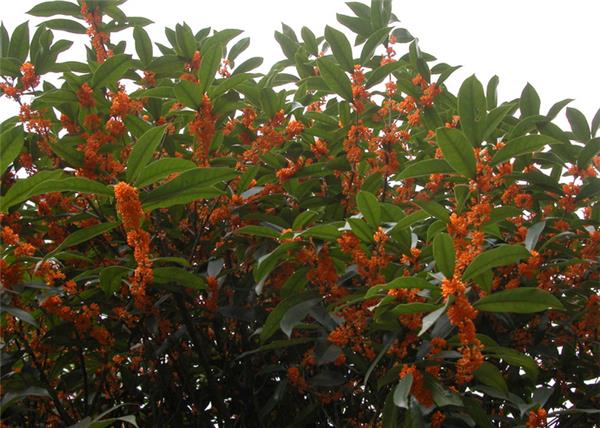
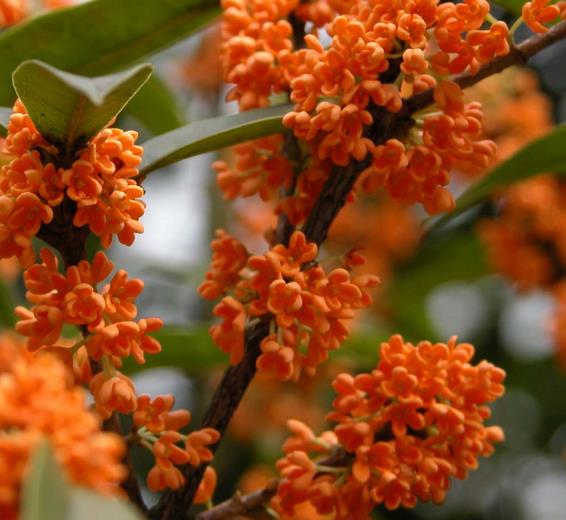
Rixiang Gui is a variety of osmanthus (Osmanthus fragrans). It has many branches, short internodes, smooth leaves, green color, and few or no serrations along the leaf margins. Rixiang Gui is an evergreen shrub in the Oleaceae family. Strong branches can grow more than 1 m in a single year. When it blooms, the whole tree is covered in bright yellow and silvery white, with clusters upon clusters of flowers, their fragrance overflowing and refreshing to the heart. The most notable advantages of Rixiang Gui are: flower stems extend beyond the green leaves, it can bloom year-round, and it blooms continuously. Its flower buds can keep differentiating, and it has the remarkable characteristics of blooming on tender spring shoots and also producing dense flower buds and blooming on lignified old branches. This ensures the long duration and continuity of Rixiang Gui's blooming. A two-leaf seedling of the current year can bloom, which is hard for ordinary osmanthus to match. It also has good adaptability, tolerates cold and drought, and is easy to plant and easy to keep alive.
Rixiang Gui dislikes dust, so you should often use a sprayer with clean water to rinse the leaves and keep the leaf surface clean. Do not place the flowerpot near places with heavy coal smoke or other harmful gases. Rixiang Gui's water requirements are the same as those of other flowering plants; soil that is too dry or too wet will affect growth and development. If you find young tender branches and leaves wilting, place the flowerpot in a basin of clean water deep enough to submerge one quarter of the pot soil for about 1 hour, and it will recover to normal. Excessive moisture can also cause oxygen deficiency and root rot. Rixiang Gui has few pests and diseases; for scale insects and red spider mites, spray with 800-1000 times diluted quinalphos solution.
II. Making a Rixiang Gui Bonsai
Rapid Cultivation of Bonsai
Digging up rootstock: Before spring sprouting, go up the mountain to dig up multi-year-old, well-shaped Shan Baila (Fraxinus chinensis). Prune and shape according to the natural form of the original stump. Decide to keep 2-4 trunk stems, and cut each trunk stem horizontally at 10-15 cm. Wrap the cut with a plastic bag, and remove the plastic bag after sprouting to prevent water loss and keep the upper part of the trunk stem from drying out. Then plant it in a flowerpot with a suitable diameter. After Qingming, when the new shoots on the trunk stems grow to 15 cm, select and keep 2-4 robust shoots at appropriate positions (that is, keep one on each trunk stem), and remove all the rest. When the retained branches are semi-lignified or lignified, grafting can be carried out, generally from May to August.
2. Grafting Methods
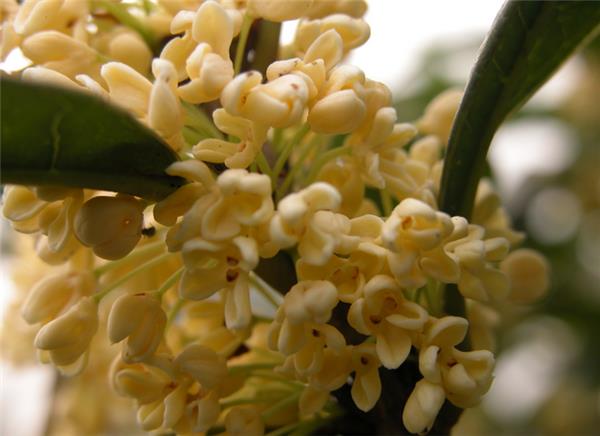
(1) Approach grafting: Select rootstock and scion of equal thickness. Use a sharp knife to cut a wound about 3 cm long and one third of the diameter deep at each approach-grafting site; the cut surface must be smooth. Match the two cut surfaces together, align the cambium of the rootstock and scion, bind firmly with plastic strips, place in sunlight, and manage normally. Generally after about 35 days, when the union is firm, you can cut off the rootstock above the grafting site and separate the lower part as a separate plant. Afterwards, remove the binding string in time according to the strength of growth. This grafting method goes from approach grafting to untying the string, and the scion blooms normally.
(2) Side grafting: Select semi-lignified or lignified Rixiang Gui as the scion. Cut into segments with 2-3 leaves, with about 2 cm of branch below the leaves, and cut off one third of the leaf blades. Use a sharp knife to cut the lower end of the scion into a wedge shape, about 1.5 cm long on one side and slightly shorter on the other. At the grafting site on the rootstock, cut a tongue-shaped opening about 1.5 cm long and one third of the diameter deep. Immediately wedge the long cut surface of the scion inward into the split in the rootstock, aligning the cambium of the rootstock and scion. Bind firmly with plastic strips, cover with a plastic film bag, and place in a shaded place. After about 40 days, when the interface has healed firmly, remove the plastic bag, cut off the rootstock above the grafting site, and carry out normal management; it can then bud and bloom normally. Untying is the same as for approach grafting.
(3) Care: After successful grafting, the whole pot can be placed on the ground for care. Apply once every half month with cake fertilizer that has been soaked, rotted, and diluted, and spray the leaves once with a photosynthetic micro-fertilizer. If leaf spot disease is found, spray with 500 times diluted Kang Ku Ling for control. If there are red spider mites, spray with 2000 times diluted Tao Xiao Ling for control. When the outdoor temperature is around 0°C, it can be moved indoors and placed in a spot with about level 5 sunlight exposure. In spring, when the outdoor minimum temperature is above 3°C, it can be moved outside and again placed on the ground for care.
(4) Shaping and pruning: According to the natural form of the original stump, it can be pruned and shaped into upright-trunk style, slanting-trunk style, lying-trunk style, dead-trunk style, exposed-root style, etc. No matter which shaping style is used, you must never rush, or you will get the result of haste makes waste. Especially for the exposed-root style, it should be done in several stages, exposing a little less each time; remember, you must not rush. Generally, it can be pruned and shaped in about two years.
(5) Repotting and matching: After grafting, care, and pruning and shaping, Rixiang Gui can be repotted into a fine bonsai pot, with ornaments placed on it, moss planted, and a pot stand matched, so you can enjoy the superb elegance of a Rixiang Gui bonsai.
Key Care Points
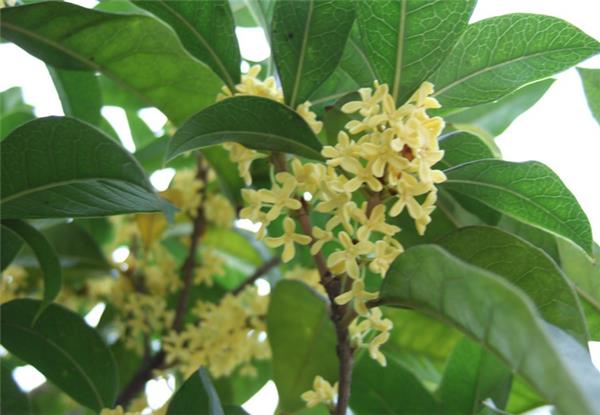
Rixiang Gui likes light and also tolerates shade. The soil should preferably be loose soil with good water permeability. It likes fertilizer, likes moisture, tolerates cold and drought, is easy to plant and easy to keep alive, has very few pests and diseases, and needs no meticulous care. During its one-year growth period, as temperature and seasons change, its blooming habits and characteristics vary, and it can generally be divided into three periods.
The above is what we know about Rixiang Gui, and we hope it helps you.