How to Grow and Care for Serissa Bonsai
Serissa is also known by the names Su Xin and Xi Ming. Below I will introduce everything about how to grow serissa and how to make a serissa bonsai, and I hope it will be helpful to everyone.
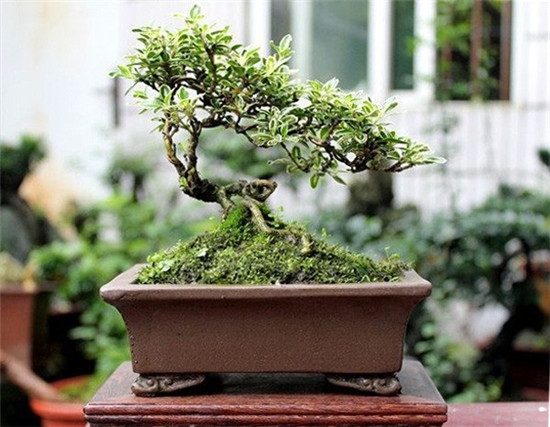
Serissa likes sunlight, is also fairly tolerant of shade, and dislikes fierce winds and scorching sun; during hot summer weather it should be given light shade. Serissa is best planted by division in spring, or propagated by cuttings during the yellow plum rain season, and it is best watered with weak tea. It is not strict about temperature, being evergreen in South China and semi-evergreen in Southwest China. It has strong drought tolerance and is not strict about soil. For potted serissa, a moist culture soil containing humus, loose and fertile, with strong permeability and slightly acidic, will let it grow well. At present there are two common serissa varieties on the market: one is the clumping type with slightly reddish flowers shaped like trumpets, which is the inferior product; the other is the single-trunk small-tree form with pure white double flowers, which is the superior product.
How to Make a Serissa Bonsai
Source of serissa bonsai plants: serissa plants suitable for bonsai can be obtained by dividing the mother plant in March, or propagated by cuttings from April to October.
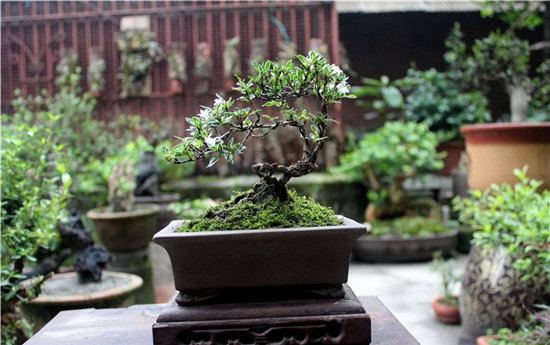
Potting soil for serissa bonsai: the soil for serissa requires sandy loam rich in organic matter, loose and fertile, with good drainage and air permeability. For the pot, a relatively shallow purple clay pot or glazed pot can be used, and the pot color should be slightly darker so that it contrasts with the serissa and increases the ornamental value. Serissa is best potted in February to March.
Light and temperature requirements for serissa bonsai: serissa likes a sunny, warm, humid and well-ventilated environment. In early summer and early autumn it should be shaded by 50%-70%, and in winter in the north the room temperature should be kept at 5-12°C.
Water and fertilizer requirements for serissa bonsai: during the growing season, serissa should be watered frequently; in summer, spray water on the serissa leaves 1-2 times a day to increase air humidity. In winter, reduce the frequency of watering and just keep the potting soil moist and slightly on the dry side. Serissa likes fertilizer, but each fertilization should not be too concentrated; in April to May each year, apply 2-3 times a 0.5% concentration phosphorus-potassium fertilizer solution to the serissa. In the depths of winter, apply 1-2 times a thin organic fertilizer solution, and no fertilization is suitable in other seasons.
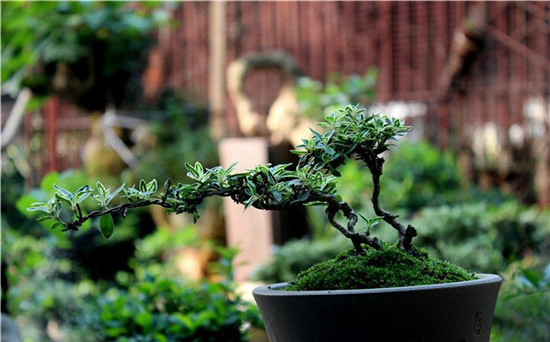
Care Tips for Serissa Bonsai:
Making a serissa bonsai takes quite a lot of time, so care cannot be careless either, otherwise it will affect the bonsai's ornamental effect. Only by understanding serissa's growth habits can you better care for it.
Serissa likes sunlight, is also fairly tolerant of shade, and dislikes fierce winds and scorching sun; during hot summer weather it should be given light shade. Serissa is best planted by division in spring, or propagated by cuttings during the yellow plum rain season, and it is best watered with weak tea. It is not strict about temperature, being evergreen in South China and semi-evergreen in Southwest China. It has strong drought tolerance and is not strict about soil. For potted serissa, a moist culture soil containing humus, loose and fertile, with strong permeability and slightly acidic, will let it grow well.
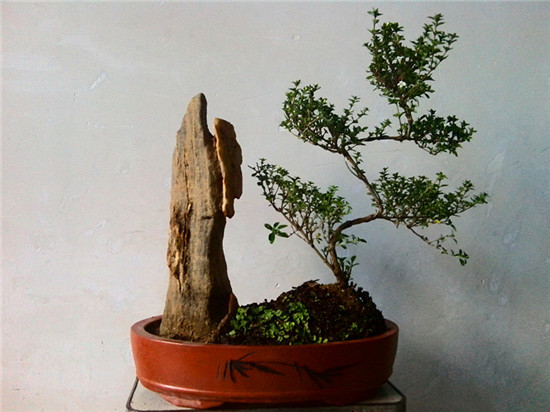
For cultivating serissa bonsai, soft mountain soil must be used, and it should be placed in a sunny spot; it cannot be kept indoors for a long time. During the growing period, fertilizer should be applied 1-2 times, and the potting soil is better kept slightly dry, as too much or too concentrated fertilizer and water will cause leggy growth of branches and leaves. In addition, to ensure that the serissa bonsai has a well-proportioned and full plant shape, pruning, shaping and artistic processing are also needed.
Serissa bonsai should have a fixed position and should not be moved here and there, as serissa is particular about phototropism. In summer, under the scorching sun, shade it from above, keep it ventilated, and spray water on its leaves 1 to 2 times a day to maintain air humidity. In severe cold winter, it can be wrapped lightly with straw (when the temperature is around -10°C) to prevent it from freezing to death.
The above is all the content I have summarized for you on growing and care tips for serissa bonsai, and I hope this article can help everyone. Please also continue to follow us.