What Are the Varieties of Rose? A Complete Guide to Rose Varieties
The rose is one of people's favorite flowering plants, and because of its great many types it has been divided into several varieties. Next, let us take a look together at the complete guide to rose varieties.
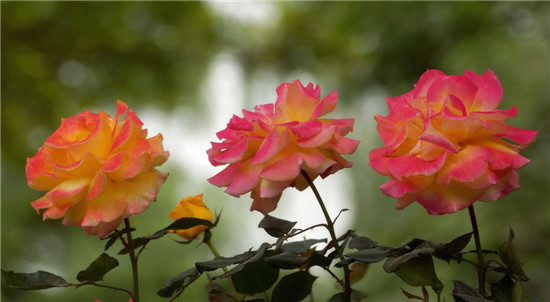
Roses are thorny shrubs, or take a trailing and climbing form. Evergreen or deciduous shrubs, upright, with brown stems bearing hooked prickles or no prickles, and some nearly thornless. The branchlets are green; the leaves are dark green, mostly pinnately compound, broadly ovate or ovate-oblong, 2.5-6 cm long, with a gradually pointed tip and sharp teeth, serrate along the leaf margin, hairless and smooth on both sides; the stipules are fused with the petiole, entire or with glandular teeth, the tip separating into ear-like lobes. The flowers are often clustered, rarely solitary, with very many colors and varying shades, 4-5 cm in diameter, mostly double but some single; the sepals are tail-like and long-pointed, with pinnate lobes along the margin; the styles are separate, extending beyond the mouth of the calyx tube, equal in length to the stamens; each ovary has 1 ovule. The fruit is ovoid or pear-shaped, 1-2 cm long, with the sepals falling off. The flowering period is April to October. Most are complete flowers. They are bisexual flowers.
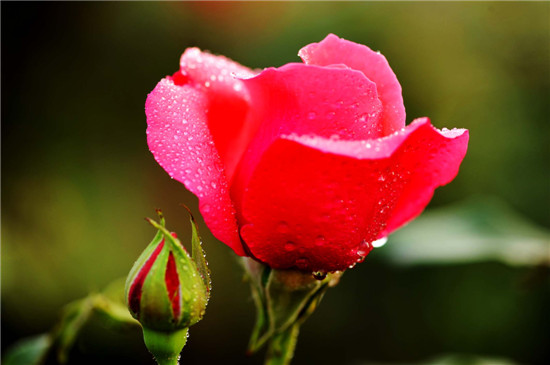
Roses are evergreen or deciduous shrubs, with green branchlets bearing scattered prickles, and some nearly thornless. The leaves are alternate, odd-pinnately compound, usually with 3-5 leaflets, elliptical or ovate, 2-6 cm long, serrate along the margin, hairless and smooth on both sides, with the stipules fused to the petiole. The flowers are borne at the tips of the branches, often clustered, rarely solitary, with very many colors. There are countless varieties, mostly double but some single; the flowers have a faint fragrance, and the flowering period is April to October, with the most blooms in spring. The fleshy rose hip, when ripe, turns red-yellow and splits open at the top; the "seeds" are achenes, chestnut brown.
Rose Varieties Classified by Color
1. White: Ting Walter, Kennedy (a classic variety), Wedding White, First White, White Satin, Green Cloud, Tanic (a classic variety), White Christmas (a classic variety), White Wine, and others.
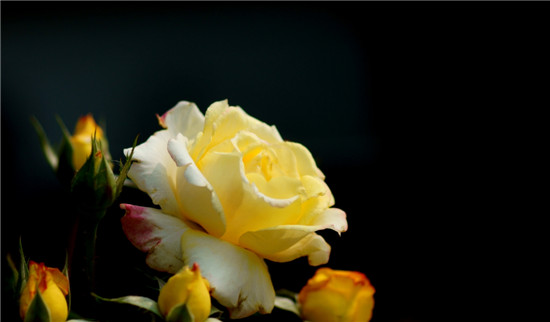
2. Yellow: Golden Phoenix, Ohio Gold, Rhine Gold (a classic variety), Gold Medal, Green Field, Princess Cantor, and others.
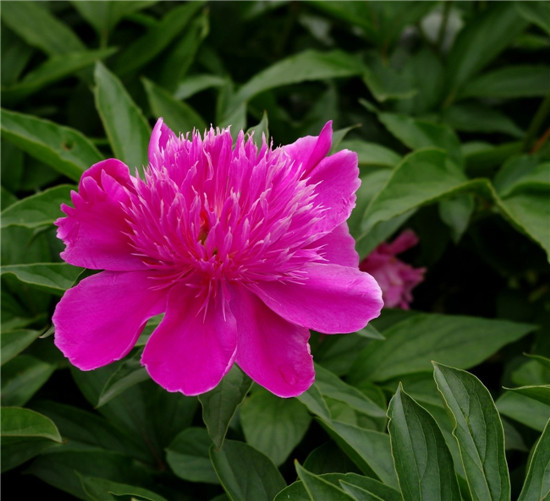
3. Red: Crimson Fan, Mingxing (a classic variety), Meilang Lipstick, Katal Card, Hanqian, Rose Center, Fragrant Magic, Olympic Games, Fragrant Cloud, and others.
4. Blue: Blue Moon (a classic variety), Blue Peace, Sapphire, Blue Ribbon (a classic variety), Jacaranda, Blue Perfume (a classic variety), Blue River (a classic variety), Heaven, and others.
5. Black-red: Black-red is a classic variety, one of the 10 most fragrant rose varieties, and a large-flowered fragrant rose variety, including Rose Selection Standard Flower, Warrior, Great Purple Light, Black Whirlwind, Banli Rock, Black Pearl, Vermilion and Ink Double Radiance, and others.
6. Green: Green roses include Green Star and Green Calyx.
7. Orange: Orange roses mainly include Jesta, Joey, Quinterly, Golden Bull, Maxina, Grand Medal, and others.
8. Pink: Pink Fan, Pink Peace (a classic variety), First-Class Lady, Japanese Pink, Drunken Fragrant Wine, Chuck Red, Tang Red, and others.
9. Bicolor: Bicolor roses are produced by hybridizing white and red roses; the beautiful colors make the heart flutter, with red and white intermingled, revealing a special kind of romance. First among the 10 most fragrant rose varieties), Land of Greece (fragrant) (a classic variety), Meilang Capriccio, Love, My Choice, and others.
Rose Varieties Classified by Attribute
Climbing Rose
A new star in landscaping - the climbing rose is a climbing shrub of the genus Rosa in the subfamily Rosoideae, with relatively tall plants. Each year it sends up thick new canes from the base, and thicker lateral branches grow from the tips of the two-year-old canes. It has a habit of blooming in all four seasons, but the greatest number of flowers appears in just the two seasons of late spring or early summer. It is a climbing growth type, with a well-developed root system, extremely strong resistance, rapid shoot sprouting, and vigorous growth. A single plant sprouts 7-8 main branches per year, and each main branch in turn branches in an open pattern, reaching a maximum annual growth of up to 5 m, with a very strong ability to resist disease. It is extensively managed, tolerant of pruning, rich in flower forms, and blooms continuously through the four seasons (some are also one-season or two-season bloomers), with brilliant, unrestrained flower colors, a long flowering period, and a rich fragrance. The flower colors include vermilion, bright red, fresh red, pink, golden yellow, orange-yellow, bicolor, pure white, and others. It sprouts from the two-year-old internodes, blooms all over the plant, and has numerous flower heads, and can form landscapes such as flower balls, flower columns, flower walls, flower seas, flower waterfalls, arch shapes, and corridor shapes.
Large-Flowered Fragrant Rose
There are many varieties, and it is the main body of modern roses. Its characteristics are: robust plants, single or clustered flowers, large blooms, elegant and beautiful flower forms, numerous, bright and lively colors, fragrant scent, and strong ornamental value.
Floribunda Rose
The floribunda rose has a spreading growth habit, with flower heads in clusters. It is cold-resistant, heat-resistant, drought-resistant, waterlogging-resistant, and disease-resistant, with extremely strong adaptability to the environment. It is widely used in urban environmental landscaping, laying out garden flower beds, expressways, and so on.
Miniature Rose
A new variety in the rose family, with a short, ball-shaped plant type and numerous flower heads. Because of its unique character it is also called the "Diamond Rose." It is mainly used for potted ornamental display, dotting lawns, and arranging color patterns.
Tree Rose
The tree rose is also called the rose tree or rose standard. It achieves a standard upright trunk and crown through grafting means of two or more times. The current specifications of tree roses (height 0.4-2.0 m, trunk stem 1-5 cm). Advantages: good ornamental effect, unique shape, noble and elegant, with distinct layers, making a refreshing impression visually; diverse forms, including round ball type, fan type, waterfall type, and miniature, and so on; it retains the advantages of ordinary roses such as strong fragrance, long flowering period, and diverse flower colors, while also appearing more novel, more noble, and more passionate, and therefore has higher aesthetic value.
Ground-Cover Rose
The ground-cover rose: its growth situation is: one, it takes a creeping, spreading form, with a height not exceeding 20 cm. Each plant sprouts more than 50 branches per year, the branches root where they touch the ground, and each branch blooms 50-100 flowers at a time; two, the root system is well developed, rooting at a depth of more than 2 m; three, the coverage is large, with a single plant covering an area of more than 1 sq m; four, the flowering is strongly gregarious, with a flowering period continuing through all four seasons.
Peace Rose
The Peace rose was bred by the Frenchman Francis Meilland in 1939 under the iron heel of fascism. He sent this rose to the United States under the code number 3-35-40. After the American horticulturist Baye received this variety that had crossed the ocean, he immediately distributed it to important flower gardens in the north and south of the United States for propagation. A few years later, this new variety made a comeback and caused a sensation throughout the United States. In 1945 the American Pacific Rose Society named this variety Peace, and declared: We are certain that this most remarkable new rose variety of the contemporary era should be named after "Peace," the greatest wish of the world's people today, and we believe that the Peace rose will serve as a model and grow forever in the gardens of our children and grandchildren.
Red Hat Rose
Morphological characteristics: evergreen or semi-evergreen upright shrub, usually with hooked prickles. Leaflets 3-5, broadly ovate to ovate-elliptical, 2.5-6 cm long, pointed at the tip, with sharp serrations along the margin, hairless on both sides, glossy on the surface; the petiole and leaf rachis bear scattered prickles and short glandular hairs, the stipules are mostly attached to the petiole, with glandular cilia along the margin. The flowers are often several in clusters, rarely solitary, about 5 cm in diameter, deep red, pink, to nearly white, faintly fragrant; the sepals are often pinnately lobed, with glandular hairs along the margin; the pedicels are mostly slender, with glandular hairs. The fruit is ovoid to spherical, 1.5-2 cm long, red. The flowering period is late April to October; the fruit ripening period is September to November.
The above is the complete content of my summary of what varieties of roses there are and the complete guide to rose varieties. I hope this article can help everyone. Please also continue to follow us.