When Is Sunflower Blooming Season? A Detailed Explanation of Blooming Time
When is sunflower blooming season? I believe many people have never thought about this question. Let's look for the answer together in the text below!
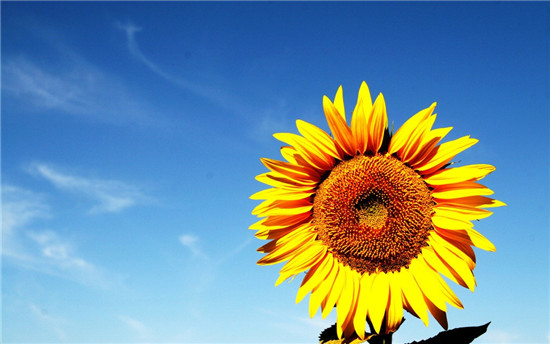
The sunflower has a capitulum, commonly known as the flower head, which grows at the top of the stem. Its shape comes in three types: raised, flat, and sunken. There are two kinds of flowers on the flower head, namely ray florets and tubular florets. The ray florets, in 1-3 layers, are borne around the outer edge of the flower head and are sterile flowers. Their color and size vary by variety, including orange-yellow, pale yellow, and purplish red, and they serve to attract insects to collect nectar and pollinate. The tubular florets, located inside the ray florets, are bisexual flowers. Their corolla colors include yellow, brown, and dark purple.
When Is Sunflower Blooming Season
The main blooming season of sunflowers is from mid-July to mid-to-late August. The blooming season can last more than two weeks.
When 75% of the plants in the field have open ray florets, the blooming season begins. It generally takes 6-9 days for a single flower head to go from the opening of the ray florets to the completion of the opening of the tubular florets. From the second day to the fifth day is the full-bloom stage of that inflorescence. The number of flowers opening during these 4 days accounts for about 75% of the total number of blooms. Flowers mostly open between 4 and 6 in the morning, and pollination and fertilization occur the next morning. Unfertilized stigmas can remain without withering for 7-10 days. The seed-setting rate of sunflower self-pollination is extremely low, only about 3%, while the seed-setting rate of cross-pollination is high.
Sunflower Care Precautions
(1) Sunflower nitrogen deficiency: during the seedling stage, growth is slow, the plant is slender and weak, and the leaves are small and thin, appearing yellow-green or light green; if nitrogen is deficient in the mid-growth period, the lower leaves turn yellow early, the flower head is small, and the growth of vegetative organs clearly deteriorates, causing premature aging of the plant.
(2) Sunflower phosphorus deficiency: the plant and flowers develop poorly.
(3) Sunflower potassium deficiency: the plant grows slowly, the leaves turn yellow, and brown spots appear on the leaves. These spots eventually dry up into thin flakes that break apart and fall off, and the oil content decreases.
(4) Sunflower calcium deficiency: stem bending occurs both before and after flower formation.
(5) Sunflower sulfur deficiency: the leaves and inflorescences are pale in color, the internodes are shorter, and the plant is short and small.
(6) Sunflower magnesium deficiency: interveinal chlorosis.
(7) Sunflower manganese deficiency: the leaves show net-like chlorosis.
(8) Sunflower boron deficiency: after the cotyledons open, the growing point is damaged or dies, or axillary buds sprout to form plants; growth is abnormal, the plant is short and small, and the stem has brown hooked longitudinal band-like marks. After the flower head forms, the stem supporting the flower head loses the ability to follow the sun; some heads always hang low, while others always face upward. The lower old leaves are thick and dark green, the upper leaves are small and curled, the mesophyll is chlorotic, and the veins are prominent.
(9) Sunflower zinc deficiency: growth is stunted, and the upper leaves become yellow and necrotic.
(10) Sunflower iron deficiency: the upper leaves all turn yellow, while the veins remain green.
(11) Sunflower copper deficiency: the upper leaves and corolla are deformed.
Management Methods for Sunflowers at the Bud Stage:
When a star-shaped body 1 cm in diameter appears at the top of the sunflower, it is commonly known as budding. From flower bud to bloom generally takes about 20 days. This is a period when vegetative growth and reproductive growth proceed together, and it is also the most vigorous stage in the plant's life. During this period, sunflowers need the most fertilizer and water, accounting for about 40%-50% of the total fertilizer and water requirement. If the need for water and fertilizer cannot be met in time during this period, yield will be seriously affected.
Management Methods for Sunflowers at the Blooming Stage:
When 75% of the plants in the field have open ray florets, the blooming season begins. It generally takes 6-9 days for a single flower head to go from the opening of the ray florets to the completion of the opening of the tubular florets. From the second day to the fifth day is the full-bloom stage of that inflorescence. The number of flowers opening during these 4 days accounts for about 75% of the total number of blooms. Flowers mostly open between 4 and 6 in the morning, and pollination and fertilization occur the next morning. Unfertilized stigmas can remain without withering for 7-10 days.
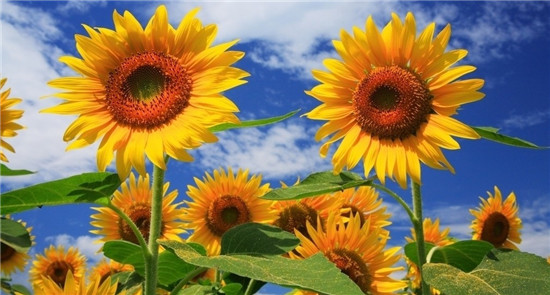
The seed-setting rate of sunflower self-pollination is extremely low, only about 3%; the seed-setting rate of cross-pollination is high. However, if temperatures are high, there is much rain, humidity is high, light is insufficient, or the soil is dry, the seed-setting rate will be greatly reduced.
Therefore, measures such as adjusting the sowing date, timely fertilization and watering, pest and disease control, and releasing bees or artificial supplementary pollination can increase the seed-setting rate.
Management Methods for Sunflowers at the Maturity Stage:
From blooming to maturity, spring sowing takes 25-55 days, and summer sowing takes 25-40 days. Different varieties differ. About 15 days after flowering and pollination is the seed formation stage. During this period, clear weather, a relatively large temperature difference between day and night, and suitable soil moisture are needed.
The above is all the content I have summarized for you on when sunflower blooming season is. I hope this article can help everyone. Please also continue to follow us.