A Guide to Placing Houseplants at Home: The Life Philosophy of Just the Right Amount
Growing green plants at home not only purifies the indoor air and beautifies the home environment, but also cultivates character. However, keeping flowers at home requires considering many factors, such as feng shui and the nature of the plants. Below, let us take a look together at the flowers and plants best suited for growing at home.
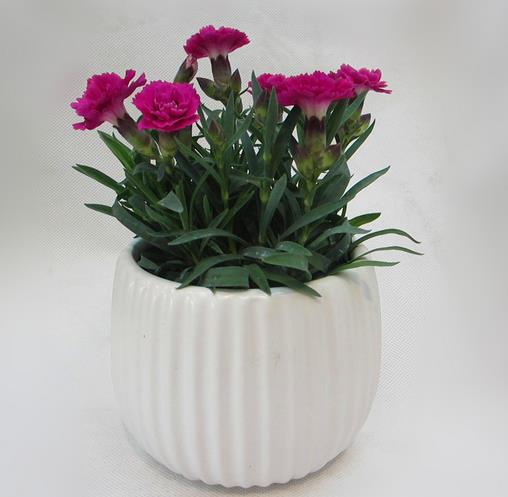
Place green plants according to different home environments
1. Entrance hall
The entrance hall is the entry point of the home, including corridors and passageways. The decoration of the entrance hall should give people a first impression and feeling that sets the tone, whether luxurious and romantic, neat and solemn, or elegant and simple, all of which can be sensed from the decoration of the entrance hall.
The entrance hall space of a home is often relatively narrow, sometimes just a corridor or passageway. It is the necessary passage through which one reaches the living room, and most of it is rather dimly lit. For the greenery decoration here, plants with neat forms or those that climb in column-like shapes are mostly chosen, such as Brazilian iron (Dracaena fragrans), Aspidistra elatior, and golden pothos (Epipremnum aureum); hanging plants such as spider plants (Chlorophytum comosum) and ferns are also often used in hanging form, which both saves space and enlivens the atmosphere of the space. In short, the plants selected for the greenery decoration here are best with slender leaf shapes and soft stems, to soften the visual line of the space.
2. Living room
The living room is the main place for daily life, the center of family activities, and also the main place for receiving guests, so it has multiple functions and is the focus of greenery decoration for the entire home. To some extent, the degree of decoration in the living room can show the owner's identity, status, and interests and hobbies; the greenery decoration of the living room should reflect a warm, hospitable, happy, and joyful atmosphere. The plant arrangement should highlight the key points and absolutely avoid clutter; it should strive to be beautiful, generous, and dignified, while also paying attention to coordinating with the style of the furniture and the color of the walls. If a luxurious and imposing look is desired, one may choose mainly plants with larger leaves and taller forms, such as Malabar chestnut (Pachira aquatica), Brazilian iron (Dracaena fragrans), and Philodendron 'Green Giant', or use vines such as areca palm (Dypsis lutescens), weeping fig (Ficus benjamina), golden pothos (Epipremnum aureum), and green emerald (Philodendron 'Emerald Green') as the main feature; if an elegant and antique look is desired, tree-stump bonsai can be chosen as the main feature.

But no matter what is used as the main feature, a small pot of brightly colored, small and exquisite foliage plants should be placed on the tea table, flower stand, window frame, or desk near the sofa, such as ornamental pineapple (Bromeliaceae), peacock plant (Calathea makoyana), and flamingo flower (Anthurium andraeanum); when necessary, fresh flowers or seasonal flowers can also be placed on the desk. Such a combination both highlights the theme of the living room layout and keeps the room evergreen throughout the four seasons, full of vitality.
3. Study
The study is a place for reading, writing, and sometimes also for receiving guests. The greenery decoration of the study should be bright, fresh, and elegant, thus creating a quiet, peaceful, and graceful environment, so that people feel calm and tranquil upon entering and can therefore concentrate. Therefore, the plant arrangement in the study should not be too eye-catching; instead, plants with non-dazzling colors and relatively ordinary forms should be chosen, reflecting a style of restraint that does not show off. Generally, a pot of light and elegant asparagus fern (Asparagus setaceus) or green plants such as nerve plant (Fittonia albivenis) and arrowhead plant (Syngonium podophyllum) can be placed on the writing desk to adjust eyesight and relieve fatigue; hanging plants with spreading and drooping forms can be chosen, such as golden pothos (Epipremnum aureum), heartleaf philodendron (Philodendron hederaceum), English ivy (Hedera helix), and inch plant (Tradescantia zebrina), hung in the corner of the wall, or allowed to trail down from the top of a bookcase; a climbing plant can also be placed in a suitable position, such as fiddle-leaf philodendron (Philodendron bipennifolium), golden pothos (Epipremnum aureum), and Philodendron 'Golden Dragon', like a coiled dragon soaring into the air, giving people the passion to strive upward and work hard.
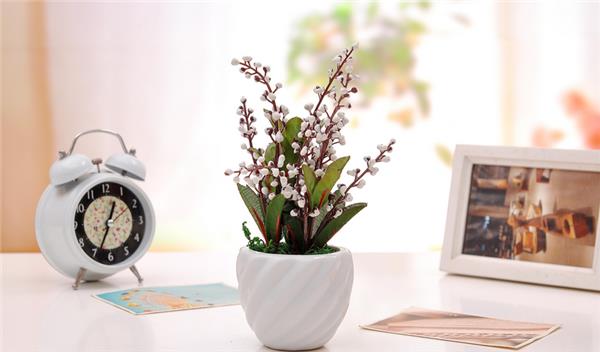
4. Bedroom
The main function of the bedroom is sleep and rest. About 1/3 of a person's life is spent sleeping, so the arrangement and decoration of the bedroom are also very important. The plant arrangement in the bedroom should revolve around the function of rest, and plant decoration should be used to create an atmosphere that can soothe the nerves, relieve fatigue, and make people relax. At the same time, because there is more furniture in the bedroom and the space seems crowded, it is best to choose small, light green plants. Matching bonsai should also not have bright colors or peculiar shapes. Asparagus fern (Asparagus setaceus), Swiss cheese plant (Monstera deliciosa), and ferns can be placed on the desk or flower stand. If space permits, plants with neat forms can also be placed on the floor, such as heartleaf philodendron (Philodendron hederaceum), Brazilian iron (Dracaena fragrans), and umbrella tree (Schefflera arboricola). In addition, plants can also be selected according to the age and personality of the occupants.
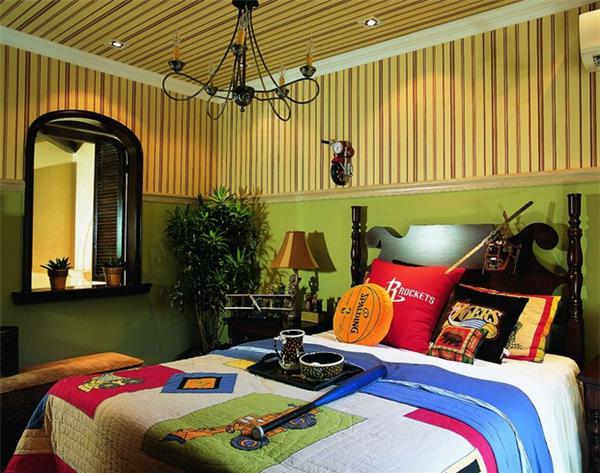
5. Dining room
The dining room is a place for family members or guests to dine or gather. When decorating, the theme should be sweetness and cleanliness, and indoor foliage plants with bright colors can be appropriately placed. At the same time, fully consider saving space, mainly using three-dimensional decoration; in principle, the selected plants should have small forms. For example, several small and exquisite, emerald-green indoor foliage plants can be displayed on a multi-tiered flower stand (such as ornamental pineapple, baby rubber plant (Peperomia obtusifolia), Swiss cheese plant (Monstera deliciosa), lily grass, peacock plant (Calathea makoyana), asparagus fern (Asparagus setaceus), and clearweed (Pilea cadierei) are all fine), or an indoor foliage plant with a clear form such as golden pothos (Epipremnum aureum), Malabar chestnut (Pachira aquatica), or Dutch iron (Yucca) can be placed in the corner of the wall). In this way, people can feel invigorated and their appetite can be increased.
The above is knowledge about growing flowers at home. I hope it can help you.
Indoor foliage plants with bright colors can be appropriately placed. At the same time, fully consider saving space, mainly using three-dimensional decoration; in principle, the selected plants should have small forms. For example, several small and exquisite, emerald-green indoor foliage plants can be displayed on a multi-tiered flower stand (such as ornamental pineapple, baby rubber plant (Peperomia obtusifolia), Swiss cheese plant (Monstera deliciosa), lily grass, peacock plant (Calathea makoyana), asparagus fern (Asparagus setaceus), and clearweed (Pilea cadierei) are all fine), or an indoor foliage plant with a clear form such as golden pothos (Epipremnum aureum), Malabar chestnut (Pachira aquatica), or Dutch iron (Yucca) can be placed in the corner of the wall). In this way, people can feel invigorated and their appetite can be increased.The above is knowledge about growing flowers at home. I hope it can help you.