How to grow heavenly bamboo (Nandina domestica)? A guide to its cultivation methods
In ancient books, Nandina domestica was called "jade coral", which shows just how beautiful its appearance is. Its leaves are elegant and graceful in many forms, making it a top choice for home plants. Now, let us take a look.
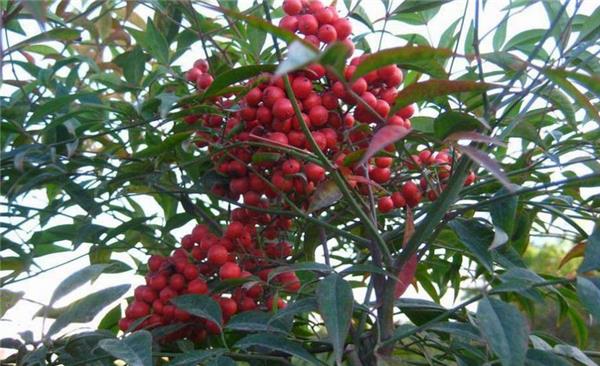
I. An introduction to Nandina domestica
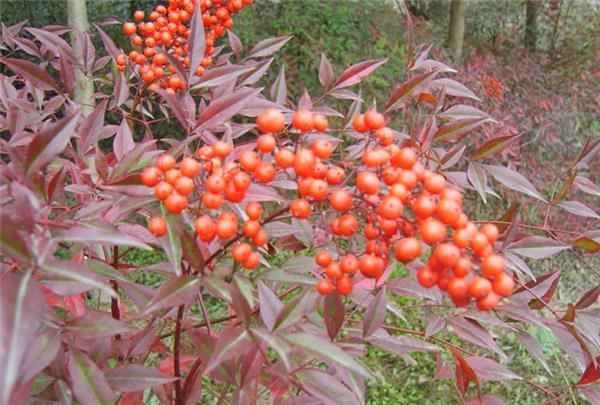
Nandina domestica is an evergreen shrub of the genus Nandina in the family Berberidaceae. It is also known as red loquat fruit, heavenly bamboo and orchid bamboo. Common cultivated varieties include the white-fruited Nandina domestica, whose berries ripen white; the silky Nandina domestica, whose leaves are as fine as silk; the purple-fruited Nandina domestica, whose fruit turns light purple when ripe; and the round-leaved Nandina domestica, whose leaves are round and glossy. Because of its superior, elegant form, it is often used to make bonsai or potted plants to decorate windowsills, entrance halls, conference venues and so on.
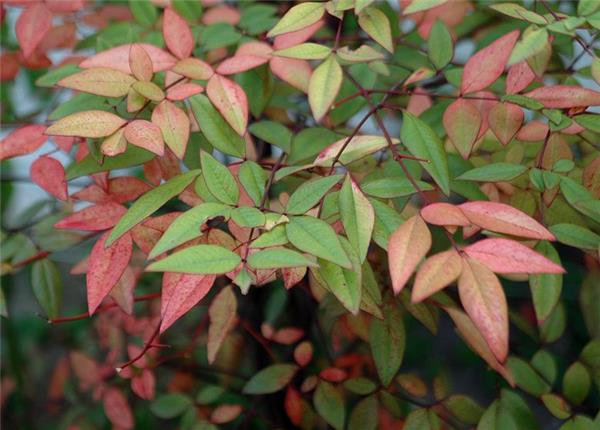
II. The cultural background of Nandina domestica
The stems of Nandina domestica stand tall like bamboo, and its feathery leaves spread out gracefully and beautifully. In autumn and winter they turn red, exceptionally brilliant, and the spicate fruit clusters are laden with red berries, dazzlingly bright. In the Song Dynasty, Yang Xunzhai wrote in a poem: "Flowers bloom after the summer rain, forming red berries even lighter and rounder; who in this world can cure the heat and vexation? Only a light fragrance purifies the karmic bonds." This describes the small white flowers blooming after a summer rain, with lovely little round berries covering the branches, making people forget the scorching summer heat; the delicate fragrance of the small flowers dispels worries and brings joy.
III. Cultivation techniques for Nandina domestica
Bonsai pruning
Nandina domestica is an evergreen shrub. It mostly grows beside moist gullies, under open forests or in thickets, and is an indicator plant of calcareous soil. It likes a warm, humid and well-ventilated semi-shady environment. It is relatively cold-tolerant. It can tolerate slightly alkaline soil. Its flowering period is from May to July. It grows wild in open forests and thickets, and is also often planted in courtyards. It likes a warm and humid climate, and is neither cold-tolerant nor drought-tolerant. It likes light and tolerates shade; under strong light its leaves turn red. It is suitable for growing in sandy loam rich in humus. As early as the Ming and Qing dynasties, Nandina domestica was listed as a garden plant for classical courtyards, and later it was also introduced into bonsai, where it was deeply loved in bonsai circles. However, this evergreen upright shrub has a tall trunk and few branches, and grows extremely vigorously in spring, making its shape difficult to control, which brings considerable disadvantages to bonsai styling.
1. Shortening. In late winter and early spring, take the collected raw stumps and, according to the design requirements, select latent bud points of moderate height and shorten them. Let them grow freely in the first year; in the same period of the second year, most of the previous year's branch tips can be cut off, leaving only one or two branches at the lowest point, so that new buds can sprout from the branch axils. Thereafter, follow this method every year to avoid the trunk growing taller year by year. This practice is also beneficial for the fruiting of heavenly bamboo.
2. Needle pricking. During the spring budding period, when new buds grow to 2 cm long, pierce the stem base of the bud with a needle; each time the new bud grows 1 cm, prick once with a needle. As the bud diameter becomes thicker, increase the number of needle pricks to two to four times. In this way, the growth of new buds can be stopped and the trunk or top can be prompted to sprout again. By continuously repeating this method, new buds will keep sprouting, which can solve the problem of few branches on the trunk, shorten the length of the branches, and meet the requirements of styling and shape control. Stop before heavenly bamboo blooms in June. During this period, remove clustered heavenly bamboo seedlings in time.
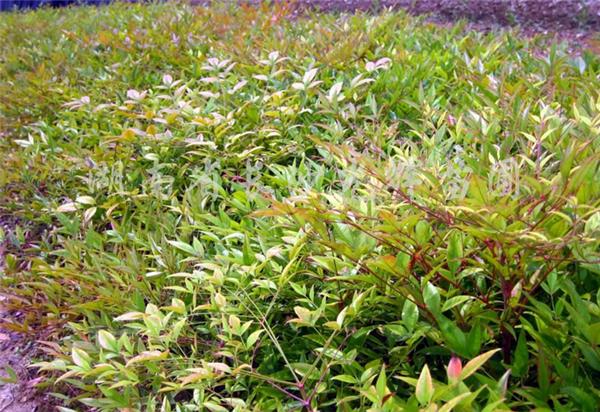
3. Care. To ensure that the shaping measures are effective, the care and management of heavenly bamboo must be done properly. In spring, the sprouting of heavenly bamboo requires sufficient light and a humid environment, so shading is not necessary; after July, it needs to be placed in a cool, shaded place, and brought out again after the Start of Autumn; in winter, move it indoors, and keep the potting soil slightly dry so it can overwinter. As for fertilisation, from February onward, apply once or twice a month, and stop in July; use cake fertiliser and bone meal fertiliser alternately, and do not apply too much or too concentrated. At the end of May, potassium dihydrogen phosphate can be sprayed once. The implementation of the above methods requires overall consideration. This method is suitable for the middle and lower reaches of the Yangtze River.
The above is the knowledge about Nandina domestica. I hope it can help you.