What is the Yimi flower? Let us take you through the cultural background of a splendid miracle
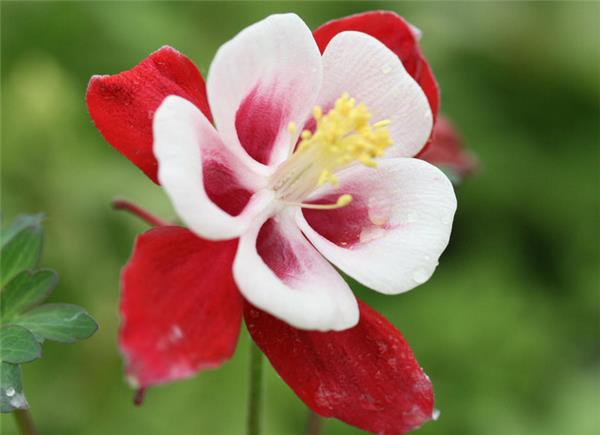
The Yimi flower grows on the Gobi Desert of Africa and is a peculiar flower. Each Yimi flower has four petals, one color per petal - red, yellow, blue and white - strikingly delicate and gorgeous. Below, let us look at some knowledge about the Yimi flower.
I. Introduction to the Yimi flower
The Yimi flower's blooming period is very short, only two days. After two days it will wither along with the mother plant; blooming means the end of its life. The name Yimi comes from the fact that among the tribes of the African desert, people call this little flower yimi, which means tenacious and sacred. Transliterated, it gives the lovely name Yimi. The Yimi flower grows in the desert regions of Africa, unknown and unnoticed, and few people have ever paid attention to it. Many visitors think it is merely a blade of grass. But it will suddenly burst into beautiful bloom one morning. That is an incomparably gorgeous flower. Its petals are lotus-leaf shaped, competing in splendor with the poisonous sun above the African land. But its blooming period is very short, only 48 hours. After 48 hours it will wither; blooming means the end of its life.
II. The cultural background of the Yimi flower
The flower of legend
On the vast Gobi Desert of Africa, it needs five years to take root, in exchange for blooming in the sixth year. The little flower has four petals, each a different color - red, white, yellow and blue - and this little Yimi flower's blooming period is only two days. After two days, both flower and stem wither together, fading away. The Yimi flower originated in Egypt, and its meaning symbolizes peace, a holy flower. The female flower has one golden-yellow stamen, and the male flower's stamen is blood-red. It is said that when the Egyptians sacrificed to the sun god, the priest had to place the stamens of a male flower and a female flower that took ten years to grow on the sacrificial altar, and strike the pharaoh's scepter three times. The Yimi flower has not yet been confirmed as discovered by archaeologists, yet Yimi flowers carved on ornate headdresses and vessels have been found in many Egyptian tombs. Ancient texts record that Anubis once helped a ghost child return to the yang world because the child held a Yimi flower. So the little Yimi flower gradually came to be praised by people as a mysterious and beautiful aspiration, used to entrust the dreams they feel are distant. It is also compared to an embodiment of the gods' grace upon the earth. There is another kind of little Yimi flower that grows on the Gobi Desert of Africa. The flower has four petals, each showing a color of its own: red, white and yellow. On the Gobi Desert, only plants with massive root systems can grow well, yet its root is only one, winding and coiling deep into the ground. It needs to spend five years completing the interweaving of its roots and stems, then accumulate nutrients bit by bit, and only in the spring of the sixth year does it put forth green and burst into verdure on the surface, blooming a small four-colored flower. But what makes people deeply lament is that this little Yimi flower, so extremely difficult to grow, does not have a long blooming period; after merely two days of bloom, it fades away together with the mother plant.
III. The flower language of the Yimi flower
The flower language of the Yimi flower: love that vanishes in a flash, a moment of splendor, miracles.
That fleeting love and bond is the message uniquely conveyed by the Yimi flower. Just as in the legendary story of the Yimi flower, as soon as the Yimi flower spirit reaches her own kingdom, she must erase her love for the king - this is because of the Yimi flower's flower language! It is precisely because the rose's flower language is eternal passionate love that the king, upon reaching the kingdom, forgets his love for the Yimi flower spirit and deeply loves the rose spirit instead. But whenever the Yimi flower blooms, the two of them become mortals and come to the human world, growing up loving each other. Whenever the Yimi flower fades, the rose spirit comes to the human world to welcome them. The bond of the Yimi flower thus becomes a sentiment hard to let go of.
The above is the knowledge about the Yimi flower; we hope it can help you.