Introduction to the senecio and how to grow it, keeping one at home is like having a sika deer
The senecio is an ornamental plant. Its potted form can be placed beside a TV or computer; it can absorb radiation, and it can also be planted indoors to absorb substances such as formaldehyde and purify the air. Now let us take a look at what we know about the senecio.
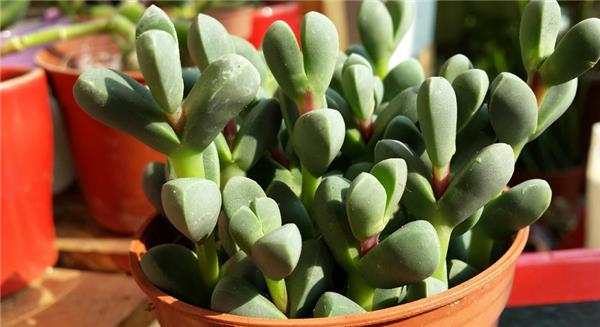
I. Introduction to the senecio
Senecio, also known as "xunboju". A succulent plant (succulent plant) of the family Aizoaceae, genus Senecio. It is native to South Africa. It likes a warm, dry environment with plenty of sunlight. It fears cold, tolerates drought, and fears high temperatures. It requires fertile, loose sandy loam. In winter the temperature should not be lower than 15°C. Its leaf shape and leaf color are rather attractive, giving it a certain ornamental value; it likes a warm, dry environment with plenty of sunlight. It is not tolerant of damage, tolerates drought, and fears high temperatures. It requires fertile, loose sandy loam. In winter the temperature should not be lower than 15°C.
II. Morphological characteristics of the senecio
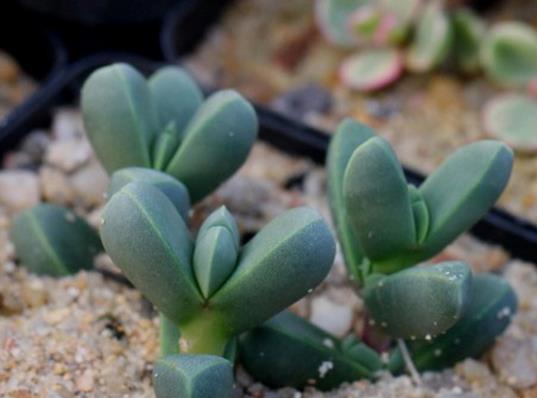
The senecio plant is not tall; it is a perennial evergreen succulent herbaceous plant, often subshrub-like, with many branches that are mostly prostrate. The leaves are fleshy and have three ridges, which is very distinctive. The senecio blooms in winter, with colors such as white, red and light purple. Common varieties are divided into two types, long-leaved and short-leaved; those that bloom in summer are all yellow.

III. Ecological habits of the senecio
The senecio likes a warm, dry environment with plenty of sunlight; it is not cold-tolerant, tolerates drought, and fears high temperatures. In summer, take care to provide shade, otherwise the surface tends to wrinkle. It requires fertile, loose sandy loam. In winter the temperature should not be lower than 15°C. The senecio can tolerate a low temperature of minus 3 degrees when the potting soil is dry. The soil can be fertile, loose sandy loam. Kite's mix is cinder mixed with peat, with granular river sand spread on the soil surface. When potting, you can water or keep the soil slightly moist; let it root in a cool, ventilated place without worrying about it. Give a little water only when the potting soil is very dry. Before rooting, the leaves will wither and shrink, and the dehydration is severe, but there is no need to worry that it will die; being a bit dry does not matter, and the wrinkled plant will root very well. Once you see signs of growth, you can gradually water it normally.
IV. Cultivation techniques for the senecio
1. Cultivation environment
For planting the senecio, it is best to choose a spot with slightly higher ground that does not easily accumulate water and faces the sun. The soil should be neutral to slightly alkaline, with a pH value not lower than 7. The soil quality should be loose, but not overly fertile. The planting hole should be determined according to the size of the root system, and the planting depth should preferably be 10 cm from the ground surface. It is best to plant with a soil ball, and water thoroughly after planting. Spray with new high-lipid film to isolate pests and diseases and improve the survival rate.
2. Cultivation
The senecio is repotted every spring, and the whole plant is pruned, with a mixed soil composed of fertile peat soil or leaf mold and coarse sand added, and a light spray of water is enough. During the spring growing period, keep the potting soil from drying out, and spray water on the ground often to maintain a certain air humidity. In summer, the senecio enters a semi-dormant state and can be kept in a semi-shaded place, keeping the potting soil from becoming too dry. After autumn, the senecio begins to grow again, and is fertilized once every half month. As winter approaches, stem and leaf growth enters a vigorous period and flowering begins. When the room temperature is kept at 15-20°C in winter, it flowers continuously. After 2-3 years of potting, it needs to be re-propagated by cuttings to renew it.
3. Key points of cultivation
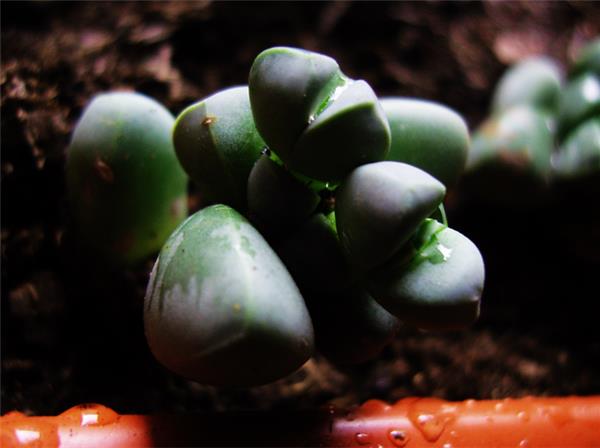
The suitable growing temperature for the senecio is 18-25 degrees, and in winter not lower than 10 degrees; for soil mixing, a mixed soil composed of fertile peat soil or leaf mold and coarse sand can generally be used; for watering, during the spring and autumn growing periods, keep the potting soil from drying out, and spray water on the ground often to maintain a certain air humidity. In summer, keep it in a semi-shaded place, keeping the potting soil from becoming too dry; during the growing period, fertilize generally once every half month; propagation methods commonly used are sowing and cuttings. For sowing, use indoor pot sowing in April-May. After sowing, it germinates in about 10 days. The seedlings have fine, shallow roots and need careful watering. Transplant the seedlings after 1 month. For cuttings, spring and autumn are the best times. Select plump stem nodes, cut them into 8-10 cm, and insert them in a sand bed. They can take root in about 15-20 days.
The above is what we know about the senecio. I hope it can help you.