Hoya odorata: Introduction and Growing Methods, Teaching You to Grow It to a Soft Pink State
Hoya odorata is a beautiful indoor foliage and flowering plant, suitable for pot cultivation. Its stems, leaves and flowers are all lovely, the flower colors are vivid, and the flower shapes are unusual, making it highly ornamental. The vines of the hoya hang down naturally, and when hung to decorate a hall or living room they look natural and elegant, which is why people love them; it is an indoor decorative vine. Let us now look at what there is to know about Hoya odorata.
I. Introduction to Hoya odorata
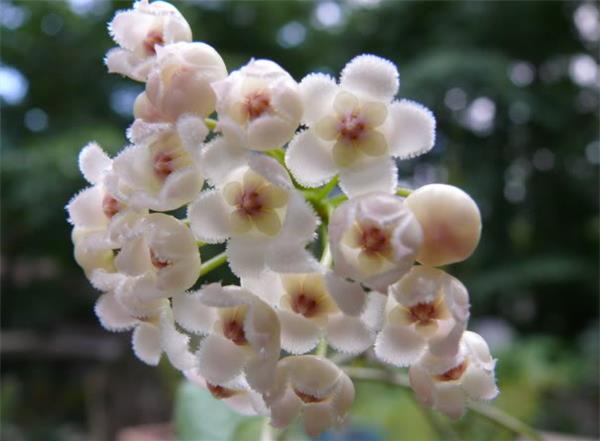
Hoya odorata is a perennial herbaceous plant of the genus Hoya in the family Apocynaceae (milkweed family). It is an epiphytic vine-like shrub with firm leaves. The inflorescence is a cyme, umbel-shaped, bearing many flowers; the calyx is short, the corolla fleshy and wheel-shaped, with the lobes arranged valvately in bud and flat or reflexed after opening; the corona is borne on the back of the stamens and spreads out in a star shape, the anthers are pressed together on the stigma, there is 1 pollinium per anther sac, upright, oblong, with a transparent membrane at the margin; the stigma is vertically flattened. The follicles are slender, tapering to a point at the tip, smooth; the seeds have white silky hairs at the tip, and it flowers from September to December.
II. Growing Methods for Hoya odorata
1. Soil
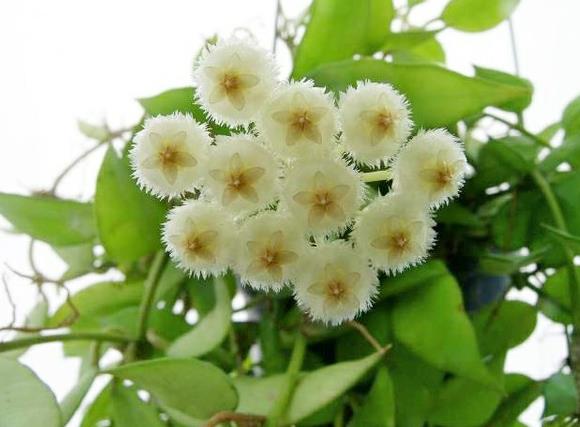
For Hoya odorata you can choose leaf mold for growing, and it can be mixed with garden soil and coarse sand; you just need to ensure the soil is fertile and loose. At the same time, before planting, enough base fertilizer can be placed in.
2. Sunlight
Hoya odorata loves diffused light and likes a semi-shaded environment; it cannot take direct sunlight. In summer you must provide sun protection for the hoya, and you can place it in an area with plenty of diffused light, which helps its growth and flowering. In winter the temperature can be kept above 1-5 degrees Celsius.
3. Water
Hoya odorata loves a high-humidity environment, but waterlogging must not be allowed to occur, otherwise it will cause root rot. Normally you can use a spray to moisten the surrounding environment for humidity. If it is during the high temperatures of summer, ensure it gets appropriate water, and in autumn and winter you can reduce watering appropriately.
4. Fertilizing
Hoya odorata is fairly suited to long-lasting fertilizer, so when potting you can apply enough base fertilizer, and during its growing season you can apply dilute fertilizer water once or twice a month. In autumn and winter you can reduce fertilizing.
5. Flowering Period Management
Before the flowering period, you can apply some liquid fertilizer. At the same time, the hoya needs 3-5 hours of light a day to flower, so when it is blooming you must not move the pot at will. Its flowering period is generally about 10 days, after which the flowers will drop off on their own and then new flowers will grow again, continuing until mid-October.
6. Points to Note
(1) The soil must be kept loose and airy, otherwise root rot will occur.
(2) Watering should be appropriate, and at the same time appropriate humidity in the air should be maintained.
(3) When planting for the first time, prepare suitable base fertilizer; if the base fertilizer is insufficient, the plant will show a state of reverse growth.
(4) In autumn and winter you can reduce fertilizing.
(5) Hoya odorata cannot take direct sunlight, so sun protection measures must be provided, but it very much loves receiving diffused light, and 4-5 hours of light a day.
III. The Roles and Uses of Hoya odorata
1. Ornamental Value
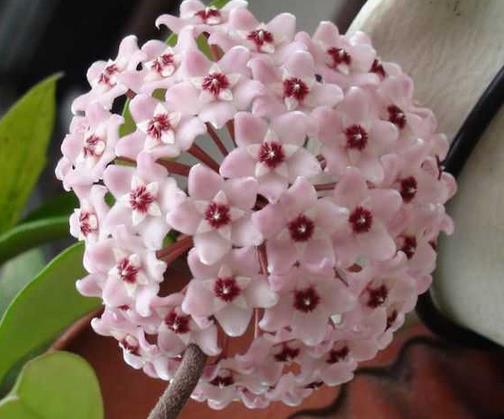
Because of its unusual leaf shapes, its flowers like umbels or hydrangea balls, and its rich colors, Hoya odorata has high ornamental value. In horticulture the hoya is a very ideal ornamental plant; it is easy to care for at home, and can also be used as an independent greenery in garden landscapes, increasing the richness of the landscape. Hoya odorata does not demand much light, and can tolerate shade as well as a certain amount of direct sunlight. The leaves of Hoya odorata are unusual in shape; besides ordinary oval leaves there are also heart-shaped leaves, round leaves and so on. Under sunlight or when there is a temperature difference, the leaves of some hoyas take on rich colors such as orange-red and red, the young leaves are pink, or the edges are white with dark green in the middle, and so on. The leaves of variegated hoyas are brightly colored and grow in opposite pairs, shaped like dancing butterflies, often curling on the stems and vines, unusually beautiful and breathtaking.
2. Decorative Role
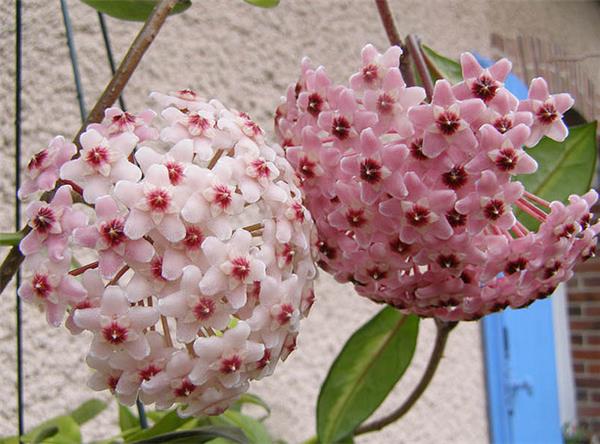
Hoya odorata is suitable both for climbing and for hanging; placed indoors it adds greatly to elegance and tranquility, and it is an ideal decorative plant. The hoya is a favorite flower of households and is widely cultivated indoors. Some hoya enthusiasts have even set up hoya associations to discuss and research the cultivation and care of hoyas, the collection of germplasm resources and so on; for example, the hoya association in Thailand, China has promoted the industrialized development of hoyas in Thailand.
The above is what there is to know about Hoya odorata; I hope it can help you.
The above is what there is to know about Hoya odorata; I hope it can help you.