What causes yellowing leaves on gardenia?
Gardenia is a flower that everyone is fairly familiar with, and people love growing it at home, so do you know what causes its leaves to turn yellow? Let's take a look together!
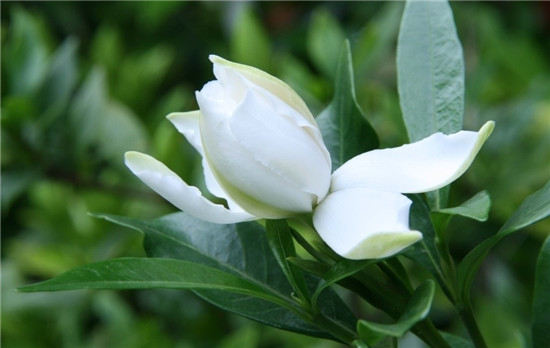
The gardenia leaf is shaped like a rabbit's ear, simple, opposite or in whorls of three, with a glossy surface and entire margins. The flower usually grows singly at the tip of the branch or in the leaf axil, white with a rich fragrance, and a salverform corolla on a long tube; it was formerly called "nizi flower," and later "ni" was written as "zhi." Gardenia is an indicator plant for acidic soil, so whether the soil environment is slightly acidic determines how well the gardenia grows. The growing medium used for cultivation is best a slightly acidic sandy loam red soil mixed with leaf mold at a ratio of 7:3, and it is best to keep the soil pH between 4.0 and 6.5. This is the basic condition for avoiding yellow leaves on gardenia, and also a good safeguard.
In addition, the yellowing of gardenia leaves is divided into six situations: water yellowing, drought yellowing, scorch yellowing, light-deficiency yellowing, fertilizer yellowing, and nutrient-deficiency yellowing. First let's introduce water yellowing and drought yellowing. Water yellowing shows as young leaves turning dull yellow without gloss, while old leaves show no obvious change, and the stems themselves are thin and yellow-green, with new shoots never growing; this phenomenon indicates overwatering, and the solution at this point is to take the plant out of the pot, place it in a ventilated, shady spot, wait for the root ball to dry, and then put it back in the pot. Drought yellowing shows as the leaf tips or edges drying out, with old leaves withering, yellowing and dropping from the bottom upward, but new leaves growing fairly normally; at this point you just need to make sure to water thoroughly and deeply.
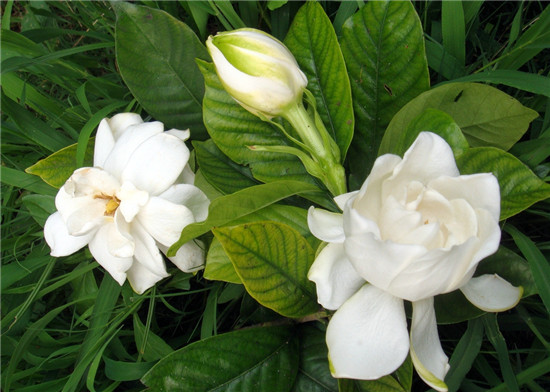
Gardenia grows the same in all four seasons, with evergreen leaves, and when it blooms it is fragrant and elegant, with white flowers that look especially fresh and lovely, making it very appealing. It is often grown in pots in courtyards, on balconies and other places, and it has strong environmental adaptability, growing well in all these places, with strong decorative and ornamental effect. Below I will describe how to grow gardenia based on its various characteristics.
First, grow it in acidic soil. Gardenia needs diffused light, so it likes acidic soil. If the soil is alkaline, the gardenia will not be able to absorb iron well, which greatly affects the formation of chlorophyll and further causes the branches to wither and even die. So its soil must be loose, fertile, acidic soil, and you can also add some substances with this effect to it.
Second, place it in a shady spot. Gardenia must never be placed in the blazing sun, otherwise the leaves will wither and yellow, but that does not mean putting it in full shade, because it does need some light; it is best to place it where it keeps 60% light daily. Also, after April arrives, fertilize twice a month.
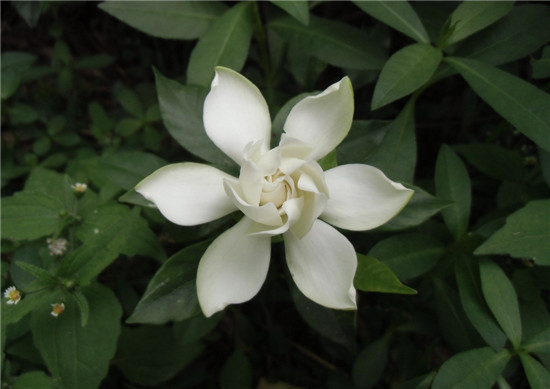
Third, air humidity. Gardenia likes moisture, so the air must not be too dry. According to expert statistics, if the air humidity is below 70%, it will affect the normal opening of the flowers, but if it is too humid, it will cause root and stem rot and yellow leaves. So besides normal watering, you should also frequently spray clean water nearby. Another point to pay close attention to is that you must not water too much, otherwise it will also affect growth. So how should gardenia be watered? When you see the soil is dry, tap the flowerpot with your hand; if there is a hollow sound, it needs watering, and stop when water starts leaking from the bottom of the pot. The water used is best mixed with some egg or soybean milk, as this is more beneficial to growth.
Fourth, key points for fertilizing. Gardenia likes fertilizer, but you must not add too much fertilizer at one time; be sure to apply light fertilizer frequently, and never cut corners for convenience, otherwise the branches will become thick, the leaves large and deep green, and it will lose its own ornamental effect.
Fifth, temperature requirements. The growing temperature for gardenia must not be too low, because it likes warmth. Generally, the temperature during the growing season is best at 18 to 22 degrees, 5 to 10 degrees in winter, and if it falls below minus 10 degrees it will suffer cold damage, which northern regions need to pay special attention to.
Causes of Yellow Leaves on Gardenia
(1) Overwatering. If the potting soil stays too wet for a long time, it causes a lack of oxygen in the soil, making some fibrous roots rot, hindering normal respiration and the absorption of water and nutrients, and causing leaves to turn yellow and drop. After damage occurs, the young leaves first turn pale yellow, and then the old leaves gradually yellow as well. Watering should be controlled immediately, fertilizing paused, and the soil often loosened so that it is well aerated.
(2) Drought and dehydration. Missing watering when growing flowers, or watering only halfway for a long time (that is, wet on top and dry below), affects nutrient absorption and also easily causes the leaves to become dull and lusterless and to wilt and droop. First the lower old leaves age, and gradually wither, yellow and drop from bottom to top. At this point you need to water a small amount and spray water, so that it gradually recovers and then return to normal watering.
(3) Long-term lack of fertilizer. If nitrogen fertilizer has not been applied for a long time, or the pot and soil have not been changed, the soil lacks nitrogen and other nutrient elements, causing the branches and leaves to become thin and weak, and the leaves thin and yellow. You need to repot in time, change to fresh loose and fertile growing medium, and gradually apply more thin, well-rotted liquid fertilizer or compound flower fertilizer.
(4) Overfertilizing. Too much fertilizer will produce new leaves that are thick and fleshy, and mostly uneven, while old leaves dry at the tips, scorch yellow and drop. Fertilizing should be stopped immediately, watering increased so that the fertilizer flows out through the drainage hole at the bottom of the pot, or the plant should be repotted immediately, the root ball rinsed with water and then replanted in the pot.
(5) Hot, high temperatures. In summer, if flowers that prefer cool conditions (such as cyclamen, fuchsia, and wax begonia) are placed in a hot spot and exposed to direct strong light, it very easily causes the tips and edges of young leaves to scorch, or the leaves to yellow and drop. They need to be moved promptly to a well-ventilated, shady spot.
(6) Too much shade. If flowers that like sunlight are kept for a long time in a shaded spot or a place with insufficient light, the branches and leaves will grow leggy, the leaves will be thin and yellow, and they will not bloom or will bloom very little. Take care to move the pot to a sunny spot.
(7) Soil and water on the alkaline side. In most areas of the north, the soil and water contain more salt and alkali. When growing acid-loving flowers such as rhododendron, camellia, banana shrub, gardenia, orchid, Michelia alba, and osmanthus, because the soil lacks absorbable soluble iron and other elements, the leaves will gradually turn yellow. When planting, choose acidic soil, and during the growing period often water with alum fertilizer water.
(8) Too dense and poorly ventilated. If too much nitrogen fertilizer is applied, the branches and leaves grow too luxuriantly, and combined with a long period without pruning, the inner branches and leaves lack light, which easily causes leaves to yellow and drop. Fertilize reasonably and strengthen pruning so that air and light can penetrate.
The above is all the content I have summarized for you on the causes of yellowing leaves on gardenia. I hope this article can help you. Please also keep following us.
Pause fertilizing, and often loosen the soil so that it is well aerated.(2) Drought and dehydration. Missing watering when growing flowers, or watering only halfway for a long time (that is, wet on top and dry below), affects nutrient absorption and also easily causes the leaves to become dull and lusterless and to wilt and droop. First the lower old leaves age, and gradually wither, yellow and drop from bottom to top. At this point you need to water a small amount and spray water, so that it gradually recovers and then return to normal watering.
(3) Long-term lack of fertilizer. If nitrogen fertilizer has not been applied for a long time, or the pot and soil have not been changed, the soil lacks nitrogen and other nutrient elements, causing the branches and leaves to become thin and weak, and the leaves thin and yellow. You need to repot in time, change to fresh loose and fertile growing medium, and gradually apply more thin, well-rotted liquid fertilizer or compound flower fertilizer.
(4) Overfertilizing. Too much fertilizer will produce new leaves that are thick and fleshy, and mostly uneven, while old leaves dry at the tips, scorch yellow and drop. Fertilizing should be stopped immediately, watering increased so that the fertilizer flows out through the drainage hole at the bottom of the pot, or the plant should be repotted immediately, the root ball rinsed with water and then replanted in the pot.
(5) Hot, high temperatures. In summer, if flowers that prefer cool conditions (such as cyclamen, fuchsia, and wax begonia) are placed in a hot spot and exposed to direct strong light, it very easily causes the tips and edges of young leaves to scorch, or the leaves to yellow and drop. They need to be moved promptly to a well-ventilated, shady spot.
(6) Too much shade. If flowers that like sunlight are kept for a long time in a shaded spot or a place with insufficient light, the branches and leaves will grow leggy, the leaves will be thin and yellow, and they will not bloom or will bloom very little. Take care to move the pot to a sunny spot.
(7) Soil and water on the alkaline side. In most areas of the north, the soil and water contain more salt and alkali. When growing acid-loving flowers such as rhododendron, camellia, banana shrub, gardenia, orchid, Michelia alba, and osmanthus, because the soil lacks absorbable soluble iron and other elements, the leaves will gradually turn yellow. When planting, choose acidic soil, and during the growing period often water with alum fertilizer water.
(8) Too dense and poorly ventilated. If too much nitrogen fertilizer is applied, the branches and leaves grow too luxuriantly, and combined with a long period without pruning, the inner branches and leaves lack light, which easily causes leaves to yellow and drop. Fertilize reasonably and strengthen pruning so that air and light can penetrate.
The above is all the content I have summarized for you on the causes of yellowing leaves on gardenia. I hope this article can help you. Please also keep following us.