What legends are there about hyacinths? Let us learn about these flower stories
The hyacinth is native to southern Europe and Asia Minor, and is cultivated most extensively in the Netherlands. What is the flower language of the hyacinth, and does the hyacinth have any beautiful legends? Let us go and take a look!
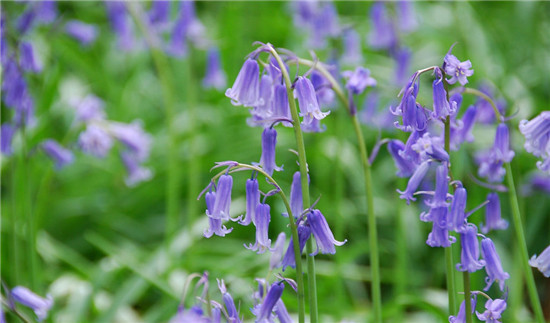
The hyacinth is also called the Dutch daffodil or the colorful daffodil. It prefers warm, humid winters and cool, slightly dry summers, and environments with ample sunlight or partial shade. It likes fertilizer and prefers fertile, well-drained sandy loam soil, and dislikes overly wet or heavy clay soil.
Hyacinth bulbs have the habit of summer dormancy, rooting in autumn and winter, sprouting new shoots in early spring, blooming in March, and the plant withering in early June.
During the growth process of the hyacinth, the root system grows best when the bulb is at a low temperature of 2-6°C. The suitable temperature for bud break is 5-10°C, the suitable temperature for leaf growth is 5-12°C, and the period from bud appearance to flowering is most favorable at 15-18°C. The storage temperature for bulbs is 20-28°C, with 25°C being the most ideal for flower bud differentiation. It can tolerate short periods of frost.
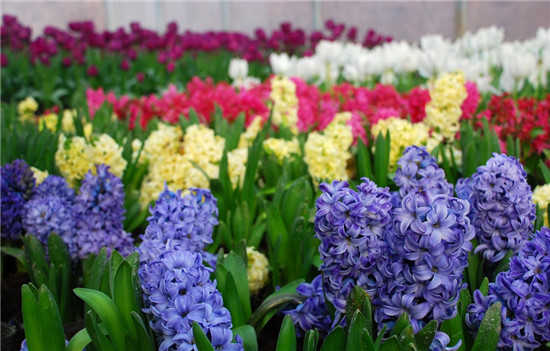
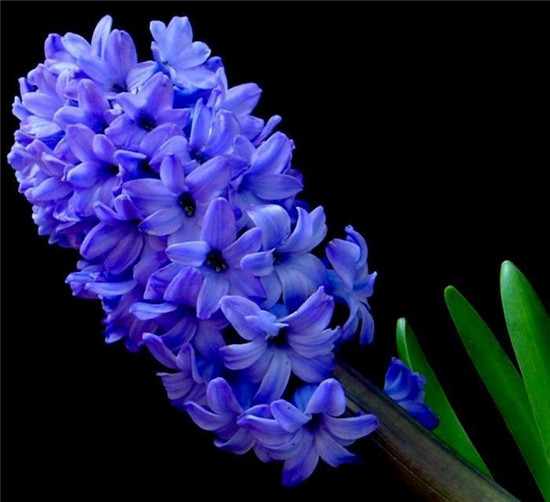
The hyacinth is a perennial herbaceous plant. The bulb is ovate with a membranous outer skin. There are 4-8 leaves, narrowly lanceolate, fleshy, with a groove on the surface, green and glossy. The flower stem is fleshy, slightly taller than the leaves, with a terminal raceme bearing 5-20 flowers, oriented horizontally or drooping, funnel-shaped, with a long perianth tube and a swollen base, and recurved oblong lobes. The flowers come in colors such as purple, white, red, yellow, pink and blue, and there are also varieties such as double-flowered, large-flowered, early-flowering and polyploid.
The legend of the hyacinth
In ancient Greek mythology there is such a legend: Hyacinthus, the grandson of Zeus, was the Greek god of plants, a handsome youth. Both the sun god Apollo and the west wind god Zephyrus were very close to him, yet Hyacinthus was only close to Apollo. They went fishing and hunting together and engaged in various sports, and the west wind god was extremely jealous.
Once, Apollo and Hyacinthus were throwing the discus together. Apollo threw first, and Hyacinthus waited to one side. The west wind god took the opportunity to alter the discus's trajectory and blew it toward Hyacinthus, striking his forehead. Apollo tried every possible means to save Hyacinthus's life, but to no avail. From the blood-soaked earth grew a hyacinth, and the sun god named it Hyacinthus in memory of his friend.
The flower language of the hyacinth
The hyacinth generally blooms around March to April each year, with the flowering period usually in March to April. After the hyacinth's flowering period is over, if it is to bloom again, the previous dying flowers need to be cut off. Therefore, the hyacinth also represents reborn love, forgetting past sorrows and beginning a brand-new love. The hyacinth is a token of fidelity between lovers, and the flower language of the hyacinth is also "firmness and gazing," which perhaps is the annotation of eternal love.
Europeans have a special feeling for the hyacinth. Venus, the goddess of beauty and love, most loved to gather the dew that clung to hyacinth petals, making her skin more beautiful and smooth. In the United Kingdom, the blue hyacinth has always been an indispensable part of a bride's bouquet or corsage at weddings, representing the purity of the newlyweds and the hope of bringing happiness. The hyacinth also symbolizes "eternal remembrance." Westerners often carve hyacinth patterns on the tombstones of their loved ones to show "everlasting remembrance."
The above is all the content I have summarized for you on what legends there are about hyacinths. I hope this article can help everyone. Please also continue to follow us.