What are the planting methods for large-leaf gardenia?
Large-leaf gardenia is also a variety of gardenia. Do you know about large-leaf gardenia? Want to learn its planting methods? Let's find out together!
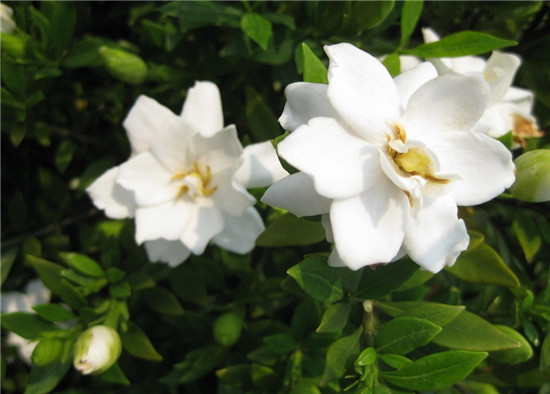
Morphological characteristics of large-leaf gardenia
Evergreen shrub. Branches clustered, trunk gray, twigs green. Leaves large, opposite or in whorls of three, 7-14 cm long, 2-5 cm wide, with short stalks, leathery, obovate or oblong-obovate, apex acuminate, dark green, glossy, stipules sheath-like. In June it bears large white flowers, the largest reaching 10 cm. Solitary at branch tips or leaf axils, about 7 cm in diameter, white, extremely fragrant; calyx lobes 6, linear; corolla lobes broadly oblanceolate; stamens 6, anthers linear; ovary inferior, 1-loculed, style thick, stigma club-shaped. Fruit obovate or long elliptic, 3-7 cm long, 1-1.5 cm in diameter, yellow, with prominent longitudinal ridges, thick pericarp, persistent calyx. Double-petaled, with rich fragrance, short stalk. When large-leaf gardenia is cared for in the north, conditions such as climate and soil are often unsuitable for its growth and development, causing its leaves to turn yellow or even the whole plant to die.
Key points for cultivating large-leaf gardenia
Large-leaf gardenia has relatively strict soil requirements and grows well in acidic soil with a pH of 5-6, while soil in the north is generally neutral or alkaline. In such soil, due to the hydrolysis of iron salts, water-insoluble ferric hydroxide is formed, which cannot be absorbed by the plant, causing severe iron deficiency in the plant. Although iron is not a component of chlorophyll, it is a necessary condition for chlorophyll formation, so iron deficiency is equivalent to blocking chlorophyll synthesis, thereby preventing photosynthesis from proceeding normally, which is the main cause of plant starvation and death.
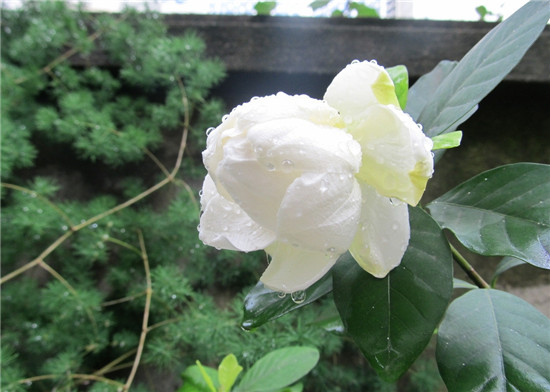
In addition, iron is also a component of certain oxidase enzymes and plays an important role in respiration. If large-leaf gardenia is deficient in iron, it will affect the plant's normal physiological activities. To solve iron deficiency, watering with "alum fertilizer water" can achieve good results. In addition, a small amount of black alum powder can also be mixed into the potting soil, at 0.5% of the weight of the potting soil. During the growing season, watering once every 10-15 days with 0.5%-1.0% black alum water can also ensure the gardenia's iron requirements, enabling it to grow and develop normally.
How to grow large-leaf gardenia
(1) Gardenia prefers acidic soil, while northern soil is mostly neutral or slightly alkaline, resulting in a lack of iron elements available for the plant to use in the soil. This is one of the main reasons for yellowing leaves. For this reason, fertile acidic culture soil should be used for growing gardenia. Generally, 4 parts leaf mold, 4 parts garden soil, and 2 parts sandy soil can be mixed. Then mix in 1-2 grams of sulfur powder per kilogram of culture soil. For watering gardenia, rainwater or fermented rice-washing water is best. During the growing period, water once every 10-15 days with 0.2% ferrous sulfate water or apply alum fertilizer water once every 10-15 days (the two can be alternated). This can not only prevent the soil from becoming alkaline, but also promptly supplement iron elements to the soil, thereby preventing leaves from turning yellow.
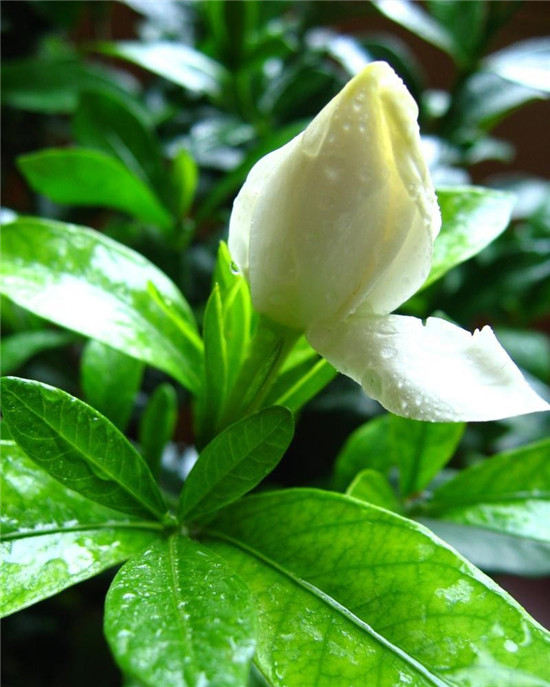
(2) Gardenia likes moisture. In addition to often keeping the potting soil moist, attention must also be paid to frequently increasing air humidity. This is because the northern climate differs from the south: northern springs are dry and often have dry winds, summers have high light intensity and hot weather, and winters are cold and dry. Therefore, in spring and summer, spray the leaf surfaces with clean water every morning and evening and also sprinkle water on the nearby ground to increase air humidity. In winter, watering should be reduced, but the branches and leaves still need to be sprayed and washed frequently to keep the leaf surfaces clean.
(3) Gardenia likes light, but fears strong direct sunlight. If exposed to the sun, the leaves will turn yellow, whiten, and even fall off. Therefore, in summer it must be placed under a shade shed or in a place with scattered light, allowing it to receive some sunlight in the morning and evening, so as to avoid yellowing of the leaves.
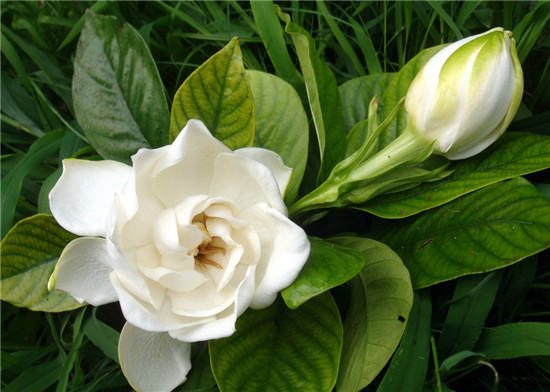
(4) Gardenia is not cold-tolerant, so attention should be paid to moving it indoors and outdoors at the appropriate time. Generally, it is moved indoors in mid-October and placed in a sunny place, with the room temperature kept at 10°C-12°C, which is suitable. The following spring, it should not be moved outdoors too early; usually late April is better. If the above four points can be achieved, gardenia can not only settle in the north, but also have green leaves and abundant flowers with a rich fragrance.
The above is the complete content of my summary on how to plant large-leaf gardenia and the planting methods for large-leaf gardenia. I hope this article can help everyone. Please also continue to follow us.