How to grow azaleas? A detailed guide to care methods
Azaleas are one of the most common flowering plants, and many friends who love azaleas want to know how to grow them. Let's take a look together!
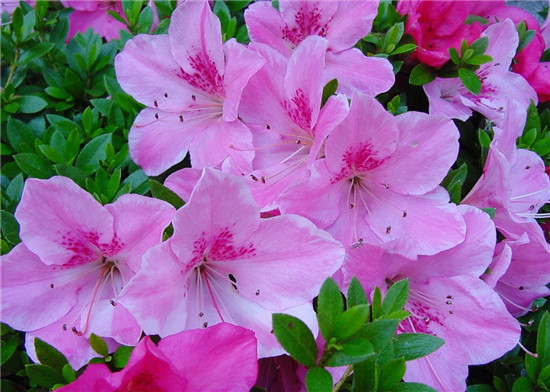
How to plant azaleas
Soil:
Generally, the care methods for plants and flowers cannot be separated from a good soil environment, and for azalea care methods, the soil environment is even more important. There are many ways to mix the growing medium for cultivating azaleas; although the cultivars differ, the following conditions are essential above all: loose, well-draining, well-aerated, acidic soil, rich in humus, and with sufficient base fertilizer.
Watering:
Everyone knows that watering is a very important task, and for azalea care methods, watering technique is very important. Because azalea roots are fine, when watering, be careful not to give too much, and of course not too little; just the right amount is best. Also, it is best to water in the morning and evening, which helps the azaleas absorb water well.
Fertilizing:
The azalea is a very dignified flower; it does not need too much fertilizer to grow, so when fertilizing, be careful not to apply too much. Too much fertilizer will make it hard for the azalea to absorb and it will die, while proper fertilizing is what allows the azalea to grow well and produce beautiful flowers.
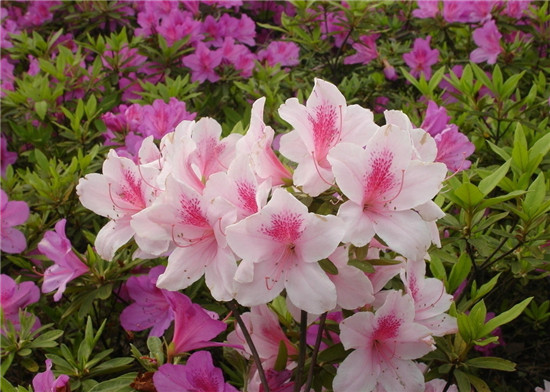
Sunlight:
Among azalea care methods, there is another very important and indispensable one: absorbing sunlight. For plants and flowers, promoting photosynthesis is very necessary. So the growth of azaleas cannot be separated from the shining of sunlight, but they should not be exposed to the sun all day either. Suitable sunlight can make azaleas produce even more beautiful and moving flowers.
Azalea maintenance
1. It likes a cool environment. It requires a shady, ventilated environment. In areas south of the Yellow River, from mid-April to early November, it can be kept outdoors in a shady, ventilated place. In summer, when the sunlight is strong and the temperature is high, it must be placed under a shade shed or in the shade of trees to create a semi-shady, cool growing environment; in winter, it should be kept in a greenhouse or indoors, with the temperature kept above 5°C.
2. Watering needs attention. Do not water if not dry; when watering, water thoroughly, and strictly avoid half-watering. This is the principle for watering azaleas. Because azaleas prefer acidic conditions, it is best to acidify the water with black alum before use. When watering, rainwater must be used; if tap water is used, the tap water must be left to stand in the sun before use, because azalea roots are relatively fine and weak, fearing both waterlogging and drought, so special attention must be paid to controlling the amount of water. Generally, in spring and autumn, water once every 2-3 days. In summer, growth is vigorous and water consumption is high, so water 1-2 times a day. Watering time should be from 8-10 in the morning and 4-6 in the afternoon. In the hot summer, it is even more unsuitable to water at noon; after the roots are stimulated by cold water, the plant will be harmed.
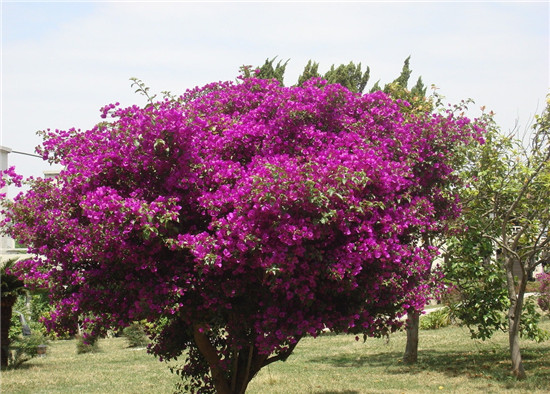
3. Requirements for fertilizing and potting soil. Azaleas like loose, highly permeable, well-draining acidic soil rich in humus. Generally, rotted cake fertilizer, fish meal, and similar materials are used after decomposition and diluted with water for irrigation. After being brought out of the room and before the flower buds open, apply a thin fertilizer once every 10 days at a concentration of 15%, for a total of 2-3 applications, to encourage old leaves to turn green and new roots to sprout. After the flowers fade, in order to encourage branch and leaf growth, fertilize 5-6 times from mid-May to early July. If it rains continuously, dry fertilizer may be applied. Before bringing it indoors, and before the azalea's growth is about to stop, fertilize 1-2 times.
Three types of problems encountered in the process of growing azaleas and their solutions:
The azaleas I have are all grown in an indoor environment in the north, with stable conditions, and the problems encountered are not too many. Now I will summarize them, hoping to help flower friends troubled by the same issues.

1. Lack of water. This problem is the most common and also the easiest to solve. When azaleas show wilting and leaf drop due to drought, they can quickly recover to health after sufficient watering.
2. Harm from hard water. If azaleas are watered with unacidified water for a long time, they will suffer chronic damage, grow worse and worse, and eventually die. Azaleas with this problem can recover after switching to acidified water, but it requires a slow process. Sometimes many new buds have already appeared and it feels as if they have recovered, but a few days later growth stops again, and after a while they continue to improve. After several rounds of this, they finally recover to health.
3. Root damage from soil quality. When azaleas drop leaves and show dehydration due to improper soil or the use of raw fertilizer, it is often a root problem and is very difficult to recover from. In this situation, it is best to give up and start over, which saves more time.
The above is all the content I have summarized for everyone on azalea care methods. I hope this article can help everyone. Please also continue to follow us.
It is often a root problem and is very difficult to recover from. In this situation, it is best to give up and start over, which saves more time.The above is all the content I have summarized for everyone on azalea care methods. I hope this article can help everyone. Please also continue to follow us.