Introduction to the Glory Bush and How to Grow It: Cultivating the Lovely Pink Beauty
The glory bush has an elegant plant form, with broad, bold gray-green leaves and drooping pink inflorescences. It is the most luxurious and beautiful of all the flowers in the Melastomataceae family. As a potted plant, the glory bush is best suited for display in hotels, halls, shopping mall display windows, and villa living rooms. Below, let us take a look at what there is to know about the glory bush.
I. Introduction to the Glory Bush
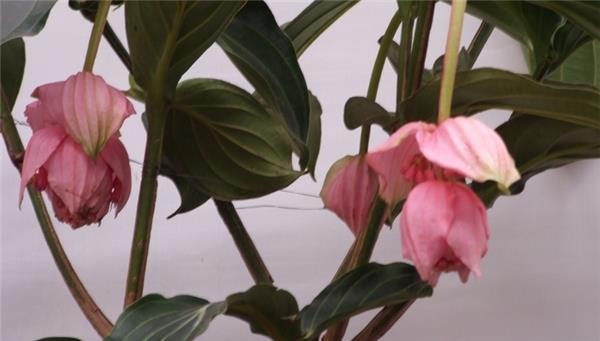
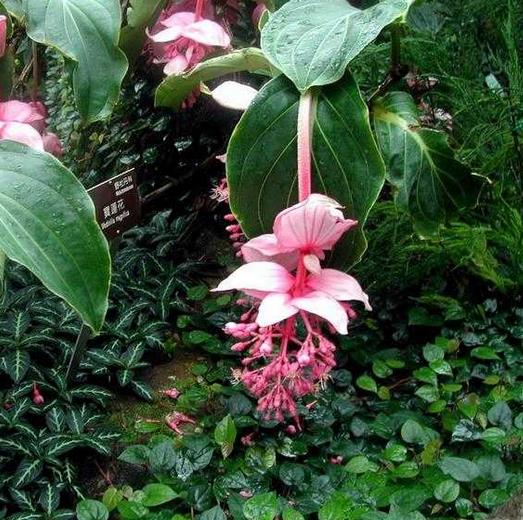
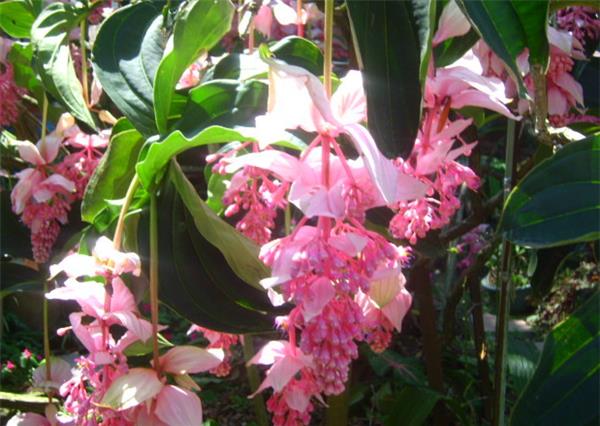
The glory bush, also known as pearl glory bush, originated in the Philippines. It prefers a hot, humid, and semi-shaded environment, is not cold-tolerant, and dislikes exposure to scorching sun. It requires fertile, loose leaf mold or peat soil, and the winter temperature should not fall below 16°C. The glory bush is an evergreen shrub native to the tropical rainforests of Southeast Asia. It grows 1.5 m to 2.5 m tall, and its stems have 4 angles or 4 wings. The simple leaves are opposite, with no petiole; the leaf blades are ovate to elliptic, entire, about 30 cm long and 18 cm wide. The leaf surface is green and glossy, and the main veins have distinct ivory-white depressions. The spike-like or paniculate inflorescences droop, with pink or pinkish-white involucral bracts outside the flowers, and the small flowers are about 2.5 cm in diameter. The fruit is spherical, with persistent sepals at the top. Its flowers, leaves, and fruit are all excellent for ornamental display, and it is suitable for large and medium-sized potted plants.
II. Cultivation Techniques for the Glory Bush
Repot every spring, remove the old soil, add fertile, well-drained leaf mold, and provide appropriate shade. During the growing season, keep the soil moist; when grown indoors in winter, increase light and reduce watering. During the flowering period from April to June, humidity should not be too high, otherwise it easily causes flower drop.
1. Potting or Transplanting
When potting small seedlings or repotting large plants that have been grown for several years, first place a 2-3 cm thick layer of coarse-grained substrate at the bottom of the pot as a drainage layer, then sprinkle a layer of fully decomposed organic fertilizer on top as a base fertilizer, about 1-2 cm thick, then cover with a thin layer of substrate about 1-2 cm thick, and then place the plant in, so as to separate the fertilizer from the root system and avoid burning the roots. After potting, water thoroughly once and keep it in a shaded environment for one week. When transplanting small seedlings, first dig the planting hole, sprinkle a layer of organic fertilizer at the bottom of the planting hole as bottom fertilizer (base fertilizer), about 4-6 cm thick, then cover with a layer of soil and place the seedling in, so as to separate the fertilizer from the root system and avoid burning the roots. After placing the seedling in, backfill the soil to cover the root system, firm the soil with your foot, and water thoroughly once.
2. Humidity Management
It likes a humid climate environment and requires the relative air humidity of the growing environment to be 70-80%. If the relative air humidity is too low, the lower leaves turn yellow and drop, and the upper leaves lose their luster.
3. Temperature Management
Because it originated in tropical regions and likes a hot, humid environment, it has very strict temperature requirements in winter. When the ambient temperature is below 10°C, growth stops, and it cannot overwinter safely when frost occurs.
4. In Summer:
(1) Strengthen air convection so that the heat inside the plant can be released;
(2) Place it in semi-shade, or provide it with 50% shade;
(3) Mist it appropriately, 2-3 times a day.
5. In Winter
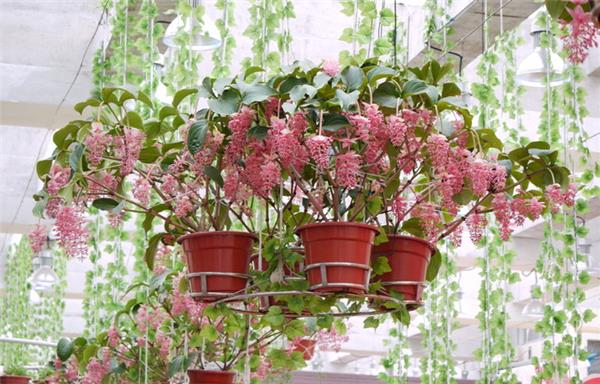
(1) Move it indoors to a place with bright light for care;
(2) Outdoors, it can be wrapped in plastic film to overwinter, but every two days at midday when the temperature is relatively high, the film should be opened to let it breathe;
6. Light Management
It likes a semi-shaded environment. In autumn, winter, and spring, it can be given plenty of sunlight, but in summer it needs more than 50% shade. When caring for it indoors, place it in a place with bright light as much as possible, such as a well-lit living room, bedroom, or study. After keeping it indoors for a period (about one month), move it outdoors to a shaded place (with insulation conditions in winter) for care for a period (about one month), and alternate back and forth in this way.
7. Fertilizer and Water Management
For potted plants, in addition to adding organic fertilizer when potting, appropriate fertilizer and water management should also be carried out during regular care.
The above is what there is to know about the glory bush. I hope it can help you.