How to grow Spathiphyllum? Plant introduction and cultivation methods for this plant with little white sails
Spathiphyllum stays green all year round, with pure white flowers that give a cool and comfortable feeling. In addition, it adapts extremely well to indoor environments, has few pests and diseases, and is simple to grow and manage, making it a very popular indoor potted flower. Below, let us take a look at what there is to know about Spathiphyllum.
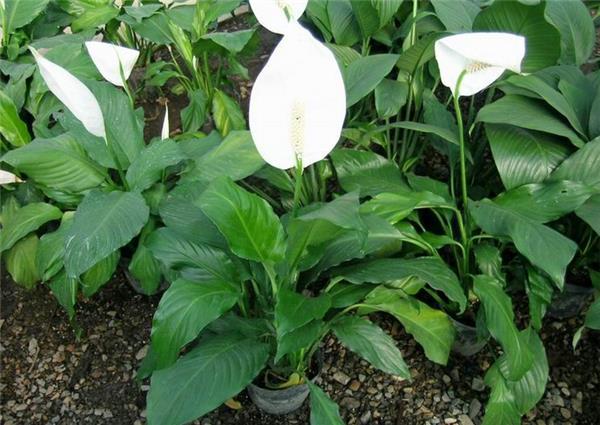
I. Introduction to Spathiphyllum
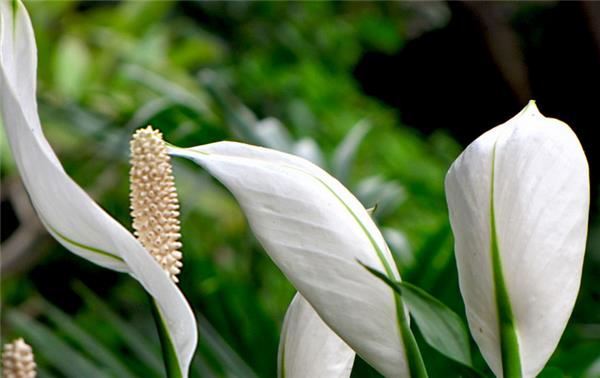
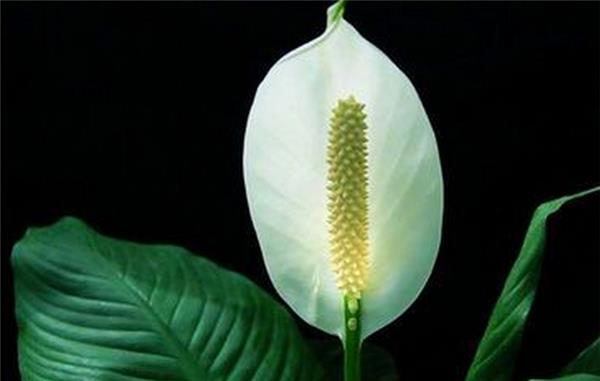
Spathiphyllum is a perennial evergreen herbaceous plant, a perennial evergreen herbaceous plant. The rhizome is short. The leaves are leathery, oblong-elliptic, with long pointed tips, 10-20 cm long, 5-9 cm wide, and the plant grows 70-120 cm tall. The suitable growing temperature for Spathiphyllum is 22-28°C. In summer, keep the potting soil moist and provide shade. In winter, the temperature should not be lower than 8°C. The stem of Spathiphyllum is relatively short and thick, with few tillers, and the plant height can reach more than 1 m, making it a large species in the peace lily series. The leaves are broad and oval, with thick petioles, and the leaf color is deep green and glossy. The spathe is huge, like a human palm, rising above the leaves, and the flower can last nearly a month from opening to withering; when it first opens, the flower color is pure white, then turns green, going from light to deep until it withers; the flowering period is late spring and early summer.
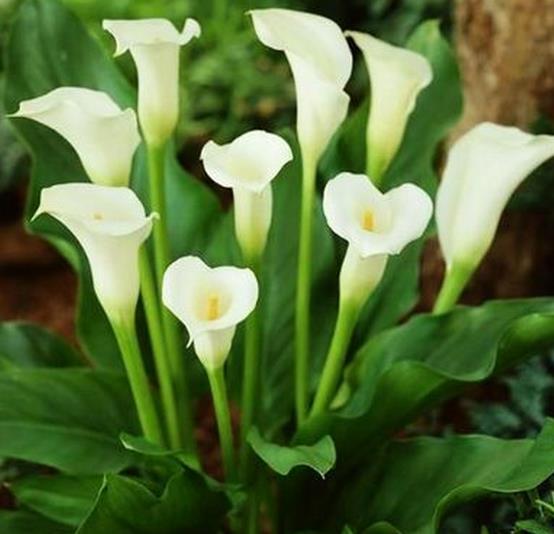
II. Cultivation techniques for Spathiphyllum
Key points for cultivation
1. Temperature
Spathiphyllum likes warmth, and the suitable growing temperature is 22-28 degrees. From April to September it is 24-30 degrees. From October to March of the following year it is 18-21°C. When the temperature is suitable, it can grow all year round. It is not cold tolerant, and the safe wintering temperature is 10. At low temperatures, plant growth is hindered and causes browning of the leaf edges and leaf tips, and in severe cases the aboveground parts scorch and wither.
2. Light
It likes a semi-shaded environment. When light is too strong, the leaf color becomes dull and loses its luster, and it can also cause scorching of the leaf tips and leaf edges. From May to September, shading should be carried out, blocking 60%-70% of sunlight. The peace lily has extremely strong shade tolerance and can grow under weak light of 200 lux, and can bloom when light is 500 lux. However, it should not be too shady either. When the light is too dim, the plant grows thin and weak, the leaves droop, the leaf color becomes pale, and it is not easy to bloom.
3. Watering
Spathiphyllum likes a moist soil environment and is not tolerant of drought. During the growing period, sufficient water should be supplied to keep the potting soil moist but not dry. However, it should not be too wet or waterlogged. When there is too much water, the leaves will bend and droop, the leaf color will turn yellow, and root rot may even occur. Watering should follow the principle of "alternating dry and wet, leaning toward moist," and watering should be controlled in winter. Prolonged low temperatures and damp potting soil easily cause root rot and yellowing leaves.
4. Environmental humidity
It likes a humid environment. When the air is dry, newly grown leaves will become smaller and yellow, and the leaf tips and leaf edges will scorch. Water should often be sprayed on the leaves and the surrounding area to keep the environment humid, and the relative air humidity should be maintained above 50%.
5. Fertilization
The plant grows quickly and has a large amount of tillering, so it needs relatively more nutrients to grow well. During the growing period, a fertilizer combining nitrogen, phosphorus, and potassium should be applied once every 1-2 weeks to promote plant growth and flowering. Stop fertilizing in winter.
6. Repotting
Because it grows quickly, repot once every 1-2 years, and this can be done before sprouting in spring. The potting soil should be loose and well drained, and heavy clay soil should not be used for planting. The growing medium can be prepared from materials such as leaf mold, garden soil, peat soil, coarse sand, or rice hull ash.
Cultivation techniques
1. Propagation and seedling selection
Virus-free test-tube plantlets propagated by bioengineering technology should be selected. The plants grow uniformly, the seedlings are sturdy, and the root systems are well developed. After planting, the growth rate is fast, and large quantities of high-quality commercial flowers can be produced.
2. Preparation of potting soil
The cultivation potting soil is the foundation for good growth of Spathiphyllum, so there are relatively high requirements for preparing the potting soil. The ratio is: three parts organic pond mud, or fertile soil, two parts river sand, two parts decomposed mushroom residue fertilizer, one part peat soil, one part perlite granules, one part decomposed pig manure or dried chicken manure, totaling ten parts mixed into a loose, breathable, well-drained mixed potting soil.
3. Fertilization
When Spathiphyllum seedlings are 10-20 cm tall in the early stage, generally there is no need to apply too much fertilizer. If too much fertilizer is applied, black streaks will appear on the leaves and the leaves will rot, which is instead harmful. In the early seedling stage, a small amount of 1% urea and 0.1% monopotassium phosphate foliar fertilizer can be used. If conditions permit, growth hormones such as "Yemianbao" or "Aiduoshou" can be added, sprayed as a foliar spray at a dilution of 4500-5000 times, once every fifteen days for good results.
The above is what there is to know about Spathiphyllum. I hope it can help you.