How to grow a Testudinaria elephantipes? Introduction to growing this plant that carries a turtle shell on its back
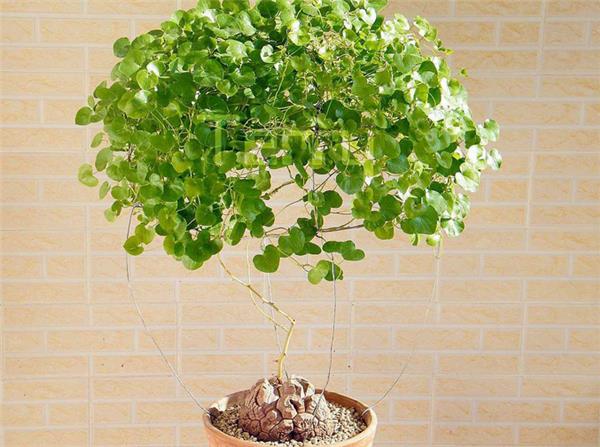
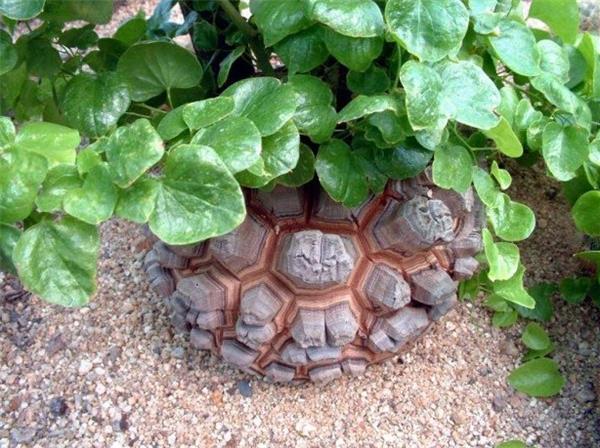
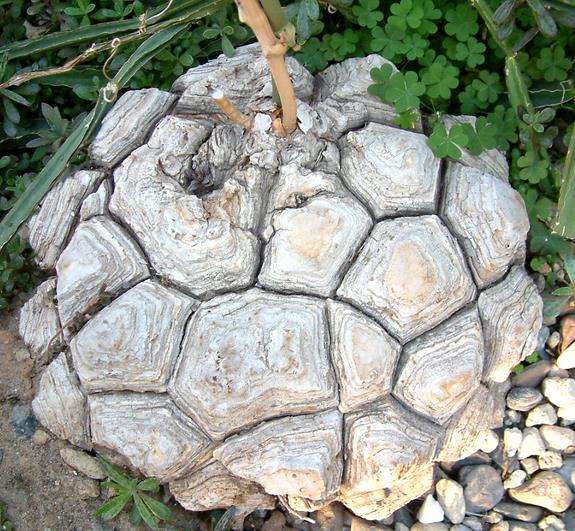
Testudinaria elephantipes is an ornamental plant, named for the way its mature stem surface cracks into a pattern resembling a turtle shell. It is divided into two types: the South African summer-dormant type and the Mexican winter-dormant type. Let's take a look at what there is to know about Testudinaria elephantipes.
I. Introduction to Testudinaria elephantipes
Perennial climbing herb. The plant can reach 6 m in height. Dioecious. The vines twine clockwise. It has a swollen tuberous root, up to 90 cm long. Leaves are nearly heart-shaped, entire, pale green. Male flowers are solitary or arranged in racemes; female flowers are solitary on racemes, yellow-green; the ovary is inferior. Capsule. Seeds are winged.
II. Ecological habits of Testudinaria elephantipes
Because its native habitat is quite dry in summer, it grows in winter and goes dormant in summer, making it a "winter-growing type". However, there is a type native to Mexico whose stem traits are almost identical to Testudinaria elephantipes, yet it grows in summer and goes dormant in winter, making it a "summer-growing type". The two have exactly opposite growth habits, so they must be carefully distinguished before cultivation. The biggest difference between the two lies in the leaves: the leaves of the Mexican Testudinaria elephantipes are kidney-shaped, 8-10 cm long, and the leaf tip is noticeably longer than that of the South African Testudinaria elephantipes.
III. Cultivation techniques for Testudinaria elephantipes
The South African Testudinaria elephantipes is a caudiciform succulent, a member of the Dioscoreaceae family, native to Cape Province, South Africa. The local climate is Mediterranean, with mild, rainy winters and an average temperature of around 15°C, and dry summers. The South African Testudinaria elephantipes is a "winter-growing" type, meaning it goes dormant in summer.
1. The growing medium should have good permeability and should not contain too much humus, otherwise the roots are prone to rot or burn. When planting, bury 1/3 of the stem in the soil; this makes cultivation easier and the stem grows faster.
2. Watering is best done by the bottom-soaking method and should be controlled; it is best not to soak it through, and usually soaking up to 1/3-1/2 of the lower part of the potting soil is sufficient.
3. The South African Testudinaria elephantipes likes partial shade. Apart from exposing it to as much sunlight as possible during the day in winter, and giving it appropriate light in early spring and late autumn, at all other times it should be kept indoors or on the inner side of a balcony in a shaded, ventilated spot.
4. Temperature, humidity and ventilation are very important for the growth of the South African Testudinaria elephantipes. It grows most vigorously at an average temperature of 15°C-25°C, can grow normally in an environment above 10°C with sunlight, and stops growing at around 5°C. Therefore, in winter it is best to keep it in a relatively warm place to maintain the temperature needed for growth; after summer begins, the South African Testudinaria elephantipes will gradually enter dormancy, and by around the end of June the swollen stem usually has only remnant dead branches left. At this point it is best to cut off the dead branches to encourage new growth, and care should also be cautious. If conditions permit, the double-pot method can be used (placing a large pot outside the pot), watering into the outer pot while keeping the soil in the inner pot dry. By around the end of July, green slender trailing stems can emerge, but the leaves do not spread out. At this time it should be kept in a partially shaded, ventilated spot and soaked once every two weeks. From early autumn, the leaves gradually spread and grow larger, and the trailing stems also lengthen and may branch; at this point the frequency of soaking can be gradually increased, and a diluted liquid fertilizer can be applied once if necessary. On rainy days in spring and autumn (when the temperature is not below 15°C), the South African Testudinaria elephantipes can be placed outdoors in a rain-sheltered, ventilated spot, letting it (leaves, stem and potting soil) fully absorb the moisture in the air and enjoy nature's nourishment, and it will surely grow lush and leafy. This kind of environment is the best growing environment for the South African Testudinaria elephantipes.
For the South African Testudinaria elephantipes, it is best to choose plants that already have hexagonal corky tubercles covering the stem for cultivation; young seedlings do not have these corky tubercles. At the same time, note the difference between it and the Mexican Testudinaria elephantipes (D. macr): their stem shapes are almost the same, but the tuberous root of the Mexican Testudinaria elephantipes is slightly flatter; the leaf shape differs slightly, with the Mexican Testudinaria elephantipes having larger leaves and 7-9 veins, while the South African Testudinaria elephantipes has smaller leaves and 5-7 veins, and both leaves are heart-shaped and triangular, but the leaf tip of the Mexican Testudinaria elephantipes is noticeably longer. Since the Mexican Testudinaria elephantipes is a "summer-growing" type (meaning it goes dormant in winter), its cultivation requirements are different, so they must be carefully distinguished.
IV. Variety classification of Testudinaria elephantipes
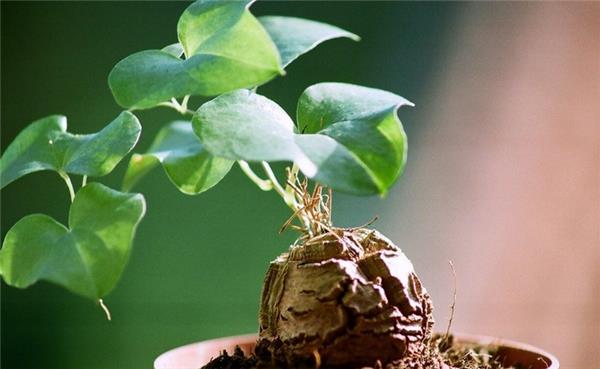
It itself has 1 variety: the mountain Testudinaria elephantipes. Species in the same genus also include the Mexican Testudinaria elephantipes, the forest Testudinaria elephantipes, and the king Testudinaria.
V. Uses and purposes of Testudinaria elephantipes
Testudinaria elephantipes is one of the most famous succulents, being both one of the representatives of caudiciform succulents and a representative of succulents in the Dioscoreaceae family. Botanical gardens should collect it as a type, and some enthusiasts can also collect and grow it.
The above is what there is to know about Testudinaria elephantipes; I hope it can help you.
The above is what there is to know about Testudinaria elephantipes; I hope it can help you.