Introduction to torch lily and how to grow it, so you can grow flowers with a torch-like bearing
The torch lily is a beautiful ornamental flower. The torch lily often appears in poetry, symbolizing grand and passionate scenes. Torch lilies can be planted in clumps on lawns or beside rockery stones as a landscape feature. Now let's take a look at what you need to know about the torch lily.
I. Introduction to the torch lily
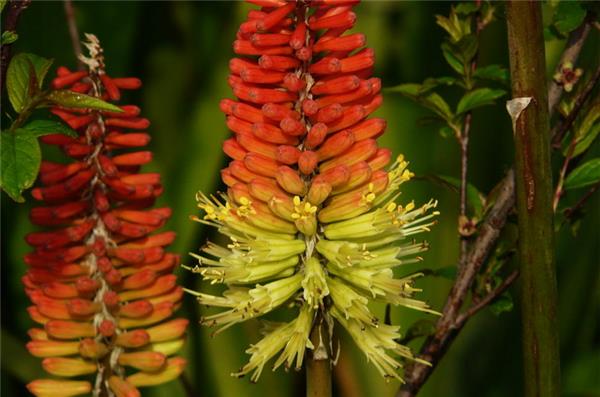
The torch lily, also known as the red-hot poker, is native to southern Africa. It is fairly cold-tolerant and can overwinter in the open ground in the middle and lower reaches of the Yangtze River. It likes full sunlight and also tolerates partial shade. It is best grown in well-drained, deep sandy loam. It likes warmth and should be grown in loose, fertile sandy loam.
II. Morphological characteristics of the torch lily
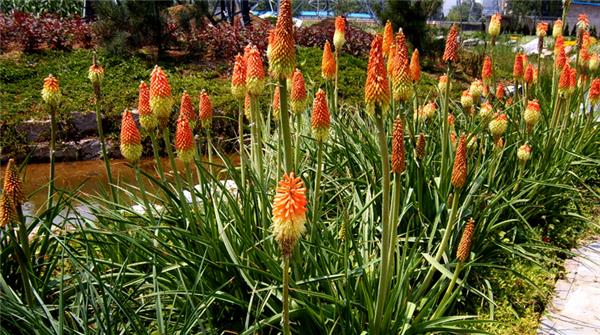
The plant is 80-120 cm tall, with upright stems. The raceme bears hundreds of small tubular flowers in a torch shape, with an orange-red corolla, and the flowering period is June-July. The leaves are linear. The capsule is yellowish-brown, and the fruiting period is September.
III. Ecological habits of the torch lily
The torch lily likes a warm, humid environment with plenty of sunlight, and also tolerates partial shade. It requires deep, fertile, well-drained sandy loam. Before planting, an appropriate amount of base fertilizer and phosphorus and potassium fertilizer should be applied. After transplanting seedlings or dividing plants, water thoroughly 2-3 times, cultivate and weed in time, and keep the soil moist; growth resumes after about 2 weeks.
IV. Cultivation techniques for the torch lily
1. Open-ground planting
Sow seeds in a greenhouse in January to raise seedlings, set them out in the open field in April, and they bloom in summer from July to August. Before planting, an appropriate amount of base fertilizer and phosphorus and potassium fertilizer should be applied. After transplanting seedlings or dividing plants, water thoroughly 2-3 times, weed in time, and keep the soil moist. Strengthen cultivation management; seedlings from seed or division can bloom in the second year. When the flower scape appears, apply 2-3 foliar topdressings of 0.1% potassium dihydrogen phosphate, with an interval of 7-10 days each time, or apply 1%-2% superphosphate once as a topdressing, to strengthen the stiffness of the flower scape and prevent bending. Increase watering before the flowering period, and stop watering after the flowers fade. If flowers are bitten by scarab beetles during the flowering period, spray with 0.2% omethoate. The torch lily is fairly cold-tolerant; when grown in the open ground, it should be properly covered with grass for warmth to help it overwinter safely.
2. Planting out
When seedlings are about 10 cm tall, they should be planted out and given 2-3 foliar topdressings of potassium dihydrogen phosphate, with an interval of 7-10 days each time and a concentration of 0.1%. Every 2-3 years it must be replanted by division to promote new root growth and force cultivation. In cut flower production, the flowering period should be extended as much as possible, which can be controlled by sowing in stages and transplanting and planting out in stages. The natural flowering period of the torch lily is from late May to mid-June. If seedlings sown the previous year are transplanted and planted out from April to June of the following year, they can bloom in September-October.
V. How to grow the torch lily
Torch lilies are mostly grown in the open ground, and can also be grown in pots. The planting site should be chosen in a high, dry place, sheltered from the wind and facing the sun, with humus-rich clay loam. Before planting, apply more decomposed organic fertilizer and add phosphorus and potassium fertilizer, then dig the soil deeply. Plant out when seedlings are about 10 cm tall, with a plant spacing of 30 cm x 40 cm. After planting, water thoroughly twice, then cultivate, loosen the soil, and keep the seedlings in place to encourage new roots. In summer, provide sufficient water and topdressing, and growth will be rapid; under conditions of 25-28°C and sufficient sunlight, it can send up spikes and bloom in about 5 months. When the flower stem appears, 2-3 foliar topdressings of potassium dihydrogen phosphate should be applied, with an interval of 7-10 days each time and a concentration of 0.1%; or 1%-2% superphosphate can be used once as a soil topdressing, which can increase the stiffness of the flower stem and prevent bending. In autumn, before dividing and replanting, apply more base fertilizer to supplement the plant's nutritional deficiencies. The overwintering ability of the torch lily is closely related to the accumulation of nutrients in the plant. After flowering, the faded flower stems should be cut off as early as possible so they do not set seed, to avoid consuming nutrients. In dry winter and spring areas, water thoroughly before the ground freezes, and cover the plants with dry grass or fallen leaves to prevent death from drying and freezing. In early spring, remove the cold protection covering late, and pay attention to attacks of late spring cold to prevent plant damage.
The torch lily is a shallow-rooted flower with slightly fleshy roots and few root hairs. If planted for too long, the roots become densely clustered, the number of root hairs decreases, and absorption capacity declines. Therefore, it must be replanted by division every 2-3 years to promote new root growth. When transplanting seedlings, water thoroughly twice, cultivate and loosen the soil, and keep the seedlings in place to encourage new roots. Before planting, an appropriate amount of base fertilizer and phosphorus and potassium fertilizer should be applied. After transplanting seedlings or dividing plants, water thoroughly 2-3 times, cultivate and weed in time, and keep the soil moist; growth resumes after about 2 weeks. When the flower scape appears, apply 2-3 foliar topdressings of 0.1% potassium dihydrogen phosphate, with an interval of 7-10 days each time, or apply 1%-2% superphosphate once as a topdressing, to strengthen the stiffness of the flower scape and prevent bending. Increase watering before the flowering period, and stop watering after the flowers fade.
The above is what you need to know about the torch lily. We hope it helps you.
The above is what you need to know about the torch lily. We hope it helps you.