An introduction to the Gerbera daisy and how to grow it: teaching you to grow beautiful Gerbera daisies
The Gerbera daisy is a beautiful ornamental flower. Its blooms are large, its colors are rich, and it needs little labor to manage. In warm regions it can supply fresh cut flowers year-round. Now let us take a look at knowledge about the Gerbera daisy.
I. Introduction to the Gerbera daisy
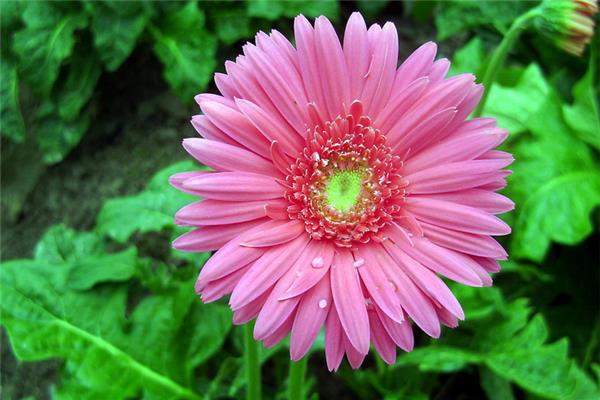
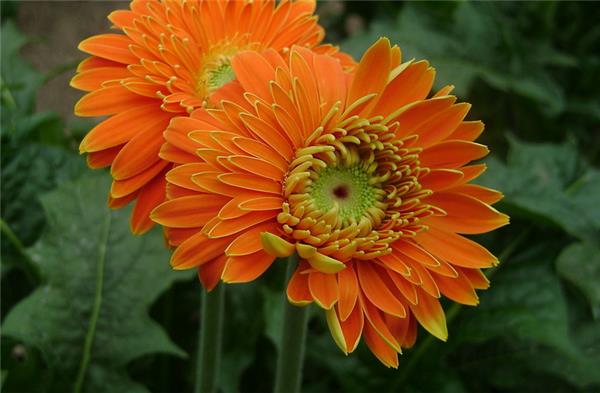
The Gerbera daisy (Gerbera jamesonii) is a perennial herbaceous plant in the family Asteraceae. The whole plant bears fine hairs, and the flower heads are terminal. Most leaves are basal and pinnately lobed. The plant grows 30-45cm tall, with solitary capitula (flower heads) borne terminally; flower colors include red, white, yellow, orange, purple and so on. The flower heads rise 20-40cm above the leaves, with a flower diameter of 10-12cm. The involucre is disk-shaped and bell-shaped, and the ligulate petals number 1-2 or multiple whorls forming a double form. It usually flowers in all four seasons, most abundantly in spring and autumn. It is an important material in modern cut flowers. The Gerbera daisy has a relatively large flower diameter (8cm-10cm), and its flowering period is easy to regulate, so the area under cut-flower cultivation increases year by year and its use is becoming ever more widespread. The Gerbera daisy also withstands long-distance transport, and its cut flowers last a long time in water; with proper cultivation methods, each plant can yield 30 cut flowers a year, making it truly an ideal cut-flower species. The main types can be divided into modern cut-flower types and dwarf cultivation types, with various flower colors such as white, pink, red and yellow.
II. Cultivation techniques for the Gerbera daisy
The suitable temperature during the growing period of the Gerbera daisy is 20-25°C; below 10°C or above 30°C it stops growing and enters a semi-dormant state. If you want it to flower all year, in winter it must be kept above 12-15°C and in summer no higher than 26°C. Therefore in the southern Fujian area it can overwinter in the open field, but to obtain high-yield, good-quality cut flowers it is best to have heat-retaining equipment such as plastic greenhouses; in summer you can switch to shade netting or spray water to cool it down, which can ensure a year-round supply of cut flowers.
(1) The soil must be sterilized. The Gerbera daisy is not very strict about soil; loose, airy sandy soil rich in humus is suitable. Because the pathogens of various diseases harmful to the Gerbera daisy can survive in the soil, and the soil also contains underground pests and earthworms that damage the roots, the soil should be sterilized before planting.
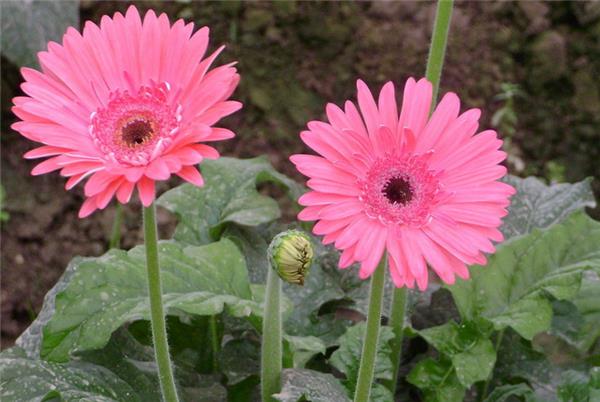
(2) Land preparation and fertilization. Because the Gerbera daisy fears waterlogging, raised-bed cultivation is generally used. The beds usually run north-south, with a bed height of about 30cm, a bed width of 1m, and a furrow width of 40-50cm. Along with land preparation, apply base fertilizer appropriately, using 200kg of barnyard manure per 100m.
(3) Planting. Planting is best done on cloudy days or in the evening on sunny days. Except for the high-temperature period from July to September in summer, when planting is not suitable, it can be done at any other time. When planting, be sure to plant shallowly, so that the root crown is exposed above the soil surface, and water thoroughly. Newly planted plants should be shaded with shade netting.
(4) Pay attention to seedling-stage management. Carry out heat-retention or cooling management according to the weather conditions at planting time, controlling the temperature at 20-25°C so that the plants quickly resume growth. After the seedlings have recovered, apply diluted human manure at 1:10 once every two weeks, ensuring that each plant has 8-10 healthy leaves before entering the flowering period. When watering and fertilizing, be careful not to let water fall into the center of the leaf rosette, otherwise the flower buds are prone to rot.
(5) Fertilizer and water management. The Gerbera daisy is drought-tolerant but not moisture-tolerant, and must never be waterlogged. During the seedling stage it should be kept appropriately moist to promote root development. During the growing period, the amount of watering can be decided according to how dry or moist the soil is: do not water until it is dry, and water thoroughly when you do. In winter, water as little as possible, and it is better for the soil to be somewhat dry. In summer, when the weather is hot and water evaporates quickly, the plant enters a semi-dormant state, flower production drops noticeably, and plant vigor weakens; at this time pests and diseases are very likely to occur, and topdressing can be combined with this to promote the roots' absorption of nutrients. In summer, promptly loosen the soil, clean the roots and prevent disease, control water and fertilizer, and provide shade and rain protection.
(6) Leaf removal and bud thinning. The Gerbera daisy can flower year-round within the range of 5-30°C, so it needs a large amount of fertilizer throughout the growing period. Before flower bud differentiation, apply more organic fertilizer and nitrogen fertilizer to promote full plant growth, mainly using monopotassium phosphate and urea, plus an appropriate amount of liquid organic fertilizer, applied as a topdressing once a week. When the plant enters the period in which vegetative and reproductive growth advance together, the proportion of phosphorus and potassium fertilizer should be increased, generally once a week, while adding an appropriate amount of organic fertilizer. Before the two flowering peaks from April to June and in September and November, foliar spraying of KH2PO4 should be carried out as appropriate to meet the needs of reproductive growth.
(7) Humidity and light. The Gerbera daisy is relatively cold-tolerant, and its growth is not sensitive to light, but it does like plenty of sunshine. When cultivated in a greenhouse, adding 2-3 layers of plastic film in winter allows it to overwinter safely. Before the first frost arrives in late October, cover it with a layer of plastic film; around November, small tunnels should be built over each bed to keep it warm. From June to September, 50% shade netting can be used to lower the temperature.
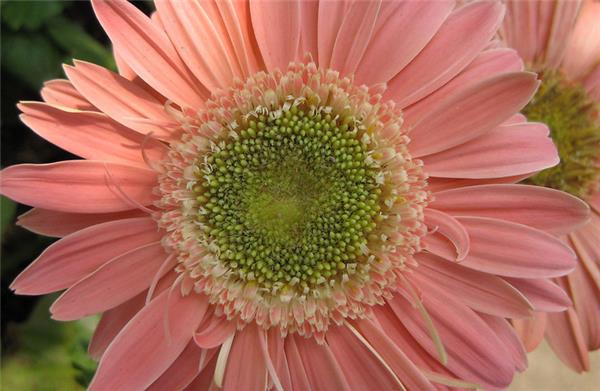
(8) Removing withered leaves. The clustered leaves at the base of the Gerbera daisy easily turn yellow and age, and should be removed promptly; this not only helps new leaves and new flower buds to sprout, but also helps ventilation and light penetration, so that the young flower buds below do not fail to receive sunlight and hormones and become "hidden buds." In addition, excessive buds or deformed flowers should also be removed promptly to ensure that the retained flower stems have enough nutrition and to improve the quality of the cut flowers. Generally, a one-year-old single plant has 15-20 healthy leaves at full bloom and can produce 5-6 flowers per month.
(9) Harvesting and keeping fresh. The Gerbera daisy can be picked when the outermost two layers of ligulate flowers of the flower head are perpendicular to the flower stem and show the color characteristic of the variety. The best time is in the morning and evening when the temperature is low, when it is easy to pick without damaging the plant. The method is to grip the lower part of the flower stem with your hand and shake it left and right to the side, and it can then be picked. Pick out flowers with disease spots, insect spots or deformities, cover the flowers with a No. 12-15 funnel-shaped plastic bag, then grade them by variety and length, and tie them in bundles of 20 with a rubber band, ready for sale. If they are not to be sold immediately, they should be placed upright in a bucket or other container with clean water to keep them in water; the water depth should preferably cover 5-10cm of the base of the flower stem.
The above is knowledge about the Gerbera daisy. I hope it can help you.
It also helps ventilation and light penetration, so that the young flower buds below do not fail to receive sunlight and hormones and become "hidden buds." In addition, excessive buds or deformed flowers should also be removed promptly to ensure that the retained flower stems have enough nutrition and to improve the quality of the cut flowers. Generally, a one-year-old single plant has 15-20 healthy leaves at full bloom and can produce 5-6 flowers per month.(9) Harvesting and keeping fresh. The Gerbera daisy can be picked when the outermost two layers of ligulate flowers of the flower head are perpendicular to the flower stem and show the color characteristic of the variety. The best time is in the morning and evening when the temperature is low, when it is easy to pick without damaging the plant. The method is to grip the lower part of the flower stem with your hand and shake it left and right to the side, and it can then be picked. Pick out flowers with disease spots, insect spots or deformities, cover the flowers with a No. 12-15 funnel-shaped plastic bag, then grade them by variety and length, and tie them in bundles of 20 with a rubber band, ready for sale. If they are not to be sold immediately, they should be placed upright in a bucket or other container with clean water to keep them in water; the water depth should preferably cover 5-10cm of the base of the flower stem.
The above is knowledge about the Gerbera daisy. I hope it can help you.