Is Gardenia Poisonous? Is It a Toxic Plant?
We all know that gardenia is a very fragrant plant, and its pure flower color makes it especially suitable as an indoor ornamental plant. So, is gardenia poisonous? Let's take a look together!
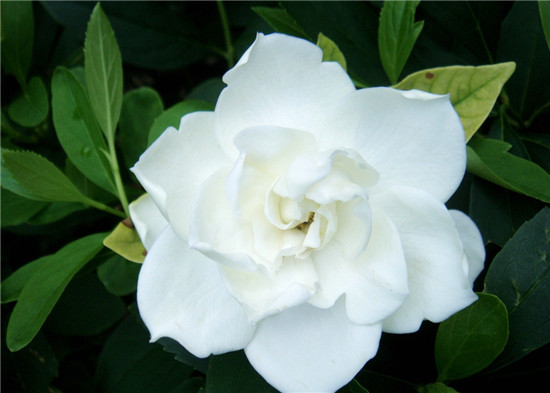
In fact, gardenia is completely non-toxic. Its flowers are rich and fragrant, and are often worn as corsages by young men and women; the scent surpasses that of perfume, so it is also used to make perfume. Gardenia fruit can be used as fuel and also as medicine, with effects of clearing heat and detoxifying, cooling the blood and purging fire.
Gardenia pest and disease control:
After suffering from pests and diseases, gardenia's flower quality is also easily affected. Leaf spot disease and chlorosis commonly occur. For leaf spot disease, spray with a 600-fold dilution of 65% zineb wettable powder. To prevent and control chlorosis, regularly add a 0.1% ferrous sulfate solution to the watering. Pests include slug moths, scale insects and whiteflies. Spray a 3000-fold dilution of 2.5% deltamethrin emulsifiable concentrate to kill slug moths, and a 1500-fold dilution of 40% omethoate emulsifiable concentrate to kill scale insects and whiteflies. Only after removing pests and diseases can healthy flowers bloom.
Uses of gardenia:
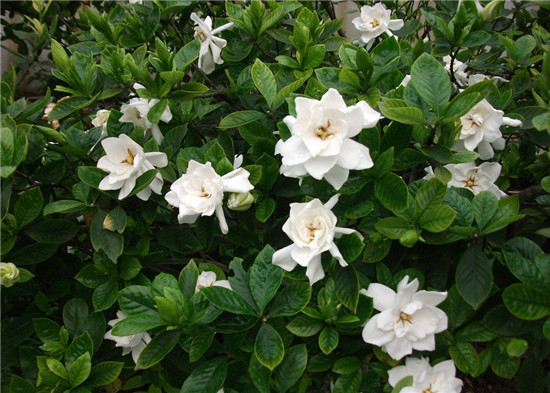
Gardenia's flowers and leaves remain evergreen throughout the four seasons. With green leaves and white flowers, fragrant and elegantly simple, it is very fresh and lovely. It is suitable for planting in front of steps, beside ponds and along roadsides, and can also be used as hedges and potted ornamentals. The flowers can also be used in flower arrangements and as wearable decorations.
Warm reminder: Gardenia is not only non-toxic, but can also purify the air. Its light fragrance is very pleasant, so it can be planted indoors with confidence. Placed on a computer desk or in a room, the atmosphere is especially lovely, and the decorative effect is even more striking.
The benefits of gardenia
Gardenia has green leaves and very white flowers, and is fragrant and elegantly simple, appearing very fresh and lovely. Of course, it is most suitable for pairing in front of steps, beside ponds and along roadsides, and can also be used as hedges and potted plants for ornamental viewing. Its flowers and leaves can be used as flower arrangements and wearable decorations.
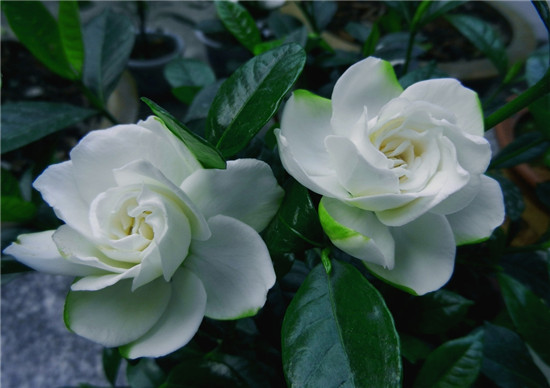
Because gardenia likes humidity in the air, and during its growth period we should also appropriately increase the amount of watering for it. Usually, we need to water once the potting soil turns white; remember to water thoroughly each time. In the hot summer, we need to spray its leaves 2-3 times a day to increase the air humidity, which can also help cool the plant. However, be sure to remember that after flower buds appear, watering must not be excessive, to avoid excessive watering causing bud drop. In winter, it is best to keep watering on the dry side, which can also prevent root rot caused by too much water.
We should also know that excessively low temperatures and direct sunlight are both extremely unfavorable to its growth. So in summer when temperatures are high, it is best to place it in a well-ventilated, humid, light-filtering open woodland or under a shade shed for care. In winter, it can be placed in a spot with sunlight and a temperature not lower than 0°C to let it go dormant; excessively high temperatures will affect its flowering the following year.
The effects of gardenia
1. Cooling blood and detoxifying: Gardenia is often used for blood-aspect heat-toxin patterns. Blood heat causing reckless movement, hematemesis, epistaxis, hematuria. Throat swelling, red eyes, heat-toxin sores and ulcers, belonging to excess heat.
2. Clearing and draining damp-heat: Gardenia is suitable for liver-gallbladder and lower-jiao damp-heat patterns. Damp-heat with fire depression in the liver channel, with vexation, easy anger, hypochondriac pain and bitter taste in the mouth. Damp-heat jaundice and damp-heat pouring downward, with painful, rough heat strangury.
3. Purging fire and relieving vexation: Gardenia is suitable for heat disturbing the mind. Externally contracted heat disease, with pathogen depressed in the upper jiao, chest and heart vexation and insomnia. Flaming fire-toxin, high fever and restlessness, even delirium.
Gardenia's dietary therapy effects
1. Promoting pancreatic secretion: Dehydroxylated geniposide from gardenia has the effect of promoting pancreatic secretion and significantly lowering pancreatic amylase, and can increase pancreaticobiliary flow.
2. Promoting bile flow and reducing jaundice: Injection of gardenia's water extract, crocin and crocetin into rabbits significantly increases bile secretion and has a clear contracting effect on the human gallbladder. It can also significantly reduce bilirubin in the blood and peripheral lymph, and can promote the rapid excretion of bilirubin in the blood.
3. Clearing heat and cooling blood: Gardenia is bitter and cold, can enter the blood aspect and clear heat; it is an auxiliary therapeutic food for conditions such as sores, swellings and toxins, intestinal wind and dysentery, and blood heat causing reckless movement.
4. Resolving phlegm and relieving cough: The active ingredients of gardenia can inhibit bacterial growth, release phlegm and clear the airway, and have the effect of resolving phlegm and relieving cough. It can be used as a dietary therapy item for those with cough caused by congested heat-phlegm.
5. Loosening the intestines and relieving constipation, preventing cancer: Gardenia contains cellulose, which can promote large intestine peristalsis, help with bowel movements, and prevent the onset of hemorrhoids and the occurrence of rectal cancer tumors.
The above is all the content I have summarized for everyone on whether gardenia is a toxic plant. I hope this article can help everyone. Please also continue to follow us.
It releases phlegm and clears the airway, and has the effect of resolving phlegm and relieving cough. It can be used as a dietary therapy item for those with cough caused by congested heat-phlegm.5. Loosening the intestines and relieving constipation, preventing cancer: Gardenia contains cellulose, which can promote large intestine peristalsis, help with bowel movements, and prevent the onset of hemorrhoids and the occurrence of rectal cancer tumors.
The above is all the content I have summarized for everyone on whether gardenia is a toxic plant. I hope this article can help everyone. Please also continue to follow us.