When Do Gardenias Bloom? The Gardenia Blooming Season
The gardenia has a fragrant scent and an elegant appearance, giving it considerable ornamental value. Let's take a look at when gardenias bloom!
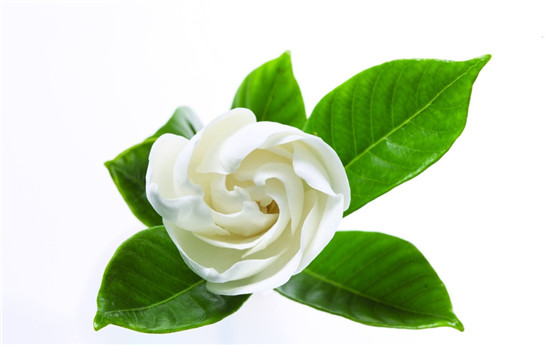
The gardenia belongs to the family Rubiaceae. It is an evergreen shrub. The leaves are simple, opposite or in whorls of 3, obovate, leathery, and glossy green. The flowers are white and extremely fragrant. The berries are ovoid, yellow or orange.
The gardenia is an evergreen shrub with glossy, leathery, emerald-green leaves that stay green all year round. In summer it produces pure white, fragrant flowers; after they fade, the flowers turn yellowish-brown but still give off lingering fragrance. The blooming period is April and May. The gardenia is a much-loved ornamental flower for courtyards and containers. It adapts well to its environment, growing in both rich and poor soil, and in both dry and moist conditions. But to make it grow luxuriantly, whether planted in the ground or in a pot, you must choose the right soil, provide shade in summer, fertilize reasonably, and prune appropriately.
Although the gardenia tolerates poor, lean soil, it does better in fertile, loose, well-drained acidic loam. In poor soil and alkaline soil it is prone to leaf yellowing, which causes the leaves to scorch, the flowers to be sparse, and the plant to grow poorly. Therefore, choosing suitable soil is very important. For container growing, do not use leaf mold alone, or add some mountain soil. The gardenia likes light but also tolerates shade; in shade the leaves are glossy green, but flowering is somewhat poorer. In summer, strong direct sunlight should be avoided, otherwise the leaves turn yellow. It can be planted in parks, around courtyards, by office buildings, and under south-facing windows of homes; growth is even better when the branches and leaves of tall trees above provide shade. When a potted gardenia spends the summer, it must not be placed on a balcony or terrace to bake in the sun, otherwise the branches and leaves will scorch and yellow, or even wither and die. The potted plant can be moved indoors and placed on a desk, tea table, or in a corridor, which both decorates the indoor environment and avoids exposure to the sun. In spring and autumn, when the light is not intense, it can be placed outdoors to receive full sunlight.
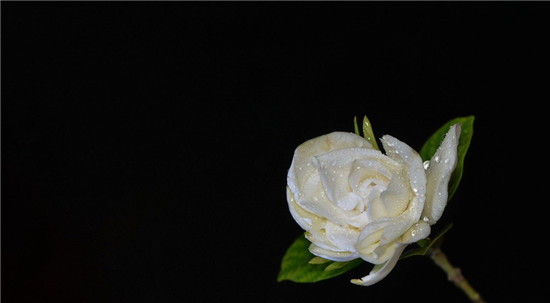
Prune the gardenia once each in May and July every year, cutting back only the tips of the shoots to encourage branching into a beautiful, full crown. After the flowers fade, remove the spent flowers promptly, which helps the plant bloom abundantly in the flowering season.
1. The gardenia likes fertilizer. It is best to apply organic fertilizers with balanced, mild nutrient strength, such as decomposed soybean cake, sesame paste residue, and peanut meal; after fermentation and decomposition they can become acidic fertilizer, but only apply light fertilizer frequently; never use concentrated or raw fertilizer.
2. The gardenia is a flower that likes a moist environment, but if watered too much, the pot soil becomes too wet, which reduces the air in the soil, injures the roots, and also causes the leaves to turn black and drop.
3. The gardenia also particularly needs iron; an iron deficiency causes chlorosis.
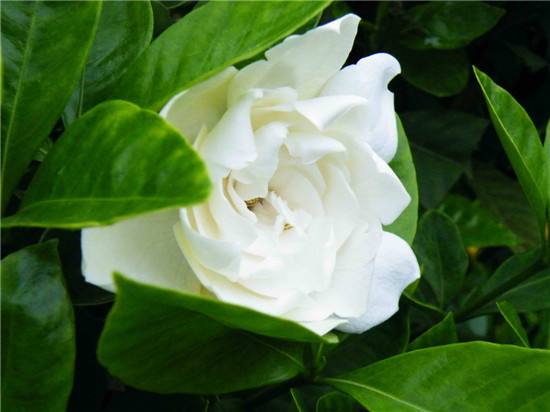
4. Too much light can also cause the leaves to turn yellow or even drop.
The gardenia likes fertilizer, so apply light fertilizer frequently; whether planted in the ground or in a pot, young seedlings should not be given heavy manure water. Apply decomposed cake fertilizer water or chicken or duck manure water once every half month. If the leaves turn yellow, add 5 per mille ammonium sulfate to the fertilizer solution. When growing in the north, it is best to water with stored rainwater. Or add 100 g of ferrous sulfate (black alum) to 5000 g of water to improve water quality. If watered with water that is also strongly alkaline (water quality in the north is mostly alkaline), the soil will deteriorate before long. Water with dilute alum fertilizer water once every 7-10 days to promote deep green leaf color and larger flowers. The gardenia is not very cold-tolerant. In the north it is all grown in pots, and before "Cold Dew" in early October it is moved indoors to overwinter. In winter, because the sun is already at a slant, the light becomes weaker, so it can be placed on a sunny windowsill; the room temperature should not be below 0degC, and it is generally best kept at 1OdegC-12degC; above 15degC it should be ventilated and cooled. Otherwise dormancy will be affected, which is bad for growth and flowering the next year. In winter, when temperatures are low, watering should be controlled; water once every 5-7 days, and watering must follow the rule of watering thoroughly once the soil has dried out. Frequently rake and loosen the surface layer of the pot soil to help the soil breathe, and often spray and wash the branches and leaves with lukewarm water. Do not let dust soil the leaf surfaces.
That is all of the content I have summarized for you on when gardenias bloom and the gardenia blooming season. I hope this article can help everyone. Please also keep following us.