What are herbaceous plants, and what are the common types?
We often talk about herbaceous plants and woody plants, but in fact many people are not very clear about what herbaceous plants are and what herbaceous plants there are. Below I will explain these two questions for everyone.
What are herbaceous plants
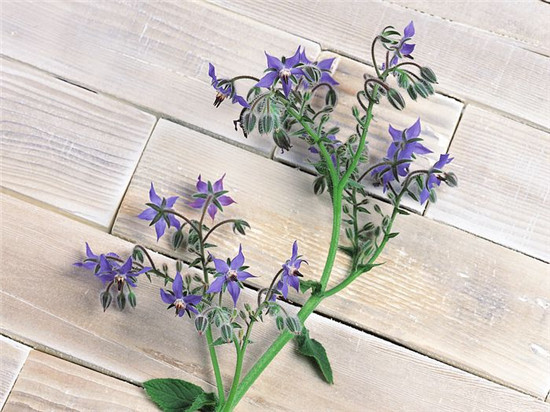
Herbaceous is a general term for a class of plants, but it is not a unit in the scientific classification of plants. The concept corresponding to herbaceous plants is woody plants. People usually call herbaceous plants "grass" and woody plants "trees," but there are occasionally exceptions, such as bamboo, which belongs to herbaceous plants, but people often regard it as a kind of tree.
What herbaceous plants are there
(1) Annual herbs: herbaceous plants whose lifespan is only 1 year, from seed germination, growth, flowering, and fruiting to withering and death, that is, plants that can complete their life cycle within one growing season, namely plants that flower and fruit and then die in the same year, such as morning glory, cineraria, bottle gourd, China aster, etc.
(2) Biennial herbs: plants that in the first growing season (autumn) grow only vegetative organs, and in the second growing season (spring) flower, fruit, and then die, such as winter wheat, sugar beet, broad bean, etc.
(3) Perennial herbs: herbaceous plants with a relatively long lifespan, generally more than two years, such as chrysanthemum, orchid, lotus, water lily, clivia, etc. The roots of perennial herbaceous plants are generally relatively thick and strong, and some also grow organs such as tuberous roots, tubers, corms, and bulbs.
What do woody plants include
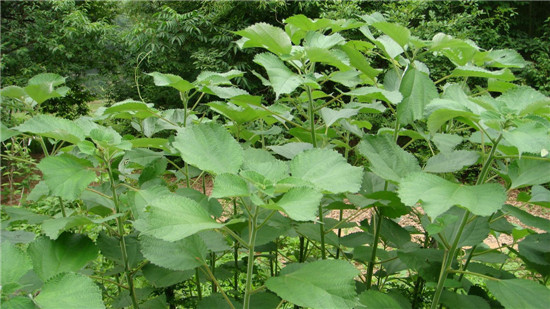
Woody plants include various trees and shrubs grown for flowers, foliage, fruit, and branches and trunks; herbaceous plants include a large number of flowers and lawn groundcover plants. The ecological benefits of plant communities composed of trees, shrubs, and lawns are extremely significant, so in urban garden plant landscaping, a reasonable combination of trees, shrubs, and grass should be considered. Because trees have a large amount of green mass, they have functions and landscape effects such as shading, sheltering from rain, reducing noise, and absorbing dust.
Because trees have a large amount of green mass, they have functions and landscape effects such as shading, sheltering from rain, reducing noise, and absorbing dust, so they are often used as street trees, specimen trees, or planted in patches in urban greening. The ecological benefits exerted by trees are the most obvious, and they are indispensable garden plants in urban greening. With the development of the social economy and the continuous improvement of urban construction standards, at present the planting of trees has developed from mostly planting 2-year to 3-year-old saplings to using 4-year to 5-year-old trees with a diameter at breast height of 8 cm to 10 cm, or trees more than ten years old with a diameter at breast height of about 20 cm, for greening. However, special attention should be paid to choosing different transplanting methods according to the characteristics of different seedlings to improve the survival rate of seedling planting.
What perennial herbaceous plants are there
Perennial herbaceous plants have a relatively long lifespan, generally more than two years, such as chrysanthemum, orchid, lotus, water lily, clivia, etc. The roots of perennial herbaceous plants are generally relatively thick and strong, and some also grow organs such as tuberous roots, tubers, corms, and bulbs. In winter, the aboveground parts still sleep quietly, and when the climate warms the next year, they sprout and grow again. Growing year after year in this way, the underground roots or stems may gradually become thicker and may also branch. Perennial herbs can live for more than two years.
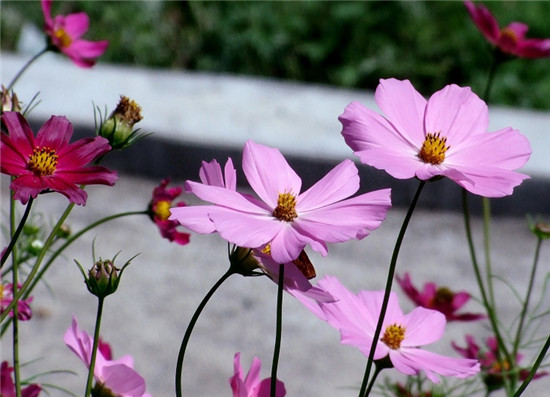
Representative plants: petunia, dianthus, verbena, etc.
Sowing time: when the temperature is suitable, they can be sown throughout the year.
Growth characteristics: after sowing, they can bloom once they grow to a certain extent. They grow fastest in spring or autumn, while growth is relatively slow in summer and autumn. They have the habit of blooming throughout the year, and the flowering period can be controlled by pruning.
1. The underground parts of perennial herbaceous plants are perennial, such as organs including rosette roots or rhizomes, bulbs, and tuberous roots, while the aboveground parts die each year, and the next spring new shoots grow again from the underground parts, flower, and bear fruit, such as lotus root, onion, taro, sweet potato, dahlia, etc.
2. Both the aboveground and underground parts of perennial herbaceous plants are perennial. After flowering and fruiting, the aboveground parts still do not wither and can bear fruit many times, such as Japanese ardisia, dwarf lilyturf, etc., all of which belong to perennial herbaceous plants.
Rosette perennial herbaceous plants specifically refer to ornamental plants whose underground organ forms have not metamorphosed into spherical or block-like forms, which are evergreen herbs, and whose aboveground parts wither after flowering, overwintering or oversummering by means of buds or tillers borne on the aboveground parts and then flowering again in autumn. They usually refer to open-ground rosette flowers native to temperate zones that are cold-hardy or semi-cold-hardy and can be cultivated in the open field, overwintering by underground stems or roots, such as peony and iris, as well as greenhouse rosette flowers native to tropical and subtropical zones that are not cold-hardy and mainly grown for flowers, such as bird of paradise, anthurium, clivia, etc.
Overview: a class in which underground organs swell into block-like, root-like, or spherical forms. All have underground storage organs, and these organs can survive for many years.
Species classification
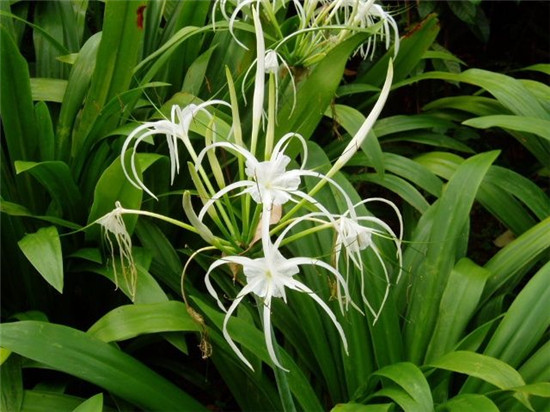
Bulbous types: daffodil, hyacinth, lycoris, lily, etc.
Cormous types: gladiolus, freesia, etc.
Tuberous types: cyclamen, gloxinia, tuberous begonia, etc.
Rhizomatous types: canna, etc.
Tuberous root types: dahlia, etc.
The above is all the content I have summarized for everyone on what herbaceous plants are and what common herbaceous plants there are. I hope this article can help everyone. Please also continue to follow us.