Essential Basics to Know Before Planting Succulents
Succulents are one of people's favorite plants, so do you all know about this little plant? Let's take a look together!
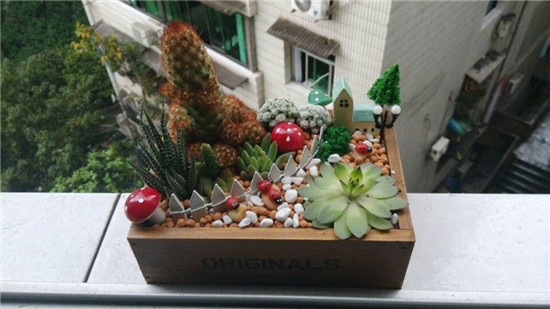
Succulent knowledge primer: Succulents are also called succulent plants or fleshy plants. In horticulture they are sometimes called succulent flowers, but the name "succulents" is the most commonly used.
Succulents refer to a class of plants in which a certain part of the vegetative organ, such as the stem, leaf or root (a few species have two such parts), has well-developed parenchyma tissue used to store water, making them appear thick and juicy in appearance.
Most of them grow in arid regions or regions that have a dry period at some point in the year. For a long period each year their roots cannot absorb water, and they sustain life solely on the water stored within their bodies. Sometimes people like to call these plants desert plants or psammophytes, but this is not quite accurate.
It is true that many succulents grow in desert regions, but not all of them grow in deserts, and many plants that are not succulents also grow in deserts.
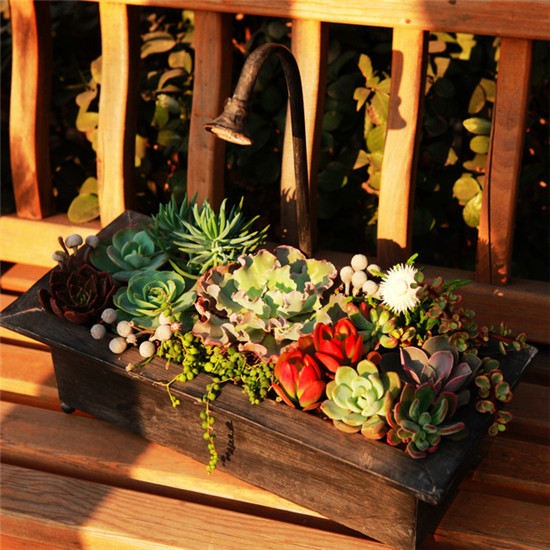
Types of Succulents
Succulent is a concept in floriculture and horticulture, sometimes also called succulent plants. However, the meaning of succulent plants in horticulture is narrower than that in botany. In botany, succulents are also called fleshy plants or succulent plants. This term was first proposed in 1619 by the Swiss botanist Jean Bauhin, meaning that such plants have thick, fleshy stems, leaves or roots. It includes all species of the Cactaceae and Aizoaceae and some species of more than 50 other families, with a total of over ten thousand species. Cultivated succulents include the Cactaceae, Aizoaceae, Euphorbiaceae, Crassulaceae, Asphodelaceae, Apocynaceae and others.
Succulents have particularly well-developed water-storage tissue, but their reproductive organs are not very different from those of ordinary plants in their respective families. According to the different fleshy parts, succulents can be divided into three types, namely leaf succulents, stem succulents, and stem-base (tuberous) succulents.
Leaf succulents: the leaves are highly fleshy, while the stems are less fleshy, and the stems of some species are woody to a certain degree. Examples include species of the Aizoaceae, Crassulaceae, Liliaceae and Agavaceae.
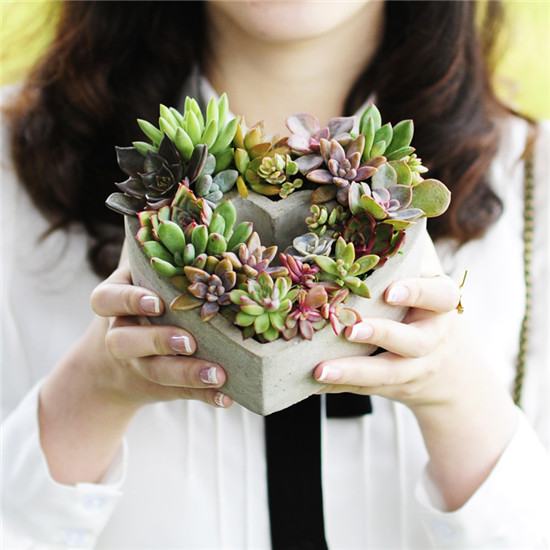
Stem succulents: the plant's water-storage tissue is mainly distributed in the stem. Some species have segmented stems with ribs and tubercles, and a few species have slightly fleshy leaves, but these generally fall off early. Representative examples are the succulents of the Euphorbiaceae and Apocynaceae.
Stem-base succulents: the fleshy part of the plant is concentrated at the base of the stem, and this part is especially swollen. Depending on the species, the shape of the swollen stem base varies, but it is mainly spherical or nearly spherical, sometimes half-buried in the ground, with no segments, ribs or tubercles. They may have leaves, or the leaves fall early; the leaves grow directly from the top of the swollen stem base or from abruptly thinned, almost non-fleshy slender branches, and sometimes these slender branches also fall early. Representative examples are the succulents of the Dioscoreaceae, Cucurbitaceae and Passifloraceae.
Seasonal Growth Phenomenon of Succulents in Early Spring
Take a close look - recently, have many of the lowest leaves on some of your succulents dried up? Don't worry, because spring has come and the succulents need to send out new buds and grow new roots. The nutrient supply in the soil is lower than the succulents' consumption, so they naturally draw nutrients from themselves, which is why the lower leaves dry up.
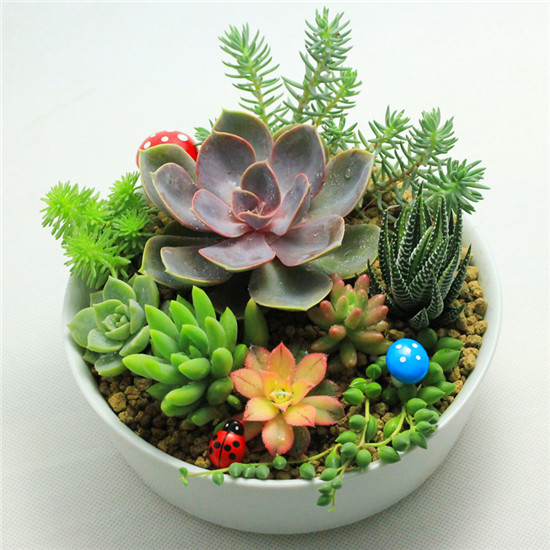
If your succulents have always spent their time on an indoor balcony, and you are in a northern region, then at this time do not rush to move the succulents outdoors, because the succulents are used to the indoor growing environment, and the temperature in northern regions at this time still does not meet the standard. If they are suddenly placed in a harsh environment, the succulents may very well die. On a sunny midday you can first open the balcony window to let in some air, so the succulents can slowly adapt to the outside environment and climate. But at night, when the temperature is lower, you should still close the doors and windows tightly to avoid the succulents getting frostbitten.
If you are in a southern region, you can choose a cloudy day with suitable temperature to move the succulents outside the window, letting them enjoy some good times. After that, pay attention to shading: first cover them with something like paper, and take it off after the succulents have adapted. If cold weather occurs, you should still move them back indoors.
Take a close look - recently, have many of the lowest leaves on some of your succulents dried up? Don't worry, because spring has come and the succulents need to send out new buds and grow new roots. The nutrient supply in the soil is lower than the succulents' consumption, so they naturally draw nutrients from themselves, which is why the lower leaves dry up.
The above is all the content I have summarized for you on the must-know basics before planting succulents. I hope this article can help everyone. Please also continue to follow us.