A Guide to the Red Spider Lily: Introduction and Growing Methods to Cultivate Its Elegant, Graceful Form
The red spider lily (Lycoris radiata) is a bulbous plant. Its bulb somewhat resembles that of a daffodil, and its flower is borne at the tip of a bare stalk. This flower has a distinctive scent, somewhat like garlic. Let's take a look at what you need to know about the red spider lily.
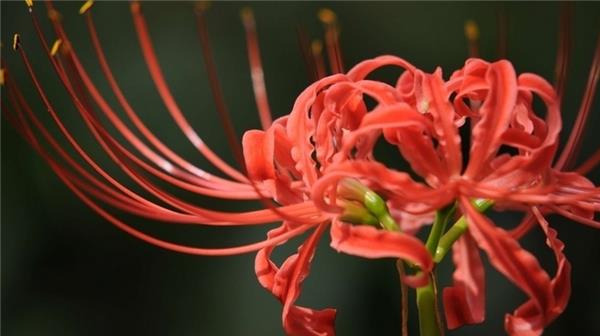
I. Introduction to the Red Spider Lily
Lycoris is a self-pollinating plant. Its capsule splits along the back, and it produces many seeds. It generally reproduces once every 3-4 years by bulbs. Because its flowers and leaves never meet, cherishing each other life after life, it is named "Higanbana" (the flower of the other shore). Because it can reduce swelling, kill insects, treat lymph node tuberculosis, boils and carbuncles, rheumatic joint pain, snake bites, and edema, and can eliminate maggots, kill rats, and prevent plague, it is also called the guardian of health, and is also known as Shehua or Sheli, the red spider lily.
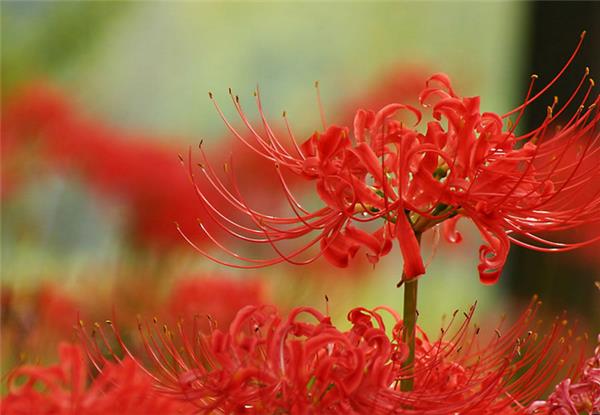
II. Cultivation Techniques for the Red Spider Lily
1. Horticultural Cultivation
The red spider lily is a common ornamental garden plant in East Asia: enjoy its leaves in winter and its flowers in autumn. It is generally best to divide the bulbs and plant them after flowering. When planting, apply sufficient base fertilizer, cover the bulbs with soil, and water thoroughly.
2. Growing Cultivation
The red spider lily is extremely easy to cultivate. It is generally best to divide the bulbs and plant them after flowering. When planting, apply sufficient base fertilizer, cover the bulbs with soil, and water thoroughly. The black flower bulbs are very easy to keep alive; keep them moist and they will not die for a year.
Peel off the small bulbs around the main bulb to propagate. Trim off the residual roots of the main bulb, sun-dry it for two days, and plant it once the wound has dried. When covering with soil, the top of the bulb should be exposed above the soil surface. For pot cultivation, choose a large bulb that has grown for 3 years and can flower (over 7 cm in diameter) and plant it in a pot. You can plant one bulb per pot, or plant 3-4 bulbs in one large pot. Plant shallowly so that 1/3-1/2 of the bulb sits above the soil surface. After potting, water once, just enough to make the soil slightly moist. Water again after new leaves emerge. Apply liquid fertilizer once every half month. In autumn, when the leaves thicken and mature, you can stop watering.
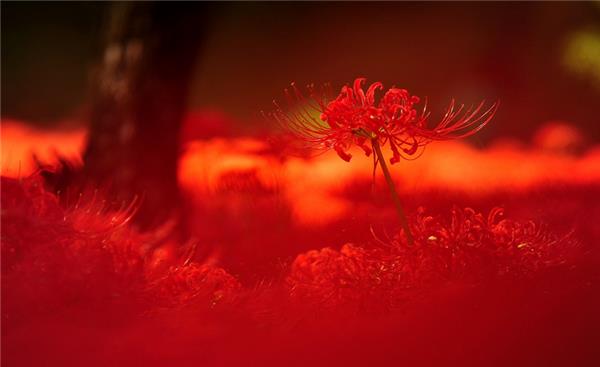
Between February and March, after sprouting, repot or replace the potting soil. The growing medium can be made by mixing 2 parts peat, 2 parts garden soil, and 1 part perlite, with a small amount of base fertilizer added. Water sparingly during the summer dormancy period, and keep the potting soil constantly moist in spring and autumn. During the growing season, apply dilute cake fertilizer water once every half month. Lycoris prefers partial shade; avoid direct sunlight in summer, keep it in a semi-shaded spot in spring and autumn, strictly control watering during the winter, and stop fertilizing. Post-flowering care and pest and disease control: after the red spider lily flowers, the flower scape should be cut off to reduce nutrient loss.
Requirements for the growing environment: the planting depth should not be too deep; it is best to just bury the top of the bulb at the soil surface. The soil should be well-drained sandy soil or loose potting soil, preferably acidic. Apply an appropriate amount of base fertilizer when planting and water thoroughly after planting. During the vegetative growth period, water frequently to keep the soil moist, but do not let water accumulate, to prevent the bulbs from rotting. From 20 days before flowering through the flowering period, an adequate water supply is essential to achieve uniform blooming and to help the flowers last.
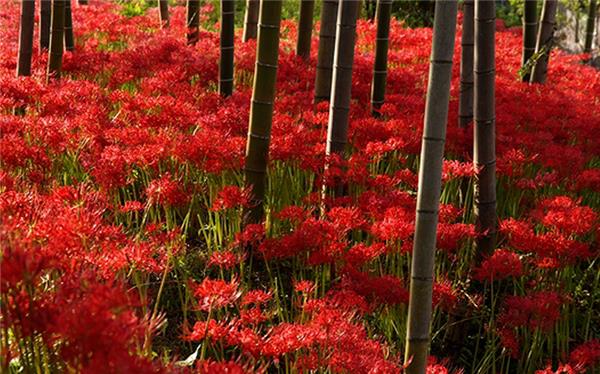
3. Planting Cultivation
Planting: it can be grown in open ground, in pots in a greenhouse, in frames, or hydroponically.
Pot cultivation: the red spider lily likes diffused light and dislikes strong light, so the light should not be too intense. The red spider lily usually has no particular requirements for soil. But since it is, after all, a southern flower, the soil should be acidic, somewhat sandy, and airy and well-drained. Higanbana has ornamental value above ground all year round: leaves without flowers, flowers without leaves.
The red spider lily is highly adaptable, and its bulbs have a dormant period. In the north it needs to be grown in pots for ornamental purposes. Red spider lilies planted at the end of May should also be able to bloom. The suitable time for planting red spider lilies in the ground: it should be planted in spring (April-May). Most varieties like a warm climate, with a maximum temperature not exceeding 30°C and a 10-day average temperature of 24°C, which is suitable for the growth of the red spider lily. Ten days after sowing, the root system grows vigorously, and the leaves emerge from the ground one after another. When the winter daily average temperature is above 8°C and the minimum temperature reaches 1°C, the growth of the red spider lily is not affected. Do not water too much, otherwise its rhizome will rot. Red spider lily.
The above is what you need to know about the red spider lily. I hope it helps you.