How do you care for a nerve plant? Let's get to know this little plant with grid-like leaf veins
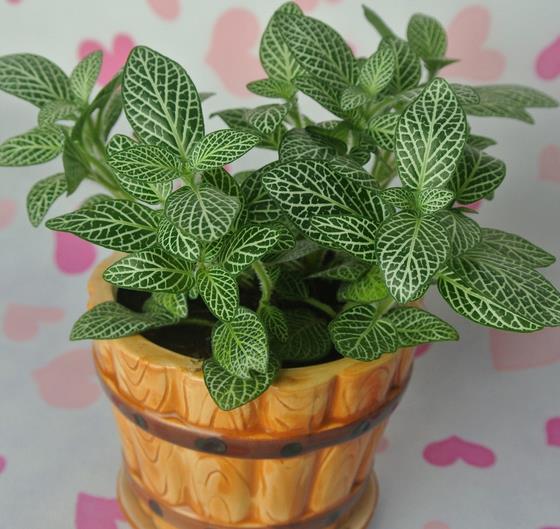
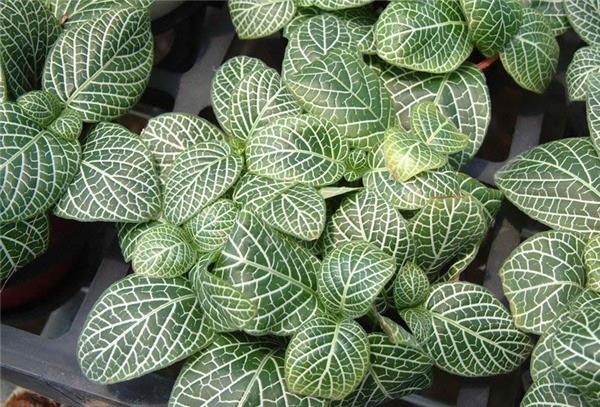
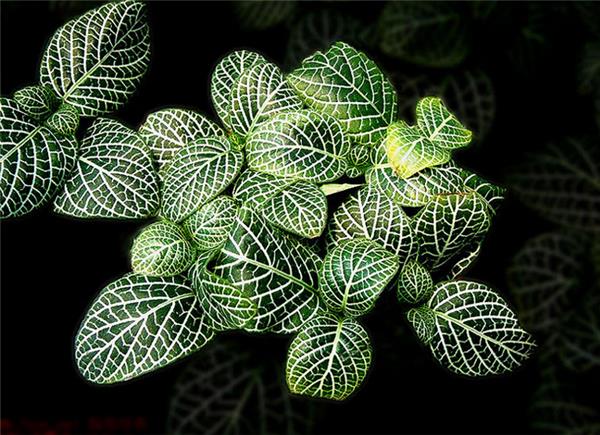
The nerve plant has a light, graceful habit and a small, delicate form; among foliage plants it is a miniature potted plant. Because its leaf veins are clear, its leaf color is soft and elegant, and its pattern is even, it is deeply loved by people, and it is currently a very popular small potted variety in Europe and America. Let's take a look at what there is to know about the nerve plant.
I. Introduction to the nerve plant
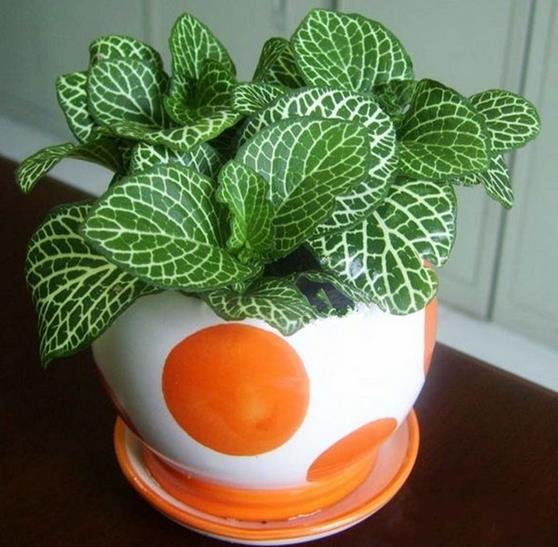
The nerve plant, also known as Fittonia and red nerve plant, is a plant in the genus Fittonia of the family Acanthaceae. The nerve plant's leaves are fresh and beautiful, making it especially suitable for potted display. In fact, the history of the nerve plant is not long; since it was discovered in the 1940s, it has been only half a century. To this day, it is already very common on windowsills, balconies and in living rooms in Europe and America, which shows that the nerve plant has a special charm. The nerve plant's leaves are fresh and beautiful, making it especially suitable for potted display. Using it in rest rooms, display windows and lobbies of hotels, shopping malls and airports, whether placed singly or in groups, can achieve good results. Potted or hanging baskets used to accent a room, placed on a desk, coffee table or windowsill, are emerald green and elegant, light and soft, making people feel fresh and comfortable. The small-leaved nerve plant is also often used in Europe and America to make bottle gardens or terrarium displays, which is also quite distinctive.
II. Cultivation techniques for the nerve plant
1. Substrate preparation
Use loose imported peat with good drainage and aeration in the 5-40mm grade, crush the peat with a machine and mix it evenly with water (standard for adding water: after mixing with water, squeeze a handful of peat tightly and water seeps out between the fingers), then it is ready for potting. For a 9cm pot, the peat usage per pot is about 250 ml; one 300-liter bag of imported peat can fill about 1200 cups.
2. Potting requirements
Choose high-quality seedlings from professional production, with a seedling height of 4-6cm and a crown width of 4-5cm, free of pests and diseases, and free of dead leaves and yellow leaves
3. Potting
For old pots that are reused, they must be soaked in a 1000-fold potassium permanganate solution for more than half an hour, then rinsed with clean water and dried for later use. Small potted plants are generally grown in pots with a caliber of 9cm. When planting, first place about 2cm of substrate at the bottom of the cup, then move the screened seedlings into the cup. Small seedlings should not be planted too deep; it is best to keep them level with the base of the plant. The substrate should be moderately firm, filled to 8 parts full of the cup, 1 cluster/pot. When potting small seedlings, first put a 2-2 cm thick layer of coarse-grained substrate or ceramsite at the bottom of the pot as a drainage layer, sprinkle a layer of fully decomposed organic fertilizer on top as base fertilizer, about 1-2 cm thick, then cover with a layer of substrate about 1-2 cm thick, and then place the plant in, so as to separate the fertilizer from the root system and avoid burning the roots. The substrate used for the pot can be selected from one of the following.
Garden soil: cinder = 3:1; or garden soil: medium-coarse river sand: sawdust (mushroom residue) = 4:1:2; or one of paddy soil, pond mud, or leaf mold. Or peat + perlite + ceramsite = 2 parts + 2 parts + 1 part; garden soil + cinder = 3 parts + 1 part; peat + cinder + ceramsite = 2 parts + 2 parts + 1 part; sawdust + vermiculite + medium-coarse river sand = 2 parts + 2 parts + 1 part. After potting, water once thoroughly and place it in a shaded environment for care.
4. Humidity management
It likes a moist climate environment, and requires the relative air humidity of the growing environment to be 60-75%.
5. Temperature management
The optimum growth temperature is 18°C-30°C. It is averse to cold and frost, and the overwintering temperature needs to be kept above 10°C. When the winter temperature drops below 4°C, it enters a dormant state. If the ambient temperature approaches 0°C, it will die from frost injury.
6. In summer
Air convection needs to be strengthened so that the heat inside the plant can be released; it is recommended to place it in semi-shade, or provide it with 50% shade; give it appropriate misting, 2-3 times a day.
7. In winter
It needs to be moved indoors to a bright place for care; if it is grown outdoors, it can be wrapped in plastic film to overwinter, but every two days at noon when the temperature is relatively high, the film should be opened to let it breathe;
8. Fertilizer and water management
It has high requirements for fertilizer and water, but it is afraid of careless fertilization, concentrated fertilizer, and one-sided application of nitrogen, phosphorus and potassium fertilizers. It is required to follow the fertilization (watering) principle of "light fertilizer applied frequently, small amounts and many times, complete nutrition":
Spring, summer and autumn
These two seasons are its peak growing seasons. Fertilizer and water management follows the cycle of "Huabao" - "Huabao" - clear water - "Huabao" - "Huabao" - clear water (at the very least, two applications of "Huabao" must be guaranteed each week). The interval period is about: 1-4 days for outdoor care; the interval should be shorter on sunny days or during high temperatures, and longer on rainy days or during low temperatures, or do not water at all; 2-6 days for indoor care; the interval should be shorter on sunny days or during high temperatures, and longer on rainy days or during low temperatures, or simply do not water. Try to schedule watering in the morning when the temperature is relatively low. In summer, water in the morning or evening when the temperature is low, and also mist the plant frequently.
9. Winter
During the winter dormant period, the main task is to do a good job of controlling fertilizer and water. Fertilizer and water management follows the cycle of "Huabao" - clear water - clear water - "Huabao" - clear water - clear water, with an interval period of about 7-10 days. The interval should be shorter on sunny days or during high temperatures, and longer on rainy days or during low temperatures, or do not water at all. Try to schedule watering at noon on sunny days when the temperature is relatively high.
The above is what there is to know about the nerve plant. I hope it can help you.