How to grow lupines? Introduction to the best companion plant for tea gardens and how to cultivate it
Lupines are mainly distributed in western North America, South America, the Mediterranean region and Africa. Their leaves are made up of many feather-like leaflets growing on both sides of the leaf stalk, and they bear beautiful white, blue, yellow, or purple flowers. Some lupine varieties are planted in gardens, and in Europe some cultivated lupines are used as fodder. A variety called cornflower is the state flower of Texas. Now let's take a look at what we know about lupines.

I. Introduction to lupines
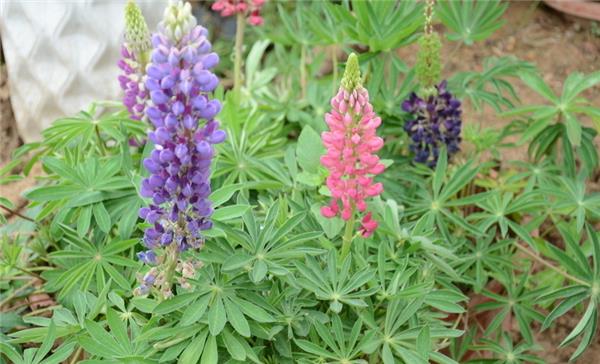
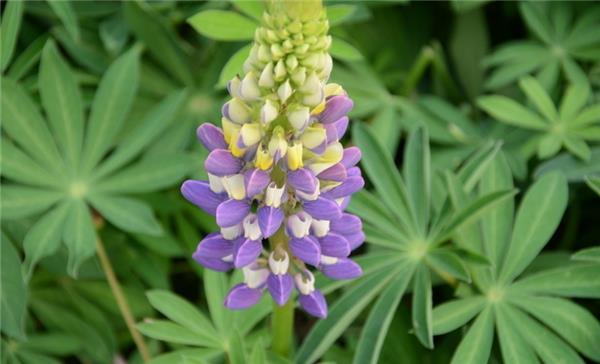
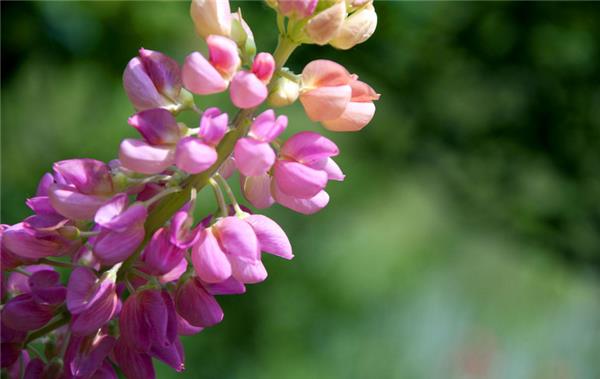
Lupine is an annual herbaceous plant, 20-70 cm tall. When tea farmers in the mountainous areas of Taiwan, China, grow tea, especially the Taiwan-specific high-mountain cloud-and-mist tea, they need to plant "lupines" as a companion around the tea hills, or even near the tea plants themselves, because this plant is said to help the tea grow healthily and to give the tea a fragrant, sweet quality. Lupine has palmate compound leaves, mostly borne at the base, with 10-17 leaflets, lanceolate to oblanceolate, thick in texture, with smooth upper surfaces and coarse hairs on the underside. The raceme is terminal, 40-60 cm tall, spire-shaped, with rich, brilliant flower colors, commonly red, yellow, blue, pink, etc. The small flower has 2 sepals, lip-shaped, upright at the sides, with margins rolled back; the keel petal is curved. The pod is 3-4 cm long, and the seeds are relatively large, brown and glossy, flat and round in shape. There are many horticultural cultivars. Native to North America, it mostly grows in sandy, temperate regions.
Lupine is a genus in the Fabaceae family. Most plants of this type are perennial herbaceous plants, about 0.3 to 1.5 m tall; there are also a few annual plants, and some are shrubs that can grow to more than 3 m tall. Like many other legumes, lupines also take part in nitrogen fixation.
II. Ecological habits of lupines
They like cool conditions and plenty of sunlight, dislike intense heat, and tolerate slight shade. They are deep-rooted and seldom form root nodules. They grow in sandy soil and require deep, fertile, loose, well-drained acidic sandy loam (pH 5.5); plants grow poorly in neutral and slightly alkaline soil. Lupines are relatively cold-tolerant (above -5°C), prefer a cool climate and a sunny location, dislike intense heat, tolerate slight shade, and need fertile, well-drained sandy soil. The main root is well developed, with few fibrous roots, and they do not tolerate transplanting. The root system is well developed and drought-tolerant, best suited to sandy soil, and it also has a relatively strong ability to use the sparingly soluble phosphorus in phosphates. It can still grow in rainy, easily waterlogged areas and in acidic soils where other plants struggle to grow; however, calcareous soil or poor drainage often leads to poor growth. It can endure a temperature of 0°C, but freezes to death when the temperature falls below -4°C; intense summer heat also inhibits growth. Lupines like cool conditions and plenty of sunlight, dislike intense heat, and tolerate slight shade. They are deep-rooted and seldom form root nodules. They require deep, fertile, loose, well-drained, acidic sandy loam (pH 5.5), and plants grow poorly in neutral and slightly alkaline soil. The lupine seedling stage lasts 30 to 35 days; after the true leaves have fully unfolded, the seedlings are transplanted and divided. Lupines have well-developed root systems, so keep the original soil when transplanting to help the seedlings establish.
III. Cultivation techniques for lupines
The lupine seedling stage lasts 30-35 days; after the true leaves have fully unfolded, the seedlings are transplanted and divided. Lupines have well-developed root systems, so keep the original soil when transplanting to help the seedlings establish. Before planting out, they should be repotted 1-2 times depending on their growth, and it is best to choose tall bucket-shaped pots to meet the growth needs of the taproot-type root system, and to determine a reasonable planting and placement density. For autumn-sown planting, corresponding cold-protection measures should be taken for overwintering, with the temperature preferably above 5°C, to avoid frost damage to the leaves, which would affect early vegetative growth and ornamental effect. Lupines like cool conditions, and since they are also perennials, special attention should be paid to their management during high summer temperatures, to prevent yellowing leaves, stunted growth, or even death caused by high heat, excessive moisture, and scorching sunlight. In landscaping use, flowering lupines can also be planted directly among the trees in woodland or in cool, ventilated spots, making summer management easier. After potted plants have been enjoyed, promptly cut off the remaining flower spikes and dead old leaves, control fertilizer and water, and do a good job of shade protection during the hot period to ensure they safely pass the summer.
IV. How to grow lupines
According to the growth habits of lupines, controlling and adjusting the pH of the growing medium during cultivation is crucial for the normal growth and flowering of lupines. In general, a relatively simple and effective adjustment method is to apply sulfur powder to the growing medium. Since sulfur needs a certain amount of time to decompose in the medium (about 40 days or more) before it can take effect, application should be carried out as early as possible.
Generally, this starts when 2-3 true leaves appear after transplanting, and the application rate depends on the original pH of the growing medium. In addition, although acidic fertilizers such as ferrous sulfate and aluminum sulfate can lower the pH in the short term, excessively high salt ion concentrations can poison plant roots, so they should be used less in production. Before planting out, they should be repotted 1 to 2 times depending on their growth, and it is best to choose tall bucket-shaped pots to meet the growth needs of the taproot-type root system, and to determine a reasonable planting and placement density. For autumn-sown planting, corresponding cold-protection measures should be taken for overwintering, with the temperature preferably above 5°C, to avoid frost damage to the leaves, which would affect early vegetative growth and ornamental effect.
Lupines like cool conditions, and since they are also perennials, special attention should be paid in summer, to prevent yellowing leaves, stunted growth, or even death caused by high heat, excessive moisture, and scorching sunlight. In landscaping use at the flowering stage, they can also be planted directly among the trees in woodland or in cool, ventilated spots, making summer management easier. After potted plants have been enjoyed, promptly cut off the remaining flower spikes and dead old leaves, control fertilizer and water, and do a good job of shade protection during the hot period to ensure they safely pass the summer.
The above is what we know about lupines, and we hope it can help you.
It is best to choose tall bucket-shaped pots to meet the growth needs of the taproot-type root system, and to determine a reasonable planting and placement density. For autumn-sown planting, corresponding cold-protection measures should be taken for overwintering, with the temperature preferably above 5°C, to avoid frost damage to the leaves, which would affect early vegetative growth and ornamental effect.
Lupines like cool conditions, and since they are also perennials, special attention should be paid in summer, to prevent yellowing leaves, stunted growth, or even death caused by high heat, excessive moisture, and scorching sunlight. In landscaping use at the flowering stage, they can also be planted directly among the trees in woodland or in cool, ventilated spots, making summer management easier. After potted plants have been enjoyed, promptly cut off the remaining flower spikes and dead old leaves, control fertilizer and water, and do a good job of shade protection during the hot period to ensure they safely pass the summer.
The above is what we know about lupines, and we hope it can help you.