A Detailed Guide to the Ornithogalum caudatum: Introduction and Growing Methods
Ornithogalum caudatum, also known as sea onion, gets its name because it resembles a tiger's eye. Because its bulbous scales look like a gourd, it is also commonly called gourd orchid. Let's take a look at what there is to know about the Ornithogalum caudatum.
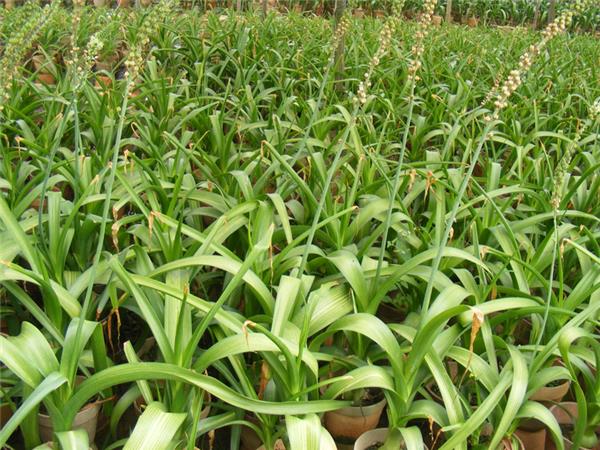
I. Ecological Habits of the Ornithogalum caudatum
The Ornithogalum caudatum is native to southern Africa. It likes sunlight and also tolerates partial shade, is cold-tolerant, fears direct sunlight in summer, likes a moist environment, and after heavy frost in winter its leaf clusters still remain verdant. It likes deep, humus-rich, loose, well-drained soil and an environment of partial shade in summer and ample light in winter. It is not cold-tolerant; in winter the greenhouse needs to be above 8°C. The bulb has a habit of summer dormancy, and the bulb has strong division capacity and a high propagation coefficient.
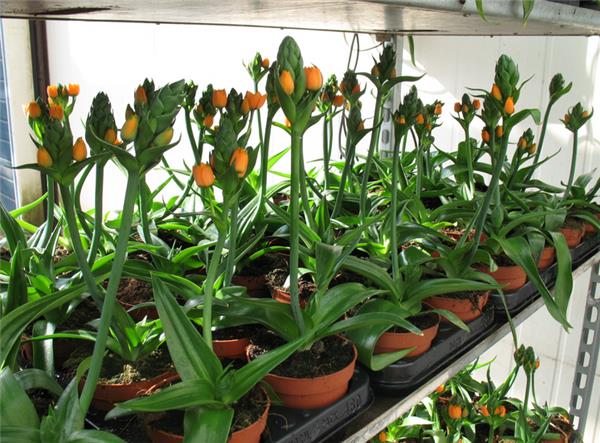
II. Cultivation Techniques for the Ornithogalum caudatum
1. Potting and Transplanting
When potting young seedlings, first place a 2-2 cm thick layer of coarse-grained substrate or ceramsite at the bottom of the pot as a drainage layer, then sprinkle a layer of fully decomposed organic fertilizer on top as a base fertilizer, about 1-2 cm thick, then cover with another layer of substrate about 1-2 cm thick, and then place the plant in, so as to separate the fertilizer from the root system and avoid burning the roots.
The substrate used for potting can be one of the following: peat + perlite + ceramsite = 2 parts + 2 parts + 1 part; peat + furnace slag + ceramsite = 2 parts + 2 parts + 1 part; sawdust + vermiculite + medium-coarse river sand = 2 parts + 2 parts + 1 part. After potting, water once thoroughly and place it in a slightly shaded environment for a week of care.
When transplanting young seedlings, first dig the planting hole, sprinkle a layer of organic fertilizer at the bottom of the planting hole as a bottom fertilizer (base fertilizer), about 4-6 cm thick, then cover with a layer of soil and place the seedling in, so as to separate the fertilizer from the root system and avoid burning the roots. After placing the seedling in, backfill the soil to cover the root system, and press the soil firm with your foot, then water once thoroughly.
2. Humidity Management
It likes a relatively dry air environment; when rainy days last too long, it is prone to infection by pathogens. It fears being rained on; keep the leaves dry at night.
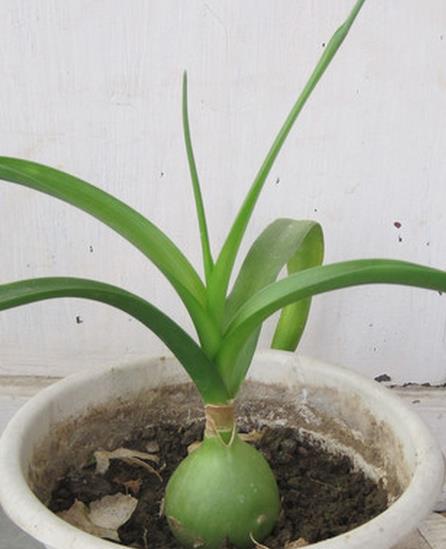
3. Temperature Management
It likes a cool climate and fears intense heat, making it difficult to get through summer; it is not tolerant of frost and cold, and when the temperature drops below 10°C it will enter dormancy. The most suitable growing temperature is 15-28°C.
4. Light Management
In the three seasons of late autumn, winter and early spring, since the temperature is not very high, it should be given direct sunlight to help it carry out photosynthesis and form flower buds, bloom and set seed. If encountering high-temperature weather or in summer, it needs to be shaded from about 50% of the sunlight. If it is kept indoors for ornamental care after blooming, it should be placed near a southeast-facing door or window, so as to extend the flowering period and increase the number of flowers as much as possible.
5. Fertilizer and Water Management
It does not have high requirements for fertilizer and water, and it also fears indiscriminate fertilization, concentrated fertilizer and one-sided application of nitrogen, phosphorus and potassium fertilizers. It is required to follow the fertilization (watering) principle of "light fertilizer applied frequently, small amounts with more frequent applications, complete nutrition": spring and autumn are the two peak growing seasons for it, and fertilizer and water management follows the cycle of "Hua Bao" - "Hua Bao" - clear water - "Hua Bao" - "Hua Bao" - clear water (at the very least, ensure two "Hua Bao" applications per week), with an interval period of about: 1-4 days for outdoor care; 2-6 days for indoor care; shorter intervals on sunny days or during high temperatures, and longer intervals or no watering on rainy days or during low temperatures.
Summer is the season of slow growth, so fertilizer and water should be appropriately controlled. Fertilizer and water management follows the cycle of "Hua Bao" - clear water - clear water - "Hua Bao" - clear water - clear water, with the interval period the same as in spring and autumn. Water in the early morning or evening when the temperature is low, and also spray the plant frequently. Try to arrange watering time in the early morning when the temperature is relatively low.
In winter, during the winter dormancy period, the main task is to do a good job of controlling fertilizer and water. Fertilizer and water management follows the cycle of "Hua Bao" - clear water - clear water - "Hua Bao" - clear water - clear water, with an interval period of about 7-10 days; shorter intervals on sunny days and during high temperatures, and longer intervals or no watering on rainy days and during low temperatures. Try to arrange watering time at noon on sunny days when the temperature is relatively high.
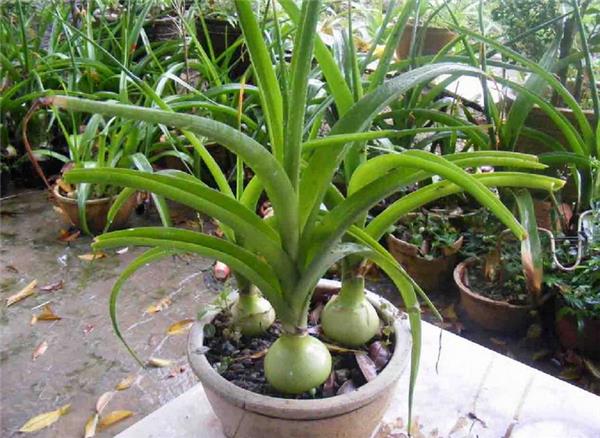
6. Shaping and Pruning
Dwarfing of the flower scape: the flower scape of the Ornithogalum caudatum can reach a height of fei meters, and the terminal raceme has as many as dozens of small flowers, with great weight, plus the flower scape is slender and long, making it easy to form a top-heavy, lodging phenomenon that affects the ornamental value. The dwarfing methods include:
① Multiple carvings of the flower scape: after the flower buds appear, use a small knife below to scrape the epidermis down to the upper end of the bulb, causing it to bend toward the wound; after a few days, scrape off the epidermis in the opposite direction below the wound, causing it to bend toward the new wound, forming an S-shaped bend. After it takes shape, make a third scrape on one side that has not yet been cut, causing it to bend again toward the third cut, and then make a cut below the newest wound to make it bend. After multiple scrapings, the flower scape continuously bends forward, backward, left and right, and thus the plant becomes dwarfed.
② One-time scraping: when the flower scape reaches about 40 cm in height, scrape the flower scape all at once according to the above method. The wound can be longer, but it must be bound and fixed with wire or plastic tape, and removed after the wound has healed and set.
The above is what there is to know about the Ornithogalum caudatum; I hope it helps you.
causing it to bend again toward the third cut, and then make a cut below the newest wound to make it bend. After multiple scrapings, the flower scape continuously bends forward, backward, left and right, and thus the plant becomes dwarfed.② One-time scraping: when the flower scape reaches about 40 cm in height, scrape the flower scape all at once according to the above method. The wound can be longer, but it must be bound and fixed with wire or plastic tape, and removed after the wound has healed and set.
The above is what there is to know about the Ornithogalum caudatum; I hope it helps you.