Introduction to the cultivation methods of the Moon Cactus (Cereus peruvianus monstrosus): a green plant that resembles a mountain-stone bonsai
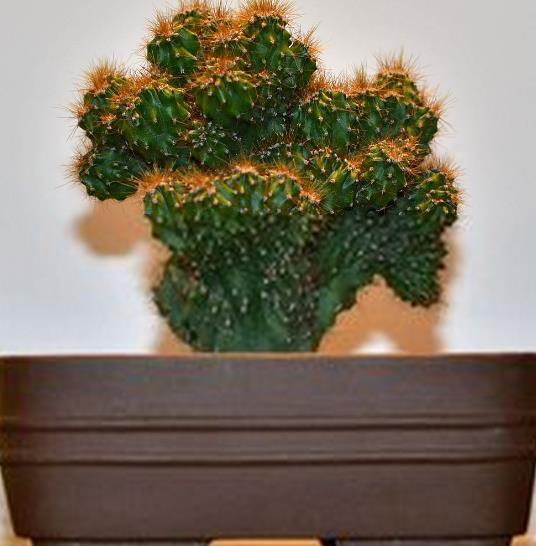
The Moon Cactus (Cereus peruvianus monstrosus) is a plant that yet resembles mountain stone. When grown in a pot, its form is like a mountain yet not a mountain, like a stone yet not a stone, verdant all year round and full of vitality, just like a unique pot of mountain-stone bonsai. Now let's take a look at what there is to know about the Moon Cactus.
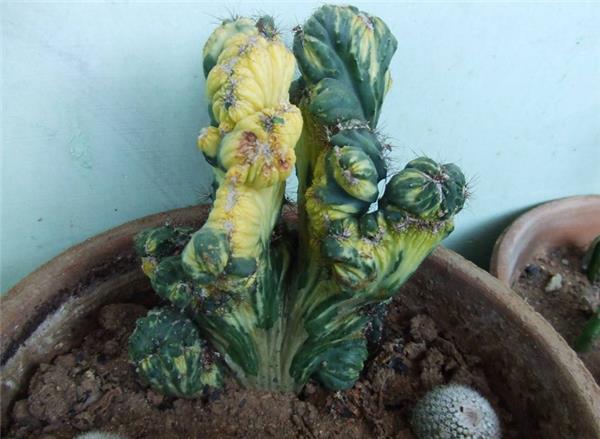
I. Introduction to the Moon Cactus
Because of its towering, rugged appearance that resembles mountain ranges, the Moon Cactus is also called the Cactus Mountain. Different varieties of the Moon Cactus differ in the shape, number and color of their peaks, hence the distinctions known as "coarse code", "fine code" and "dense code".
II. Cultivation techniques for the Moon Cactus
1. Cultivation
The Moon Cactus is easy to cultivate and grows rapidly. When the pads are small, repot every year, add loose garden soil, and water 2-3 times a week; there is no need to fertilize. Too much fertilizer and water easily causes rot. If light is insufficient, the plant grows thin and elongated, which affects its form. During the growing period it needs ample sunlight; in midsummer shade it slightly and keep the potting soil somewhat dry, so as to slow the growth rate and maintain an attractive plant shape.
2. Potting
When potting small seedlings, first place a 1-2 cm thick layer of coarse-grained substrate or expanded clay pellets at the bottom of the pot as a drainage layer, then scatter a layer of fully decomposed organic fertilizer on top as a base fertilizer, about 1-2 cm thick, then cover with another layer of substrate about 1-2 cm thick, and then place the plant in, so as to separate the fertilizer from the roots and avoid burning the roots.
For the potting substrate, you can choose one of the following. Vegetable garden soil: cinder = 3:1; or garden soil: medium-coarse river sand: sawdust (mushroom residue) = 4:1:2; or one of paddy soil, pond mud, or leaf mold. Or peat + perlite + expanded clay pellets = 2 parts + 2 parts + 1 part; vegetable garden soil + cinder = 3 parts + 1 part; peat + cinder + expanded clay pellets = 2 parts + 2 parts + 1 part; sawdust + vermiculite + medium-coarse river sand = 2 parts + 2 parts + 1 part. After potting, water once thoroughly and keep it in a slightly shaded environment for one week.
3. Humidity
The Moon Cactus prefers a relatively dry air environment. If rainy, overcast weather lasts too long, it is susceptible to infection by pathogens. It is afraid of rain, and the leaves should be kept dry at night. The most suitable relative air humidity is 40-60%. Temperature management: the most suitable growing temperature is 15°C-32°C. It is afraid of high temperature and stuffiness, and enters a dormant state in the intense summer heat when the temperature is above 33°C. It fears cold and frost, and the overwintering temperature needs to be kept above 10°C. It also enters a dormant state in winter when the temperature drops below 7°C. If the ambient temperature approaches 4°C, it will die from frost damage.
4. Summer
(1) Strengthen air convection so that the heat inside the plant can be released.
(2) Place it in semi-shade, or provide it with 50% shade.
(3) Mist it appropriately, 2-3 times a day.
5. Winter
(1) Move it indoors to a bright spot for care.
(2) Outdoors, you can wrap it in plastic film to overwinter, but every two days at the warmer midday hours you must uncover the film to let it breathe.
(3) Fertilizer and water management: it has a very strong drought tolerance and can grow even under arid environmental conditions, but this does not mean you should not water or fertilize it; its root system is afraid of waterlogging, and if water accumulates in the pot, or if you water and fertilize it too frequently, it easily causes root rot. The principle for watering and fertilizing it is "alternate dry and wet; when dry, dry it out completely; do not water until it is dry; when you water, water thoroughly", and when watering and fertilizing, avoid getting the plant wet.
6. Spring and autumn
These two seasons are its peak growing periods. Fertilizer and water management follows the cycle "Hua Bao" - clear water - "Hua Bao" - clear water, with intervals of roughly: 2-4 days for outdoor care; shorter intervals on sunny days or during high temperatures, and longer intervals or no watering on rainy, overcast days or during low temperatures; 3-6 days for indoor care. Summer: during the high-temperature period in summer it often enters a dormant state and has little demand for fertilizer and water, so you may even need to restrict fertilizer and water. Fertilizer and water management follows the cycle "Hua Bao" - clear water - clear water - "Hua Bao" - clear water - clear water, with intervals of roughly: 3-5 days for outdoor care. Try to schedule watering in the morning or evening when the temperature is lower. Also mist the plant frequently.
7. Covered cultivation
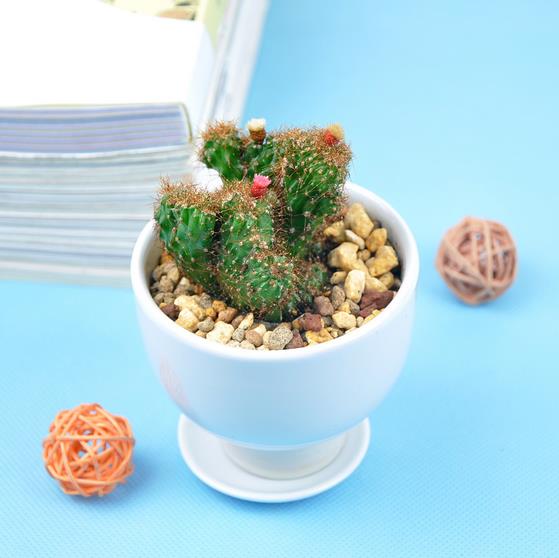
There are many reasons why the Moon Cactus grows rapidly under covered cultivation. Under covered conditions, the potting soil loses water slowly, which better maintains the slightly dry state in which the Moon Cactus grows rapidly, and also reduces damage to the plant caused by drought. Whether organic or inorganic fertilizers, in a covered environment they can all decompose better and exist in a form conducive to plant absorption. Because the nutrient supply is good, the Moon Cactus naturally grows strongly. The glass bottle or the glass-inset wooden box used usually also needs a layer of colorless plastic film over it to prevent sunlight from concentrating on a certain point of the plant; however, even without the protection of colorless plastic film, the angle of sunlight entering the cultivation container will also change. At this time, the plant has a larger light-receiving area than under normal lighting conditions, which is very beneficial for the assimilation of the Moon Cactus, and thus the plant's photosynthetic efficiency will increase and its photosynthetic products will also increase somewhat. Because of the good heat-retention effect, sunlight entering the glass bottle or glass-inset wooden box can make the ambient temperature rise rapidly and not drop quickly, which is especially meaningful in seasons with lower temperatures. Because the ambient temperature is relatively raised, the rapid-growth stage is also extended accordingly. Even more valuable is that the covered cultivation conditions create an environment with a large day-night temperature difference, with high temperatures during the day and low temperatures at night; this environment is very similar to the day-night temperature environment of the Moon Cactus's place of origin, and its effect in promoting better plant growth is very obvious. Under covered cultivation conditions, the growth and development of mites, the harmful animals that damage the Moon Cactus, are greatly restricted. Therefore, covered plants almost never show mite damage, and in this case the situation in which the Moon Cactus becomes "armored" and yellowed due to the presence of mites will not occur, and the plant looks even more like ranges upon ranges of layered green mountains.
The above is what there is to know about the Moon Cactus. I hope it can help you.
The angle of sunlight entering the cultivation container will also change. At this time, the plant has a larger light-receiving area than under normal lighting conditions, which is very beneficial for the assimilation of the Moon Cactus, and thus the plant's photosynthetic efficiency will increase and its photosynthetic products will also increase somewhat. Because of the good heat-retention effect, sunlight entering the glass bottle or glass-inset wooden box can make the ambient temperature rise rapidly and not drop quickly, which is especially meaningful in seasons with lower temperatures. Because the ambient temperature is relatively raised, the rapid-growth stage is also extended accordingly. Even more valuable is that the covered cultivation conditions create an environment with a large day-night temperature difference, with high temperatures during the day and low temperatures at night; this environment is very similar to the day-night temperature environment of the Moon Cactus's place of origin, and its effect in promoting better plant growth is very obvious. Under covered cultivation conditions, the growth and development of mites, the harmful animals that damage the Moon Cactus, are greatly restricted. Therefore, covered plants almost never show mite damage, and in this case the situation in which the Moon Cactus becomes "armored" and yellowed due to the presence of mites will not occur, and the plant looks even more like ranges upon ranges of layered green mountains.The above is what there is to know about the Moon Cactus. I hope it can help you.