An introduction to the characteristics of rose varieties: different rose varieties each have their own features
Roses have long symbolized beauty and love, and many people use roses to express their feelings. So how well do you know roses? Let us take a look together!
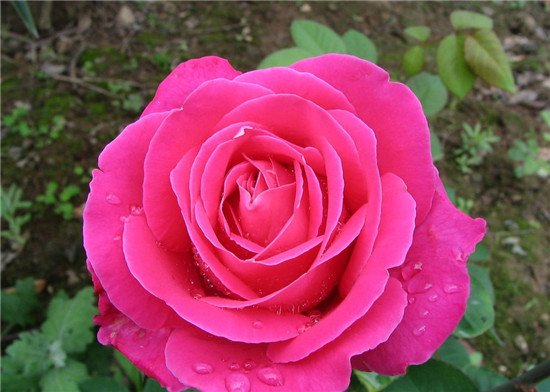
Introduction to roses
Rose, also known as cishi flower, paihuai flower, assassin, and chuanxin rose. A shrub of the genus Rosa in the family Rosaceae. As a crop, its flowers are mainly used for food and for extracting rose essential oil; rose oil is worth more than an equal weight of gold and is used in cosmetics, food, fine chemicals, and other industries.
The three outstanding members of Rosaceae - rose, Chinese rose, and wild rose - are in fact all plants of the genus Rosa. In Chinese, people customarily call varieties with large, solitary flowers Chinese roses, those with small clustered flowers wild roses, and those from which essential oil can be extracted roses. But in English they are all called rose. According to currently officially registered varieties, there are about 30,000 roses.
In addition, cut-flower "roses" are actually Chinese roses. "Bulgarian rose" is actually Rosa damascena. Authentic "Bulgarian rose essential oil" is actually Rosa damascena essential oil.
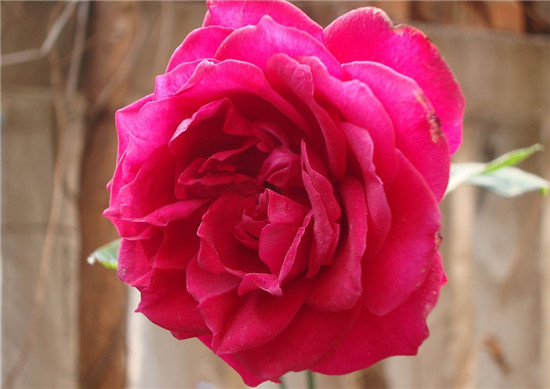
Rose belongs to the family Rosaceae, subfamily Rosoideae, genus Rosa; it is a deciduous shrub with many thorns on its branches. It has odd-pinnate compound leaves with 5-9 leaflets, elliptical, with marginal prickles, and a mostly wrinkled surface; the stipules are largely fused with the petiole. Flowers are solitary or several clustered together, purplish red, and fragrant.
Cut-flower "roses" are actually Chinese roses, with colors including pink, red, yellow, and white. Now there are many more colors, such as blue and black.
The morphology of roses
An erect shrub, up to 2 m tall; stems stout, clustered; branchlets densely covered with tomentum, with prickles and glandular hairs, and with straight or curved, pale yellow prickles, the prickles covered with tomentum outside. Leaflets 5-9 cm, 5-13 cm including the petiole; leaflets elliptical or elliptically obovate, 1.5-4.5 cm long, 1-2.5 cm wide, apex acute or rounded-obtuse, base rounded or broadly cuneate, margin sharply serrate, upper surface dark green, glabrous, veins sunken, wrinkled, lower surface grayish green, midvein prominent, reticulate veins obvious, densely covered with tomentum and glandular hairs, sometimes glandular hairs not obvious; petiole and rachis densely covered with tomentum and glandular hairs; stipules mostly adnate to the petiole, the free part ovate, margin glandular-serrate, lower surface tomentose.
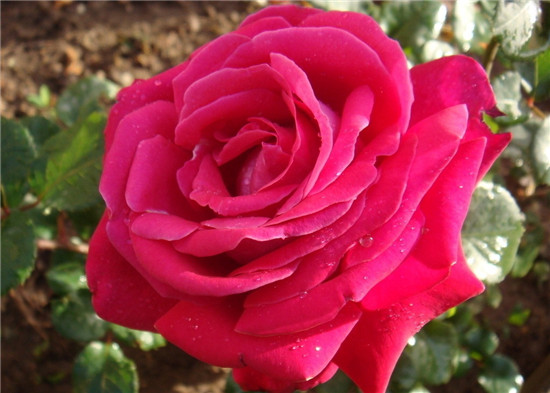
Flowers solitary in leaf axils, or several clustered; bracts ovate, margin glandular-hairy, tomentose outside; pedicel 5-22.5 mm long, densely covered with tomentum and glandular hairs; flowers 4-5.5 cm in diameter; sepals ovate-lanceolate, apex caudate-acuminate, often with pinnate lobes and expanded into leaf-like form, sparsely pubescent above, densely pubescent and glandular-hairy below; petals obovate, double to semi-double, fragrant, purplish red to white; styles free, hairy, slightly exserted beyond the mouth of the hypanthium, much shorter than the stamens. Fruit flattened-globose, 2-2.5 cm in diameter, brick red, fleshy, smooth, sepals persistent. Florescence May-June, fruiting period August-September.
The effects of roses
Pungent and sweet in taste, slightly warm in nature. It regulates qi and relieves depression, resolves dampness and harmonizes the middle, activates blood and disperses stasis. It contains volatile oil (rose oil), mainly citronellol, nerol, eugenol, phenylethyl alcohol, nonanol, benzyl alcohol, linalool, phenylethyl acetate, as well as quercitrin, bitter substances, tannins, gallic acid, carotene, red pigment, and other components. It is used for disharmony between the liver and stomach, epigastric and abdominal pain, chest tightness, nausea and vomiting, reduced food intake, or diarrhea; women's irregular menstruation, traumatic injuries, swelling and pain from stasis; bleeding due to blood stasis, hematemesis, hemoptysis; and early-stage carbuncle swelling or breast carbuncle.
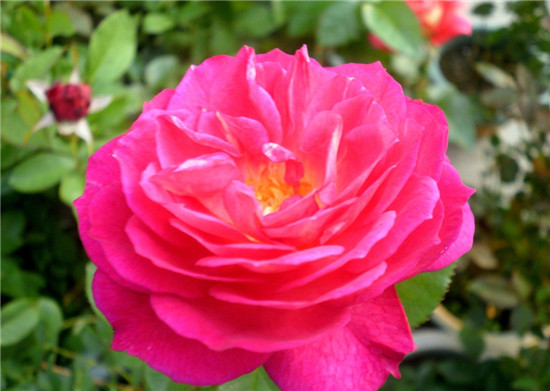
In addition, roses also contain a variety of nutrients and have a very good therapeutic effect on certain skin diseases. Long-term use can completely remove acne and pimples, making facial skin smooth and tender, and has a certain effect on treating facial chloasma.
For distending pain in the chest, hypochondrium, and abdomen, and for nausea and poor appetite, it can be combined with Xiangfu, fingered citron, and Amomum villosum, etc.
For irregular menstruation, premenstrual breast distending pain, and traumatic pain, the former can be combined with Angelica sinensis, Ligusticum chuanxiong, and white peony, etc. For traumatic pain, it can be used together with red peony, peach kernel, safflower, and the like.
It moves qi and relieves depression. This product is fragrant and dispersing, enters the liver and stomach meridians, opens depressed stomach qi, and disperses stagnant liver qi, so it has the function of moving qi and relieving depression. It can be used to treat liver-stomach qi pain, chest and hypochondriac distension, abdominal distending pain, and liver-wind headache. As "Bencao Zaixin" says: "It soothes the depressed qi of the liver and gallbladder, strengthens the spleen and reduces fire, and treats cold pain in the abdomen and accumulated cold in the epigastrium."
The above is all the content I have summarized for everyone on the variety characteristics of roses. I hope this article can help everyone. Please also continue to follow us.