A detailed introduction to the "man-eating flower," giving you a full understanding of this plant
The "man-eating flower" is a mysterious plant that grows along the Amazon River in the Americas. Just how mysterious is it? Let's explore it together!
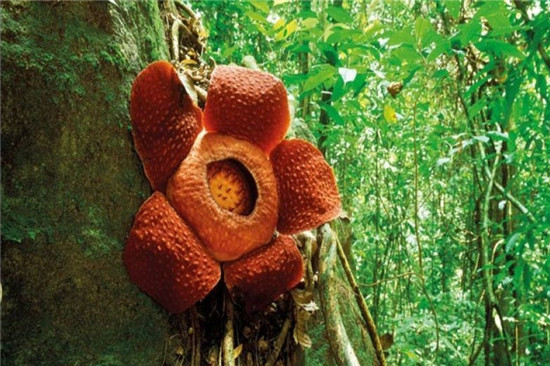
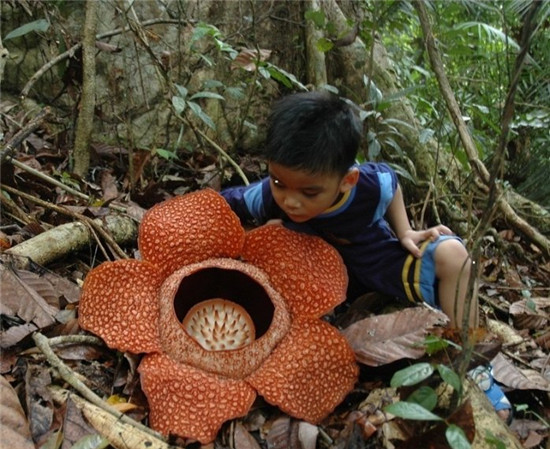
The "man-eating flower" grows in the primeval forests and swampy areas along the Amazon River in the Americas. Its form is extremely delicate and beautiful, with a flower shape resembling a sun disc. Its fragrance is just like that of an orchid, it can reach 1.5 m in diameter, and its petals are about 1.4 cm thick. One flower has 5 petals, and its leaves are 30 to 40 cm long. The "man-eating flower" relies on flies to pollinate it and absorbs nutrients from other plants to live, so it has no leaves and no stem. It has no division of the four seasons at all, so it is not certain when it will emerge. However, according to local people, May to October each year is its main growing season.
When it first emerges from the ground, it is only about the size of a ping-pong ball. After several months of slow growth, the flower bud goes from being the size of a ping-pong ball to the size of a cabbage, and then the 5 fleshy petals slowly open. By the time the flower is fully bloomed, two days and two nights have already passed. What is hard to believe is that the huge flower that the Rafflesia has worked so hard to produce can actually only last 4-5 days, and it is said that during these 4-5 days, the flower will continuously release a peculiar stench, so that large animals naturally avoid it, while some insects that are attracted to foul smells come to pollinate it and act as its matchmaker. When the petals wither, they turn into a pile of rotten black matter. Before long, the fruit also ripens, hiding within it many tiny seeds, ready at any moment to fall into the ground and seek a suitable place to germinate.
Adrian Slack pointed out in his monograph "Carnivorous Plants" that the leaves of these plants have become very peculiar. Some are like pitchers, some are like small pouches or mussel shells, and some have leaves covered with glandular hairs that can secrete various digestive fluids to digest the bodies of insects. They usually prey on small insects such as mosquitoes and flies, but sometimes they can also "eat" large insects like low-frequency dragonflies. Most of these carnivorous plants grow in areas that are frequently washed by rainwater and lack minerals. Because the soil in these areas is acidic and lacks nitrogen nutrition, the absorption function of the plant roots is not great. In order to meet the needs of survival, they went through a long evolutionary process and became a type of plant that can eat animals. However, Adrian Slack emphasized that among the carnivorous plants known so far, none has been found to be like what some articles describe: bearing many long branches, and if a passerby accidentally touches them, the branches will tightly entangle, and the branches secrete an extremely sticky digestive fluid that firmly sticks to and strangles the person, until all the nutrients in the human body have been absorbed.
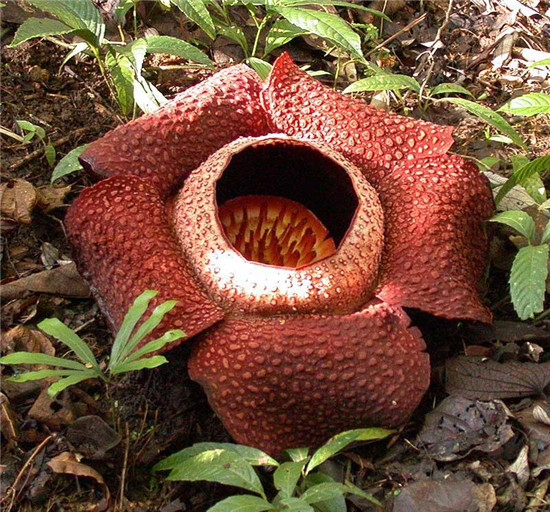
The living habits of the "man-eating flower"
The "man-eating flower" is a mysterious plant with certain habits similar to those of animals. It must swallow and eat at least ten living lives before it can produce one flower. Ten yields one, meaning that among ten flowers, only after being nourished by the continuous fresh lives of living creatures can one small green fruit be set! Having eaten countless insects, ants, birds, beasts, and even innocent passersby along the way, and also having devoured the other nine small fruits that bore fruit at the same time, only after a hundred years will one green fruit of the "man-eating flower" go from green to brownish red and then ripen into a blood-dripping crimson. At that time it becomes a rare treasure of the world. It can be made into a miracle drug that increases ability values, but unfortunately that is only a legend, and no one has ever seen a crimson "man-eating flower" fruit.
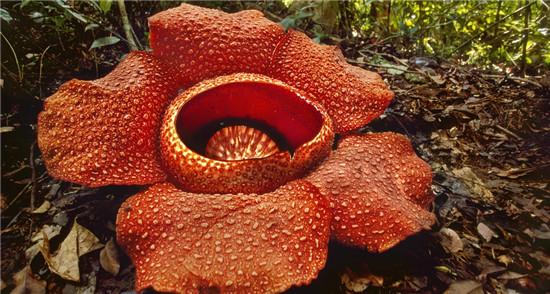
The species reproduction of the "man-eating flower"
The "man-eating flower" relies on flies to pollinate it and absorbs nutrients from other plants to live, so it has no leaves and no stem. It has no division of the four seasons at all, so it is not certain when it will emerge. However, according to local people, May to October each year is its main growing season. When it first emerges from the ground, it is only about the size of a ping-pong ball. After several months of slow growth, the flower bud goes from being the size of a ping-pong ball to the size of a cabbage, and then the 5 fleshy petals slowly open. By the time the flower is fully bloomed, two days and two nights have already passed. What is hard to believe is that the huge flower that the Rafflesia has worked so hard to produce can actually only last 4-5 days, and it is said that during these 4-5 days, the flower will continuously release a peculiar stench, so that large animals naturally avoid it, while some insects that are attracted to foul smells come to pollinate it and act as its matchmaker. When the petals wither, they turn into a pile of rotten black matter. Before long, the fruit also ripens, hiding within it many tiny seeds, ready at any moment to fall into the ground and seek a suitable place to germinate.
The above is the full content of the detailed introduction to the "man-eating flower" that I have summarized for everyone. I hope this article can help you. Please also continue to follow us.
The flower will continuously release a peculiar stench, so that large animals naturally avoid it, while some insects that are attracted to foul smells come to pollinate it and act as its matchmaker. When the petals wither, they turn into a pile of rotten black matter. Before long, the fruit also ripens, hiding within it many tiny seeds, ready at any moment to fall into the ground and seek a suitable place to germinate.The above is the full content of the detailed introduction to the "man-eating flower" that I have summarized for everyone. I hope this article can help you. Please also continue to follow us.