An Analysis of the Characteristics and Medicinal Value of the Night-Blooming Cereus
Everyone uses "a flash in the pan" to describe the fleeting beauty of the night-blooming cereus. Friends who have never seen the night-blooming cereus bloom are surely looking forward to it very much. Next, I will introduce the characteristics and medicinal value of the night-blooming cereus.
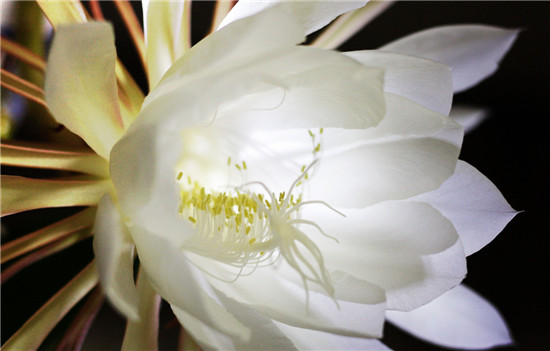
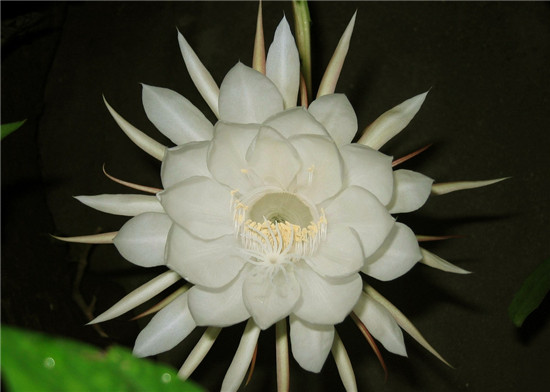
The night-blooming cereus, also known as Qionghua, Beauty Under the Moon, Qionghua, Beauty Comes with the Moon, and so on, each name is so pleasant-sounding and full of poetry. Each night-blooming cereus plant is about 1-2 m tall, with an upright main stem in a cylindrical shape. Irregular branches grow on the stem, and the leaves at the stem nodes are green and flat in shape. However, the edges of its stem nodes are wavy or concave, without thorns. The flowers grow from small areoles on the edges of the stem segments, about 25-30 cm long and 10 cm wide. When in bloom they are white, and the flowering period is between July and August. In winter it must be cultivated in a greenhouse.
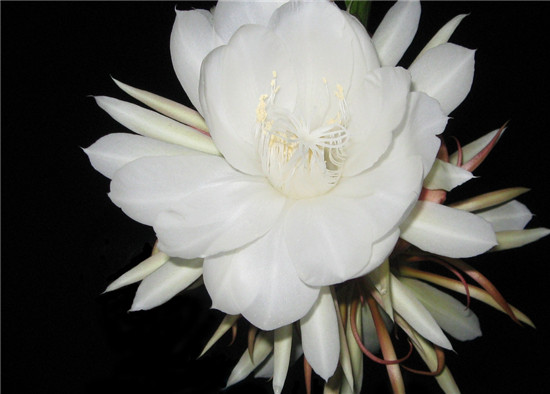
Why does it give rise to the saying "a flash in the pan"? When the night-blooming cereus blooms, the flowers are large and beautiful, but it does not bloom during the day. It only opens after about eight or nine o'clock at night, and what is especially remarkable is that it blooms for only 3-4 hours, which is very brief. What leaves a deep impression about the night-blooming cereus is also its gorgeous and moving posture when it blooms, but after a few hours it closes its corolla, and the flower withers very quickly, so people describe things that vanish quickly as "a flash in the pan." But in fact, the reason the night-blooming cereus blooms for such a short time is related to the climate of its place of origin. It grows in the tropical deserts of Mexico. The high temperatures before eight or nine o'clock at night and the low temperatures after midnight are both unfavorable for blooming. In order to reduce water loss and survive, it gradually developed the habit of blooming for a short time at night.
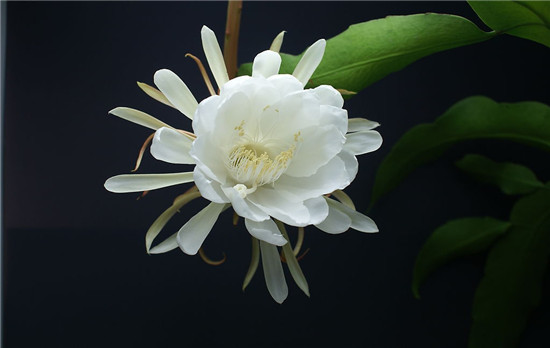
Its living environment. The night-blooming cereus likes a warm, humid, and semi-shaded environment. It is not tolerant of frost and must not be exposed to strong sunlight, otherwise it will die. Generally, for it to grow healthily, attention should be paid to the temperature. Between March and September, it should be in an environment of 13-19°C, while from September to December it should be kept at 12-18°C, and from December to March of the following year the night-blooming cereus should be kept at a temperature of 10-16°C. In particular, note that in winter it must not be lower than 0°C. At the same time, the night-blooming cereus should be given fertile, well-drained sandy soil, and air humidity should be maintained.
Cultivation Methods for the Night-Blooming Cereus
1. Soil: The night-blooming cereus does not have high soil requirements for cultivation. For potting soil, a mixed soil of 2 parts peat soil, 1 part coarse sand, and 1 part cinder can be used. The potting soil should not be too wet.
2. Sunlight: The night-blooming cereus likes semi-shade. In spring and autumn, place it outdoors in a semi-shaded spot for cultivation, avoiding direct sunlight. In summer, it is best to place it indoors in a bright, well-ventilated place, or on a north-facing balcony or under the shade of a large tree, but avoid exposure to strong sunlight, otherwise it can easily cause the abnormal stems to turn yellow and wilt, reducing its ornamental value.
3. Temperature: The night-blooming cereus likes a warm, humid, and semi-shaded environment, so attention should be paid to the temperature. Between March and September, it should be in an environment of 13-19°C, while from September to December it should be kept at 12-18°C, and from December to March of the following year the night-blooming cereus should be kept at a temperature of 10-16°C. In particular, note that in winter it must not be lower than 0°C. In northern regions, potted plants can generally be moved indoors for overwintering in early to mid-October. During overwintering, place them in a sunny spot and keep the room temperature at about 10°C, control watering, and keep the potting soil from becoming excessively dry.
4. Watering: In spring and autumn, water the night-blooming cereus by the principle of watering when dry and stopping when wet. In summer, watering should be appropriately increased, but water must not accumulate in the pot, otherwise the roots are prone to rot. In dry and hot seasons, spray the plant with clean water once in the morning and once in the evening every day to increase air humidity and promote growth and flowering.
5. Fertilizing: The night-blooming cereus relatively likes fertilizer and also has relatively high fertilizer requirements. Well-rotted organic fertilizer is best, plus a small amount of bone meal or superphosphate. During the growing period, apply a dilute cake fertilizer solution about once every half month. If a small amount of rice vinegar or ferrous sulfate is added to the liquid fertilizer, the growth will be even better. After flower buds appear, increase the application of 0.2% potassium dihydrogen phosphate 1-2 times, and the flowers will be large and brightly colored. After the flowers fade, apply liquid fertilizer 1-2 more times immediately, which is beneficial for flowering the following year.
The Medicinal Value of the Night-Blooming Cereus
1. Clearing heat and relieving cough, preventing and treating pulmonary tuberculosis and asthma.
The night-blooming cereus has the effect of clearing heat and relieving cough. We know that long-term continuous coughing may trigger diseases such as pulmonary tuberculosis and even asthma. These minor ailments cannot be ignored, and pulmonary tuberculosis and asthma are even more necessary to prevent and treat. Usually, we can drink flower tea brewed from the night-blooming cereus more often to help us clear heat, eliminate phlegm, and reduce inflammation. The effects are all very good. In addition, coughing caused by pulmonary tuberculosis can also gradually have its symptoms relieved under the heat-clearing and cough-relieving effect of the night-blooming cereus.
2. Palpitations and insomnia, pain in the heart and stomach due to qi.
For friends who are often prone to palpitations or always suffer from insomnia, regularly drinking some night-blooming cereus flower tea is also of great benefit. The night-blooming cereus also has a very good effect on treating anxiety and insomnia. For pain in the heart and stomach due to qi caused by poor mental conditions such as palpitations and insomnia or other reasons, it also has an obvious effect of regulating qi and relieving pain.
3. Purifying the blood and eliminating toxins, preventing and treating constipation.
Usually, when we brew fresh night-blooming cereus with hot water, we can also add some rock sugar to blend and drink. Rock sugar is warm in nature. When brewed together with the night-blooming cereus, it can not only relieve cough and eliminate phlegm, but also has the effect of purifying the blood and eliminating toxins; its heat-clearing effect can also treat heat syndrome of the large intestine, and has a certain therapeutic effect on constipation and bloody stool caused by it.
4. Preventing and treating high blood pressure and excessively high blood lipids.
In addition to adding rock sugar and brewing it for drinking, we can also blend the night-blooming cereus with honey and brew it for drinking. We can also put some night-blooming cereus into the pot when stewing meat, then pour in an appropriate amount of rice wine, or add medicinal materials such as Rehmannia root and cassia seed and stew them together. After stewing, not only is the meat unusually delicious, but after eating it can also effectively prevent and treat high blood pressure and excessively high blood lipids.
The above is all the content I have summarized for everyone on the characteristics of the night-blooming cereus and its medicinal value. I hope this article can help everyone. Please also continue to follow us.