A detailed explanation of the characteristics and habits of the Chinese hackberry, for a comprehensive understanding of this plant
The Chinese hackberry is a deciduous tree of the order Rosales (Urticales), and this tree is often cultivated as a bonsai. Next, let us take a closer look at it together.
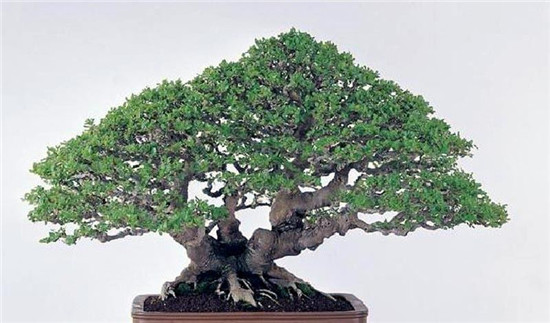
Introduction to the Chinese hackberry
Chinese hackberry, family Ulmaceae, genus Celtis. Deciduous tree, bark gray, smooth, rough but not fissured, branches spreading flat. Leaves relatively thick, broadly ovate or round, with serrations on the upper-middle margins, leaf surface hairless, veins sparsely covered with short soft hairs along the underside. Monoecious, male flowers clustered in the leaf axils of the lower part of the current year's branches; female flowers solitary in the leaf axils of the upper part of the branches, 1-3 clustered together. Drupe nearly spherical, orange-red when ripe, flowering period April, fruit ripening period October. Mostly grows in shaded places on plains; distributed across the Huai River basin, south of the Qinling Mountains to the provinces and regions of South China, scattered on plains and low mountain areas, commonly seen near villages.
Garden use: The Chinese hackberry has a full and broad crown and dense shade, making it most suitable as a shade tree for parks and courtyards. It can also be planted in rows along streets and highways as a street tree. It can be used for greening in urban residential areas, schools, factories and mines, street green spaces, and the "four sides" greening of rural areas, and is also a tree species for windbreaks and embankment protection in river network areas. It can also serve as a landscape feature for villages.
Habits: Light-loving and shade-tolerant. Prefers fertile, moist, loose soil, tolerant of drought and barren conditions, tolerant of mild salinity and alkalinity, and tolerant of waterlogging. Highly adaptable, deep-rooted, strong sprouting ability, wind-resistant. Tolerant of smoke and dust, resistant to pollution. Grows relatively fast, long-lived.
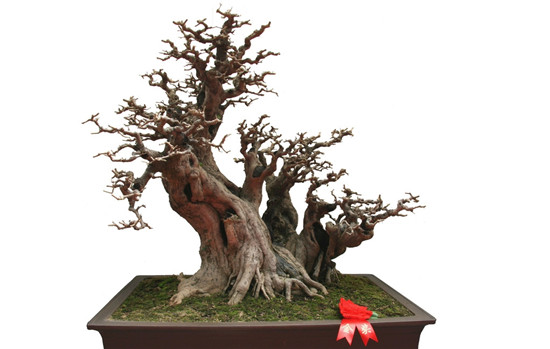
Characteristics of the Chinese hackberry
Deciduous tree, up to 20 m tall, crown oblate. Bark grayish-brown, rough but not fissured, branches spreading flat. Leaves broadly ovate or elliptical, apex shortly acuminate, base oblique, upper half of the margin with shallow serrations, veins tri-nerved, lateral veins fewer than six pairs, not reaching the leaf margin, leaf surface hairless, veins sparsely covered with short soft hairs along the underside. Flowering period April, flowers 1-3 borne in the leaf axils of the current year's branches. Fruit ripens in October, drupe nearly spherical, orange-red when ripe, drupe surface with sunken dots and ridged back, solitary or two joined together.
Habits of the Chinese hackberry
Light-loving, slightly shade-tolerant. Tolerant of waterlogging, and also has a certain cold resistance. Not demanding about soil, prefers fertile, moist and deep soil, tolerant of mildly saline-alkaline soil. Deep-rooted, strong wind resistance. Relatively long-lived; old trees 200-300 years old are commonly seen in its central distribution area. Resistant to smoke, dust and toxic gases.
The role of the Chinese hackberry
The Chinese hackberry has dense shade and a broad crown, making it an important tree species for urban and rural greening. It can be planted as a solitary shade tree for courtyards, or used as a street tree. It can also be selected as a tree species for greening factory and mining areas as well as for windbreaks and embankment protection. It is also a commonly used tree species for making bonsai.
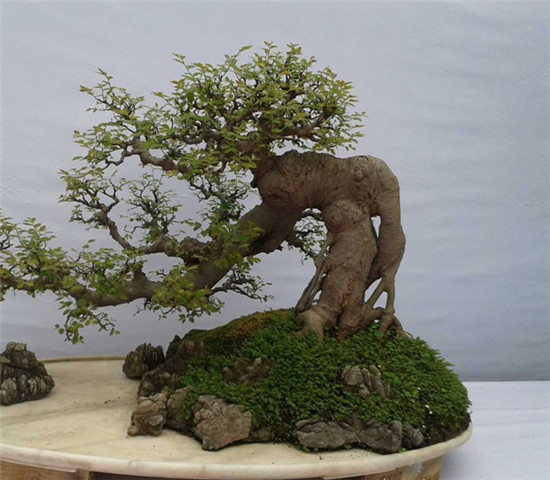
Making a Chinese hackberry bonsai: the potting process
1. Choosing a pot
The main ornamental value of a Chinese hackberry bonsai is its classical elegance, so it is suitable to use a purple clay ceramic pot or a glazed ceramic pot, and the pot shape is best rectangular, square or oval, while also being determined according to the tree shape. Since the Chinese hackberry has dense leaves, deep green leaf color, and grayish-brown, rough bark, the pot color is best light yellow or ochre-brown, to create a contrasting and enhancing effect.
2. Soil
The Chinese hackberry is not picky about soil and is highly adaptable, but it grows better under fertile, loose, well-drained sandy loam conditions. When cultivating bonsai, a growing medium generally made by mixing garden soil with sandy soil or rice husk ash is used, as this is more suitable for forming a loose soil environment and more conducive to the growth of the Chinese hackberry.
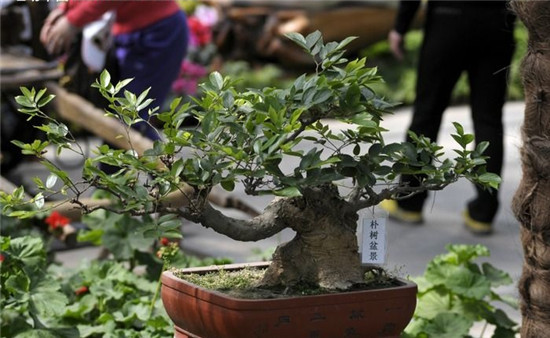
3. Planting
It is best to plant after autumn or before spring bud break. When planting, the root system should be properly pruned and tidied, cutting away overly long main roots and keeping more lateral roots and fibrous roots, and mounding with loose, fertile soil. At the same time, the branches and leaves should also be properly thinned. If a medium-shallow pot is used for planting, metal wire is also needed to secure the roots to the bottom of the pot to prevent it from toppling.
Making a Chinese hackberry bonsai: shaping techniques
1. Processing
The shaping of the Chinese hackberry mostly uses the method of coarse wiring and fine pruning, while the Lingnan school's large tree-form processing completely adopts the pruning method. This technique, which imitates Lingnan painting, places special emphasis on pruning skills, building up branches and truncating the trunk, and values the overall composition effect. Chinese hackberry bonsai made with this pruning method can maintain a beautiful form whether the branches and leaves are lush or in the leafless winter state.
2. Tree form
The Chinese hackberry bonsai is also not fussy about tree form; whether made into the straight-trunk style, slanting-trunk style, curved-trunk style, lying-trunk style or rock-clinging style, it can present a beautiful posture. Its branches and leaves can be wired into pads or pruned into steamed-bun-shaped round pads, and can also be processed into a natural tree form.
The above is all the content I have summarized for you on the characteristics and habits of the Chinese hackberry plant. I hope this article can help everyone. Please also continue to follow us.
I hope this article can help everyone. Please also continue to follow us.