What are the common daily cultivation methods for succulents?
Many succulent growers who have only been into succulents for a while surely have plenty of questions they don't know the answers to. Compared with other plants, growing succulents is actually quite demanding. Let's take a look together!
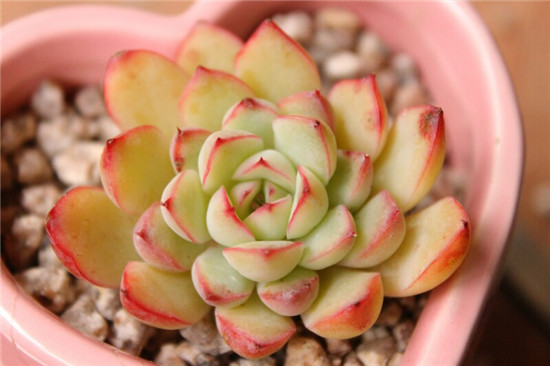
Dead leaves on succulents are the most dangerous thing
Layer upon layer of dead leaves are a breeding ground for mealybugs. In the south, in summer, because of rain or watering, the piled-up dead leaves easily create a stuffy, humid micro-environment, and combined with the wounds from mealybug feeding, the stem easily develops black rot. For tough plants like Echeveria glauca (blue echeveria), the stem slowly becomes wet, rots and decays. So if your succulents haven't had their dead leaves cleaned for a long time, clean them up properly before tragedy strikes.
When pulling off the dead leaves, be careful to steady the succulent first, then clean, so as not to damage the roots. After cleaning the dead leaves, if you find the succulent can't stand steadily, you can prop it up with a small object for now; once the roots grow out, it will be stable. If you unfortunately find mealybugs, you can consider washing them off with water as a temporary fix, and do a proper cleanup once the weather cools down. If you really can't stand it, when spraying pesticide pay attention to the concentration, and after spraying place the plant in a cool, ventilated environment. Never put it in direct sun, as it easily causes pesticide burn.
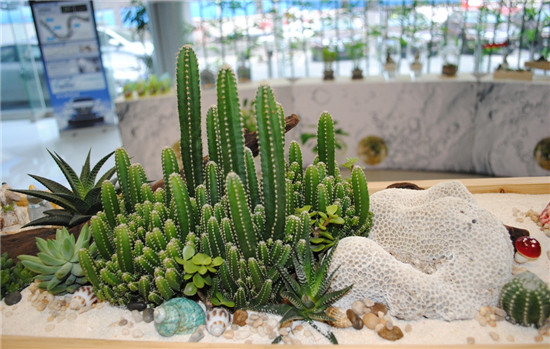
The bottom is ruined while the top still looks fine, and this is all caused by dead leaves at the base. At the same time, it tells us how important top dressing is: with top dressing, at least after watering, the dead leaves at the base won't absorb moisture so easily, and perhaps they won't rot away like this.
There is another situation that also causes succulents to have a lot of dead leaves, and that is when the succulent enters dormancy, typically like the mountain rose (Greenovia aurea) in summer. In this case, by no means pull off the dead leaves, because here the dead leaves play a protective role. What you should pay attention to is not watering or watering less; when watering, just water along the edge of the pot, and be sure to avoid the leaves as much as possible. Once water accumulates in the dead leaves, it's a tragedy.
Common methods and precautions for using fungicides on succulents
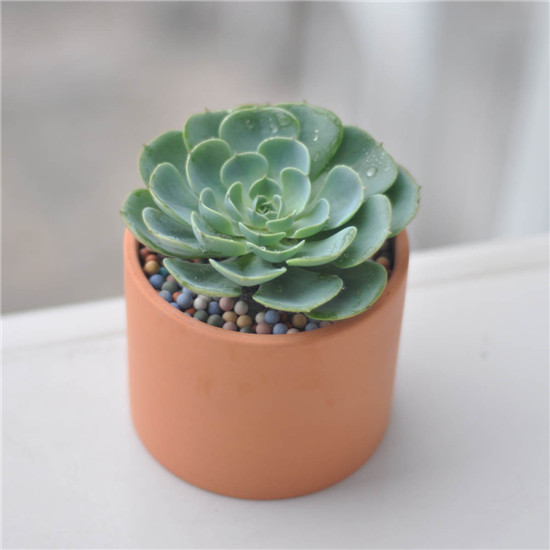
From soil mix to leaf propagation, succulents seem to have a standard procedure for every step, and as long as you follow it, nothing goes wrong. In fact, illness ultimately comes down to external causes. Everyone knows that too much water causes rot, mushiness and black rot, so water must be controlled. But the culprit behind mushiness and black rot is fungi: too much water leads to a massive proliferation of fungi, which in turn causes soil oxygen deficiency and malignant fungal growth, finally breaking down the plant's epidermal defenses and invading the interior. Since most plants have no immunity, once pathogens enter the plant body they can run rampant, hence the legend of black rot killing a plant overnight. So besides controlling water, what other way is there to prevent disease? That is sterilization.
If growing methods can prevent disease at the source, then chemicals are like blocking the enemy midway. Not only that, chemicals come in many kinds: besides fungicides and insecticides for disease and pest control, there are also plant growth regulator chemicals, as well as fertilizers.
First fungicides, then insecticides, and finally plant regulators and fertilizers. I will not only introduce usage and dosage, but also mention some common knowledge, which will be of great help to succulent growers who want to go deeper into growing succulents. I majored in law, so my wording is objective and stiff; please don't mind, and if there are shortcomings, experts are welcome to point them out.
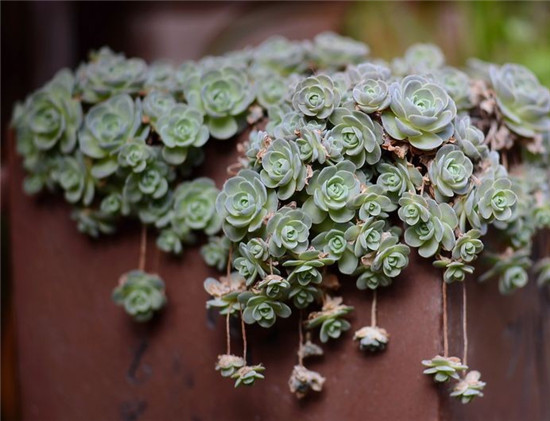
Mixing pesticides for succulents
First, accurately weigh the amount of pesticide and the amount of water; do not arbitrarily increase or decrease the concentration, and mix strictly according to the instructions. Plant growth regulators in particular are very sensitive to concentration. First use a small amount of water to make a stock solution, then dilute it.
Applying pesticides to succulents
First, choose suitable equipment. For example, when spraying fungicides, choose a nozzle with smaller droplets; when spraying insecticides, you can choose a slightly larger nozzle. Second, apply according to the weather: do not spray in strong wind or rain; do not spray before rain; do not spray when there is dew; do not spray under high temperature and blazing sun. At high temperatures, chemicals are highly volatile, and the chemicals enter the human body through breathing and skin pores, easily causing poisoning of the operator. Try to choose sunny, windless conditions, generally 8-10 a.m. (after the dew has dried) and 5-7 p.m. (around sunset), and choose times when pests are most active for spraying. Third, adopt corresponding application techniques according to different target pests and diseases. For example, pathogens are generally on the underside of crop leaves, so when applying you must spray the underside of the leaves evenly; aphids generally occur on tender shoots; mites are mostly on the underside of older leaves in the inner canopy; and mealybug larvae are all on the roots. In addition, fungicides can generally be applied directly to wounds on the plant.
The above is the entire content of the common daily cultivation methods for succulents that I have summarized for everyone. I hope this article can help you. Please also keep following us.
For example, pathogens are generally on the underside of crop leaves, so when applying you must spray the underside of the leaves evenly; aphids generally occur on tender shoots; mites are mostly on the underside of older leaves in the inner canopy; and mealybug larvae are all on the roots. In addition, fungicides can generally be applied directly to wounds on the plant.The above is the entire content of the common daily cultivation methods for succulents that I have summarized for everyone. I hope this article can help you. Please also keep following us.