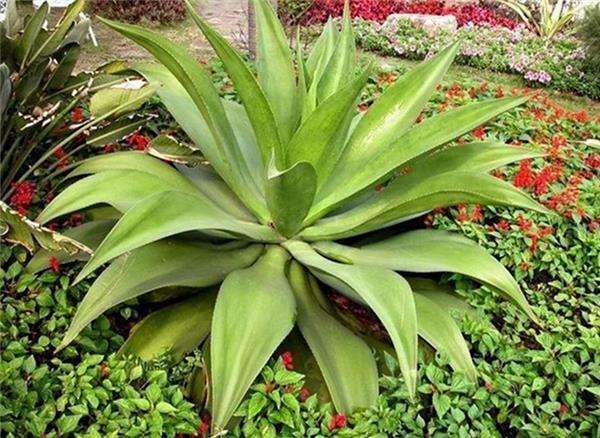
How to Grow Agave? Six Steps to Success with Potted Agave
Agave is an evergreen plant all year round, with excellent ornamental value and medicinal benefits, and it also has a beautifying and skin-nourishing effect, making it one of the favorite flowers of many flower-loving beauties. Agave is not demanding about its surroundings. It prefers well-drained, fertile and moist sandy loam. The suitable growing temperature for agave is 15-25°C.
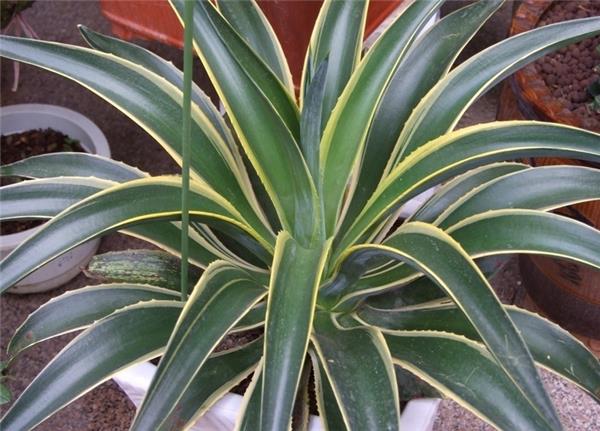
It has the longest inflorescence in the world. The agave plant is very tall, and its leaves are grayish-green or blue-gray, capable of growing to 1.7 m in length and 20 cm in width, with a rosette-shaped base. What is special is that its leaf margins change color, starting out brown and turning grayish-white as it grows. It is also worth mentioning that some agave species only bloom after ten or several decades, forming the longest inflorescence in the world, which can reach 7 to 8 m in height, with as many as several hundred white or pale yellow bell-shaped flowers. Because the mother plant dies after blooming, it is also called the century plant.
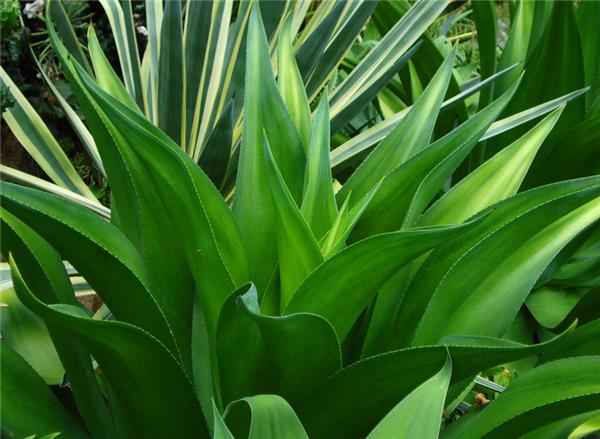
It looks very much like aloe, so you need to distinguish them carefully. Because both are perennial evergreen succulents, agave and aloe are very similar, both having short stem nodes, a white powdery coating on the leaf surface, and spines at the edges and tips. To tell them apart, first look at the leaves: after an agave leaf is broken, there is no sap and you will see thread-like fibers, while aloe has liquid flowing out and no fibers. Next is the way their leaves emerge: the outermost leaves of agave wrap around the inner leaves, while aloe separates starting from the small leaves. In addition, the spines of agave are hard and sharp, with a hard dark brown spine at the leaf tip, while aloe does not have spines as hard as those of agave. It should be noted that agave is toxic, so do not mistake it for aloe and eat it.
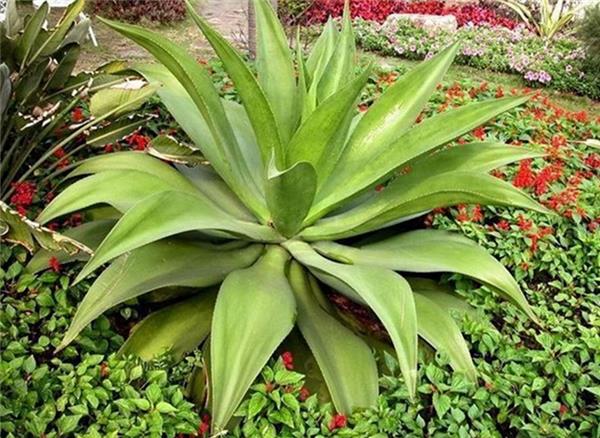
1. Soil: Agave is not very strict about soil, but loose, fertile, well-drained loam is best. For potting, a mix of leaf mold and coarse sand is usually used.
2. Watering: Agave is very robust by nature and not demanding about water, but during its growing period it must be given sufficient water to grow well. In addition, during the winter dormant period, agave should not be watered too much, otherwise root rot is easily caused.
3. Sunlight: Agave prefers light and should often be placed outside to receive sunlight, but variegated varieties need appropriate shading in summer to keep their colors fresh and tender. In winter, if the light in its location is dim, then keep it at low temperature, do not water, and keep it dry, otherwise it will rot. Light should be restored immediately in spring.
4. Temperature: The suitable growing temperature for agave is 15-25°C, and it grows best at 10-16°C at night. Cool, cold and dry conditions in winter are most favorable for its growth, and the overwintering temperature should be kept above 5°C.
5. Fertilizing: Agave has a very strong ability to adapt to the environment. Even growing in fairly barren soil, it will not affect the plant's development. However, fertile medium will still make agave grow even better. Fertilizing once a year is appropriate; do not spray fertilizer frequently, otherwise fertilizer damage is easily caused.
6. Pests and diseases: Agave often suffers from leaf spot disease, anthracnose and gray mold, which can be sprayed with a 1000-fold solution of 50% Tuzet wettable powder. When there is harm from scale insects, spray with a 1000-fold solution of 80% dichlorvos emulsifiable concentrate to kill them.