What Is Marchantia? An Introduction to the Air Quality Assessor and How to Grow It
Marchantia is extremely sensitive to air pollution, so it is often used as an indicator organism for air quality. In areas with severe air pollution, Marchantia has almost disappeared, forming what is known as a "lichen desert." Let's take a look at what we know about Marchantia below.
I. Introduction to Marchantia
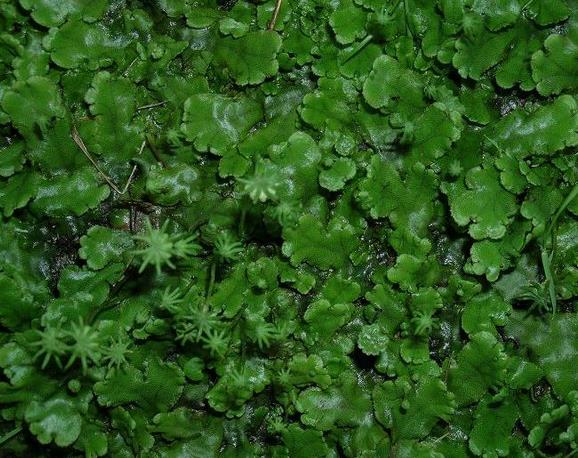
Marchantia is a spore-producing plant in the genus Marchantia, family Marchantiaceae, class Marchantiopsida. The plant body is thalloid, flat, and grows prostrate; the dorsal side is green with hexagonal air chambers, each with a pore in the center; the pores are chimney-shaped; the air chambers contain numerous upright photosynthetic filaments. The ventral side has purple scales and rhizoids. It is dioecious; the male receptacle is disc-shaped with wavy shallow lobes, bearing many small pores on top, with antheridia inside the pore cavities, and a relatively short stalk; the female receptacle is finger-shaped or deeply lobed, with archegonia on the underside, and a relatively long stalk; after fertilization, the egg cell develops into a sporophyte. The sporophyte is divided into three parts: the capsule, the seta, and the foot.
II. Morphological Characteristics of Marchantia
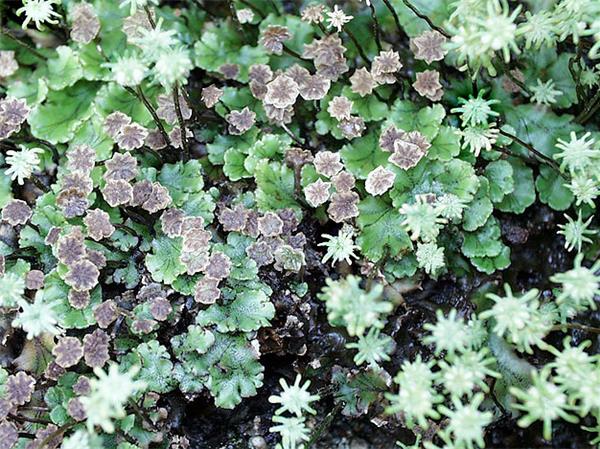
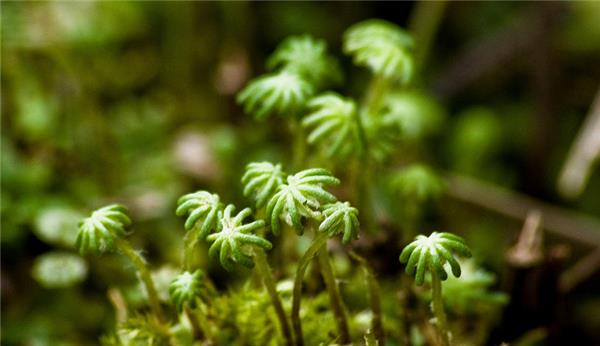
The plant body is thalloid, flat, and grows prostrate; the dorsal side is green with hexagonal air chambers, each with a pore in the center; the pores are chimney-shaped; the air chambers contain numerous upright photosynthetic filaments. The ventral side has purple scales and rhizoids. It is dioecious; the male receptacle is disc-shaped with wavy shallow lobes, bearing many small pores on top, with antheridia inside the pore cavities, and a relatively short stalk; the female receptacle is finger-shaped or deeply lobed, with archegonia on the underside, and a relatively long stalk; after fertilization, the egg cell develops into a sporophyte. The sporophyte is divided into three parts: the capsule, the seta, and the foot.
In the world of bryophytes, Marchantia is one of the most widely distributed species. It has no true roots; its rhizoids do not absorb water or inorganic salts but only serve a anchoring function; the stem is weak and lacks conductive tissue; the leaves are green, small, and thin, and besides performing photosynthesis, they can also absorb water and inorganic salts. The capsule is spherical, containing spores and elaters; when mature, it splits irregularly at the top, and the spores are dispersed by the flexing movement of the elaters under different humidity levels. Under suitable conditions, the spores germinate to form a protonema. Vegetative reproduction often occurs through gemmae produced in gemma cups on the dorsal side of the thallus. It mostly grows on shaded, moist substrates rich in organic matter.
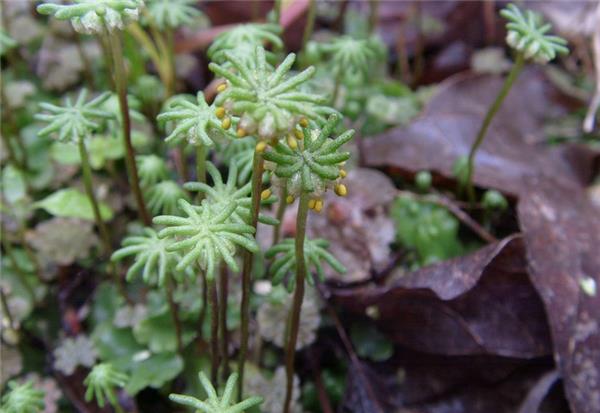
As a representative species of the order Marchantiales, class Marchantiopsida, it is one of the liverworts named by Linnaeus in 1753 and is widely distributed throughout the world. Marchantia is characterized by a flat, ribbon-like thallus with multiple dichotomous branching, light green or dark green, about 1 cm wide and up to 10 cm long, with slightly wavy margins, often growing interwoven into patches. The dorsal side has hexagonal air chambers, with chimney-type pore openings, containing numerous upright photosynthetic filaments. The ground tissue of the thallus is 12-20 cell layers thick; the ventral side has 6 rows of purple scales, with heart-shaped appendages at the tips of the scales; rhizoids are densely borne at the base of the scales. It is dioecious. The male receptacle is disc-shaped, with wavy shallow lobes divided into 7-8 lobes. The female receptacle is flat, deeply divided into 6-10 finger-like lobes. Asexual reproduction occurs abundantly through multicellular disc-shaped gemmae borne in gemma cups at the front end of the thallus.
III. Cultivation Techniques for Marchantia
Cultivation and Planting
Chopped tissue pieces of the Marchantia thallus can sprout and grow into complete thalli.
In the agar culture method, aside from preparing the nutrient solution of the medium with a complete culture solution used in general plant physiology cultivation, the remaining methods are the same as general tissue culture (no hormones or other exogenous substances need to be added). This method is omitted here. Below we focus on the method of culturing isolated tissue pieces into plantlets and mature plants using the flower pot soil method.
(1) Leave 1/3 of the flower pot empty, place the lower part in a water tray, and keep the soil moist.
(2) Scatter thallus fragments of about 3 x 1.5 mm onto the soil.
(3) Cover the pot (with a glass sheet or plastic film). After one week, the tip portion of the thallus, with a growing point, will grow from the edges of the fragments. After three weeks, a relatively complete thallus will grow.
(4) Issues to note during the cultivation process:
① Maintain the temperature at around 15-20°C.
② Keep the soil moist without visible standing water.
③ Excessively high temperature or excessive humidity tends to produce algae. Besides adjusting temperature and humidity, use iron tweezers to remove stray algae, because excessive algae growth may cause the Marchantia thallus to turn yellow.
The above is what we know about Marchantia. We hope it can help you.