What Are Carnivorous Plants? A Complete Guide to These Plants
Carnivorous plants are a unique group of plants on Earth, surviving in this world in a unique way. Let's take a look at these carnivorous plants together!
There is only a small fossil record concerning the evolution of carnivorous plants, so the process is not clear. The number of carnivorous plant fossils that have been found is very small, and most are seeds and pollen. Carnivorous plants are herbaceous plants and do not have structures that readily become fossils, such as bark or wood. In particular, the structure of their traps is even more delicate, and for various reasons it may be missing from the fossil record.
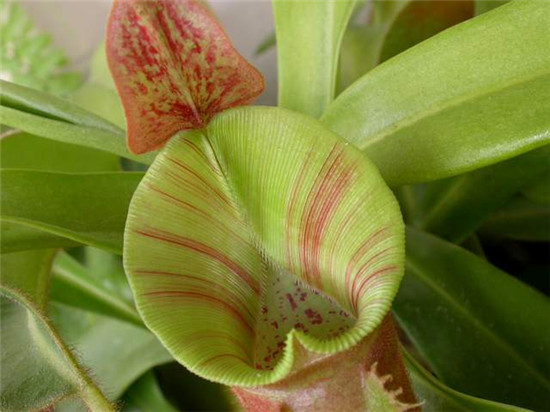
Nevertheless, the structure of modern traps can still be used to infer most of the structure of ancient traps. The reconstructed earliest known carnivorous plant, Archaeamphora longicervia, had pitcher-like or bottle-like leaves whose traps undoubtedly originated from curled and fused leaves. The vascular tissue of pitcher plants is a good example of this.
The sword-shaped leaf section at the front of the pitcher mixes vascular bundles from the left side of the pitcher body and the right side of the pitcher body, which is consistent with the hypothesis that the two edges of the original leaf fused toward the adaxial surface of the leaf. Sticky traps also gradually evolved from a sticky, non-carnivorous leaf, and at the same time they evolved from passive traps into active traps.
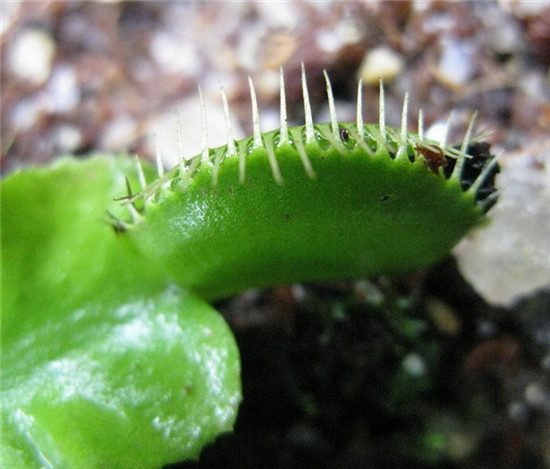
Molecular data show that the "Dionaea-Aldrovanda" clade is closely related to Drosera. However, its trap is worlds apart from that of Drosera: it lost the sticky mucilage and changed into a rapidly moving snap trap, and the reason for this is unknown.
A Brief Introduction to Carnivorous Plants
Plants with the ability to prey on insects are called carnivorous plants. Carnivorous plants generally have the ability to lure, capture and digest insects and absorb nutrients from insects, and even some small animals such as frogs, small lizards and small birds, so they are also called meat-eating plants.
In countries such as Switzerland and Denmark, butterworts (Pinguicula) are also used to make cheese: the leaves are put into a barrel, which is then filled with milk, and the milk coagulates into cheese.
Many countries are also using carnivorous fungi on a large scale to control nematode diseases in various crops, and great progress has been made.
Carnivorous plants are autotrophic plants that obtain nutrients by capturing and digesting animals. Most of the prey of carnivorous plants are insects and arthropods. They grow in areas with poor soil, especially areas lacking nitrogen, such as acidic swamps and rocky desertified areas. In 1875, Charles Darwin published the first paper on carnivorous plants. These carnivorous plants, which can attract and capture prey, produce digestive enzymes and absorb the decomposed nutrients, are distributed across 10 families and about 21 genera, with more than 630 species. In addition, plants in more than 300 genera have insect-catching functions, but they do not have the ability to digest prey, so they can only be called insect-catching plants. Certain pitcher plants (Nepenthes) can occasionally prey on small mammals or reptiles, so carnivorous plants are also called meat-eating plants.
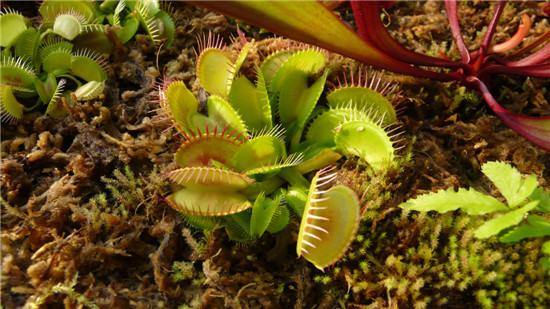
Carnivorous plants refer to the group of plants that can hunt and digest and absorb certain insects and arthropods, numbering about 600-750 species. Interestingly, although they all share the common skill of catching insects, they are very distant in kinship, coming from 10 different families and 17 genera in the plant kingdom.
Driven by their respective survival pressures, carnivorous plants independently took the road of carnivory in their own ways. Across the vast land, not every inch is fertile soil; many places are sandy and rocky wastelands, high-cold slopes and waters that have long lacked nutrient elements. All kinds of harsh and barren environments set up obstacle after obstacle for the survival of plants. For example, in some seemingly lush swamps, because they are in an acidic environment for a long time, although the soil is rich in organic matter, it is difficult for bacteria to decompose it into nutrients available for plant growth. Even in tropical rainforests known as a "paradise of animals and plants," although nature is never stingy with sunshine and rain, under the competition for limited space and resources by tall trees and layer upon layer of dense vines, various plants still face fierce competition for survival.
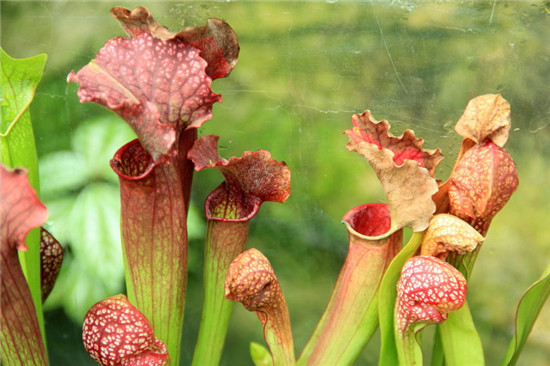
The long-term situation of scarce resources has taught some plants to treat tasty, protein-rich insects and other small animals as a new source of nutrition. However, although animals are delicious, they are not lambs waiting to be slaughtered; without clever schemes and strategies, the insects will not let themselves be dealt with! Fortunately, the stage of nature is quite fair, and she gave these plants, under strong survival pressure, the opportunity to evolve freely. On the long road of evolution, these plants, living in different environments and regions, independently developed the best insect-hunting tool that uses stillness to counter motion - the trap. These traps come in different forms yet are each exquisitely ingenious, and thus have fascinated countless scientists and plant lovers, who never stop exploring them.
The above is the full content of what carnivorous plants are and an introduction to carnivorous plants that I have summarized for everyone. I hope this article can help you. Please also continue to follow us.
However, although animals are delicious, they are not lambs waiting to be slaughtered; without clever schemes and strategies, the insects will not let themselves be dealt with! Fortunately, the stage of nature is quite fair, and she gave these plants, under strong survival pressure, the opportunity to evolve freely. On the long road of evolution, these plants, living in different environments and regions, independently developed the best insect-hunting tool that uses stillness to counter motion - the trap. These traps come in different forms yet are each exquisitely ingenious, and thus have fascinated countless scientists and plant lovers, who never stop exploring them.The above is the full content of what carnivorous plants are and an introduction to carnivorous plants that I have summarized for everyone. I hope this article can help you. Please also continue to follow us.