How to grow orchids? A detailed guide to orchid cultivation methods
Growing orchids well is no simple matter. You have to figure it out slowly, step by step. Let's take a look together at orchid cultivation methods!
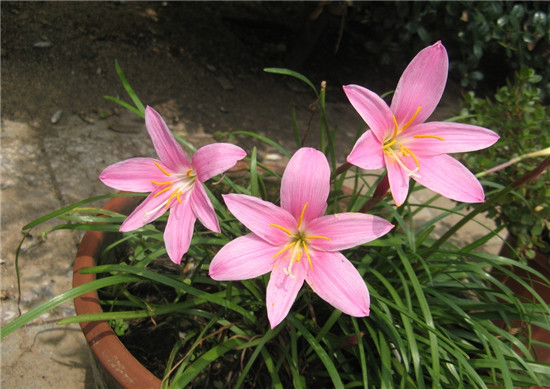
Orchids are what people call orchid plants, and there are a great many species of orchids. They are a very popular indoor flower, and because of their many forms and fine flower shapes, they are known as the foremost of indoor flowers. Growing orchids also requires special attention to technique, because they are rather delicate plants. The article below explains orchid cultivation methods in detail.
Orchids are particularly delicate plants, so they need careful attention when cultivated. The cultivation of orchids follows one main principle: "In spring do not take them out, in summer do not expose them to the sun, in autumn do not let them dry out, in winter do not keep them wet." What exactly does this mean? Read on to learn how to grow orchids, to help you understand orchids' growth habits and their cultivation methods, so that this delicate flower can bloom beautifully and fill a room with fragrance.
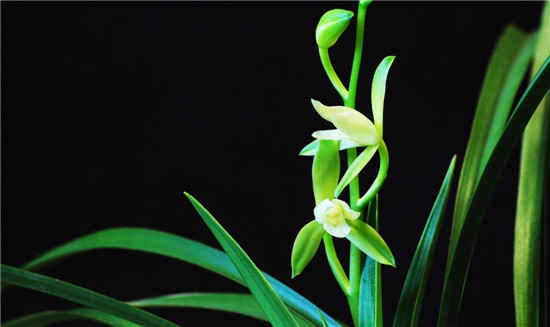
Orchids are plants that fear direct sunlight and prefer shade. They cannot tolerate dust and grime, and they like a warm, humid climate; they also cannot tolerate waterlogging. During the orchid's growth, it needs careful attention, otherwise its normal growth will be affected.
Orchid cultivation methods
Requirements for the growing medium:
Wild orchids grow on shaded, well-ventilated mountain slopes where water does not accumulate, so the growing medium must be: airy, loose, well-draining and slightly acidic. In recent years, as advanced orchid-growing methods have spread from Hong Kong, China, Taiwan, China and abroad, indoor orchid growing has become much more widespread, and so sphagnum moss, perlite, volcanic scoria, granular brick, granular "immortal soil", granular peat and similar materials have become ideal growing media. Their greatest advantage is that they make water management and aeration easy.
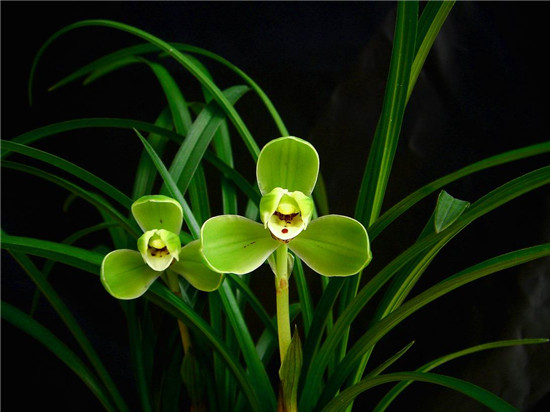
Temperature requirements:
(1) The optimal temperature for orchids to root, sprout and grow normally is 20-28°C; below 20°C they can still grow, but growth is slow; above 28°C growth is rapid, but they may also be forced into dormancy because the temperature is too high. Therefore, whenever the temperature rises above 32°C, measures should be taken to increase the shade density, raise ventilation and increase air humidity, so as to ensure the ecological conditions for fast orchid growth.
(2) Suitable temperature for dormancy: the suitable temperature during the orchid's dormancy period is 10-16°C by day and 5-10°C at night. However, for Cymbidium goeringii (spring orchid), the suitable temperature during dormancy should be kept below 10°C and above 3°C, so that it can pass through the vernalization stage and flower normally. If the temperature during dormancy is too high, dormancy may be broken, the germination rate increased and the number of sprouting cycles raised, but this has the drawback of easily causing premature aging and shortening the plant's life.
(3) The lowest temperatures orchids can tolerate: -4°C for Cymbidium goeringii, -2°C for Cymbidium ensifolium (four-season orchid), and 2°C for Cymbidium sinense (Chinese cymbidium).
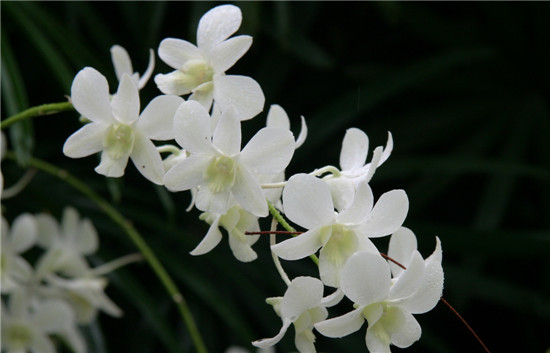
Humidity requirements:
Orchids originally grow in deep mountains and wild forests, where the surrounding humidity is fairly high, generally between 75% and 90%. Orchids grow well when relative air humidity is 60%-70%; too dry or too wet both easily trigger orchid diseases. Therefore, whether growing indoors or outdoors, a gradual microclimate of humidity suited to orchid growth must be created. After orchids are collected from the mountains, especially when planted on a balcony or a rooftop terrace, the humidity inside the shelter is often below 60% if no humidifying measures are taken. So you must adapt to local conditions and take effective measures to raise the humidity of the orchid-growing site, to reach the temperature requirement suitable for orchid growth, that is around 75%, close to the environmental humidity of the orchid's native habitat. In this way orchids grow well, with emerald-green, lively leaves, a high germination rate, no black spots on the leaf surface, no scorched yellow leaf tips, and more flowers.
Requirements for the growing location:
The place where orchids are placed is very important; it directly affects their growth and development. Orchids are generally placed in the open in spring, summer and autumn (in summer in a shaded spot in the open), and indoors in winter. Outdoors it is best to have open space all around and moist air. Indoors there must be plenty of light, ideally facing south. This favors orchid growth. The orchid pots are best placed on a wooden stand or a table, not on the ground.
Shade requirements for orchids:
Most orchids are semi-shade plants, and most species fear direct sunlight, so they need appropriate shading. In early to mid-April, orchids can receive more sunlight to promote growth. After late April, they should be shaded appropriately. For summer and autumn orchids with upright leaves, it is best to place them on the south side of a shaded spot so they receive somewhat more sunlight; for autumn orchids and spring orchids with drooping leaves, two hours of light a day is best. From the beginning of June to September, shade should be started earlier each day; if reed blinds are used, dense blinds or two layers of thin blinds can be used. After October the weather turns cooler and sunlight is weaker, so shading can be delayed, but around midday you still need to shade properly.
Pay attention to rain protection when growing orchids outdoors:
Orchids can take light rain, but must be protected from plum rain, showers or continuous rain. During the plum rain season, rain protection must be especially good. From late June to mid-September there are often showers. If the rain is short and the amount is small, more water should be given in the evening so that the hot air in the pot is released; otherwise the orchid will be damaged, or even have its roots rot and die. If a shower is followed by sunshine, shade must be provided promptly, so that rising ground heat does not affect orchid growth.
In rainy seasons, which coincide with the stage when orchids put out leaf buds, if the potting soil is too warm it will cause poor leaf bud growth or invite disease. At this time, a small amount of plant ash can be sprinkled to regulate the humidity of the potting soil.
The above is the full content of the orchid cultivation methods I have summarized for you. I hope this article can help you. Please also keep following us.
After October the weather turns cooler and sunlight is weaker, so shading can be delayed, but around midday you still need to shade properly.Pay attention to rain protection when growing orchids outdoors:
Orchids can take light rain, but must be protected from plum rain, showers or continuous rain. During the plum rain season, rain protection must be especially good. From late June to mid-September there are often showers. If the rain is short and the amount is small, more water should be given in the evening so that the hot air in the pot is released; otherwise the orchid will be damaged, or even have its roots rot and die. If a shower is followed by sunshine, shade must be provided promptly, so that rising ground heat does not affect orchid growth.
In rainy seasons, which coincide with the stage when orchids put out leaf buds, if the potting soil is too warm it will cause poor leaf bud growth or invite disease. At this time, a small amount of plant ash can be sprinkled to regulate the humidity of the potting soil.
The above is the full content of the orchid cultivation methods I have summarized for you. I hope this article can help you. Please also keep following us.