How to Grow Hyacinths? Detailed Guide to Growing Methods and Precautions
Hyacinth is a common variety of flowering plant grown in water, with very rich colors, and is deeply loved by everyone. However, many friends do not know how to grow hyacinths, so today let us explain in detail the growing methods and precautions for hyacinths.
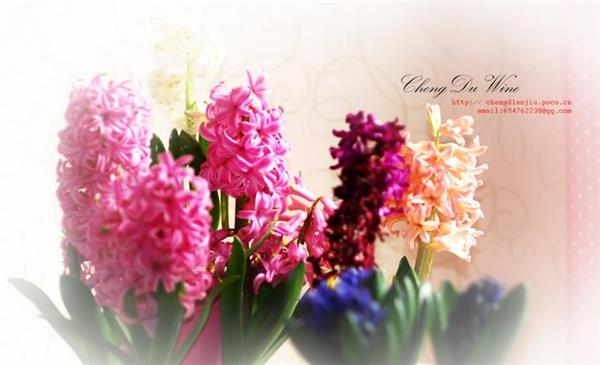
If you want to know how to grow hyacinths, first let us understand the ecological habits of hyacinths
Hyacinth prefers a warm and humid winter, a cool and slightly dry summer, and a sunny or semi-shady environment. It likes fertilizer and is suited to fertile, well-drained sandy loam soil, and avoids overly wet or heavy clay soil.
Hyacinth is native to southern Europe. It prefers a cool, humid and sunny environment. The bulb has a summer dormancy habit, roots in autumn and winter, sprouts new shoots in early spring, blooms in March, and the plant withers in early June. During the growth process of the hyacinth, the root system of the bulb grows best at a low temperature of 2-6°C. The suitable temperature for bud break is 5-10°C, the suitable temperature for leaf growth is 10-12°C, and 15-18°C is most favorable during the bud emergence and flowering period. The storage temperature of the bulb is 20-28°C, with 25°C being the most suitable, which is most ideal for flower bud differentiation.
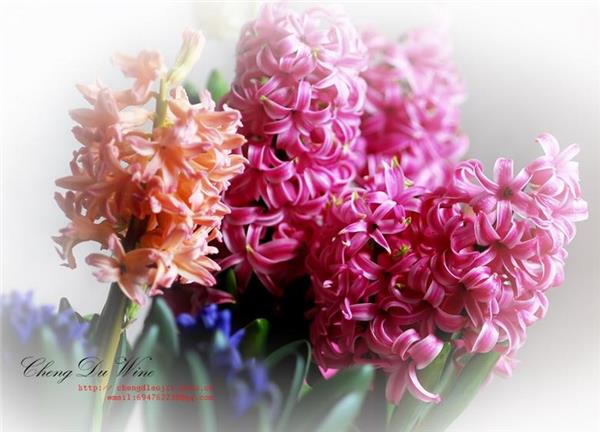
Soil culture growing method for hyacinths:
If the bulb you bought has already grown roots and leaves, and you prefer soil-cultured potted plants, you can still choose the potting method now.
1. Select a robust bulb and plant it in loose culture soil.
2. For the culture soil, a mixed substrate of peat + perlite can be chosen.
3. The top 1/3 of the bulb should be exposed above the potting soil, as this is more favorable for bulb root growth.
4. After planting, place it in a sunny spot and keep the potting soil moist. The temperature required for forcing blooms is 5-10°C. Also note that hyacinths greatly need light and water. If there is insufficient light, or long-term dryness in winter, it will lead to poor flowering. If you see that the emerging flower stem is too short to elongate, you can place potted flower 1 in a dark place for several days to encourage the stems and leaves to grow leggy, and after the flower stem extends, switch back to normal care. Hyacinths come in colors such as pink, purple-red, snow blue, white, yellow, and peach red, and the growing methods are the same.
Water culture growing method for hyacinths:
1. There should be a 1-2 cm space between the water surface and the bulb; never submerge the bottom of the bulb in water;
2. The water temperature should not be too high, preferably below 15°C;
3. Place the bulb on the mouth of the bottle. After roots develop, the water level can be lowered to just barely touch the roots, so that the roots can fully absorb oxygen and promote the growth of root fibers. After the root system develops, you can use black cloth to cover the container so that the roots further develop. (Experiments have shown that roots grow best in a dark environment) 4. Before the bulb sprouts, do not place it under direct sunlight;
5. When the bulb's sprout grows to 5 cm, place the whole bottle in a dark place. After the root system has fully emerged, move it to a warm south-facing windowsill with sufficient scattered light, and frequently add water so that the water reaches the bulb;
6. When the leaves and flower buds grow out, expose them to sunlight for 1-2 hours every day, so that the leaves and flower stalks grow robustly. Turn it in one direction every day so that it does not grow leaning to one side due to phototropism. No fertilization is needed, and in March and April of the second year it will bloom into a bright and fragrant hyacinth.
7. At a temperature maintained at 17-20°C in your home, you will enjoy the process of bud formation, growth and color development, but do not place it directly near a heat source; in this way the beautiful hyacinth flower will extend its blooming time.
8. Keep the water quality in the bottle clean and change the water once a week. If nutrient solution has been added, decide the number of water changes according to the degree of water turbidity.
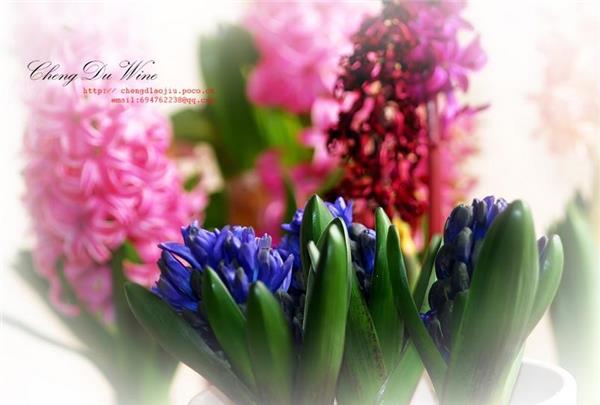
Precautions for growing hyacinths
1. Bulb selection: The nutrients needed for hyacinth flowering mainly come from the nutrients stored in the bulb leaves. Only by choosing a bulb with an undamaged surface, fleshy scales that are not excessively shriveled, relatively hard and heavy, and plump, can it produce abundant and beautiful flowers.
2. Soil requirements: The soil is required to be fertile, with high organic matter content, good aggregate structure, and a pH value of 6-7; the culture soil can be prepared in the ratio of 5 parts leaf mold : 3 parts garden soil : 1.5 parts coarse sand : 0.5 part bone meal; before planting, chemical agents such as formalin can be used. At a soil temperature of 10-15°C, apply the chemical to the soil surface and immediately cover it with film. After 3 days of warm weather, remove the film, let it air for 1 day, then plant and keep the soil moist.
3. Light: Hyacinths only need more than 5000 Lx to maintain normal physiological activity. Too weak light will lead to weak plants, overly long stems, small buds, early flower fading, yellowing leaves and other conditions. An incandescent lamp can be used to supplement light at a distance of about 1 m; however, too strong light can also cause burns to leaves and petals or shorten the flowering period.
4. Temperature and humidity regulation: If the temperature is too high, even above 35°C, flower bud differentiation will be inhibited, abnormal growth will occur, and the rate of blind flowers will increase; if the temperature is too low, the flower buds will suffer frost damage.
Soil humidity should be maintained between 60-70%. If too high, root respiration is inhibited and rot easily occurs; if too low, the aboveground parts wilt and may even die. Air humidity should be maintained at around 80%, and humidity can be increased by spraying and sprinkling water on the ground, or reduced by measures such as ventilation.
That is all for today's introduction to hyacinth growing methods and precautions. I hope everyone likes it!
That is all for today's introduction to hyacinth growing methods and precautions. I hope everyone likes it!