What Is the Meaning of the Shamrock? A Symbol of Prayer, Hope and Love
As for the shamrock, I think everyone has heard of this plant, but do you know its flower meaning? Today let us take a look at what the shamrock symbolizes.
A Brief Introduction to the Shamrock's Appearance
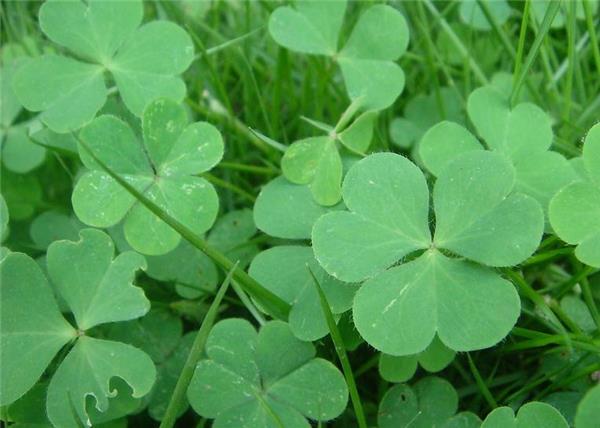
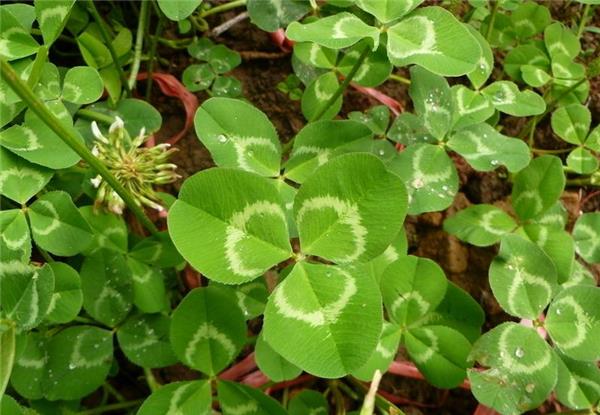
The shamrock is a low-growing plant with many branches; its creeping stems grow along the ground, and wherever a node touches the soil it takes root and sends up new shoots. It has compound leaves with three leaflets; the leaflets are obovate or obcordate, wedge-shaped at the base, blunt or slightly notched at the tip, with finely serrated edges, and a white "V" marking in the center of the leaf surface; the stipules are oval and clasp the stem. It blooms in summer and autumn, with head-like racemes that are spherical, on long peduncles, with white flowers, occasionally pale red. It flowers and sets seed at the same time, the seeds ripen at different times, and the seeds are very small.
The Meaning of the Shamrock
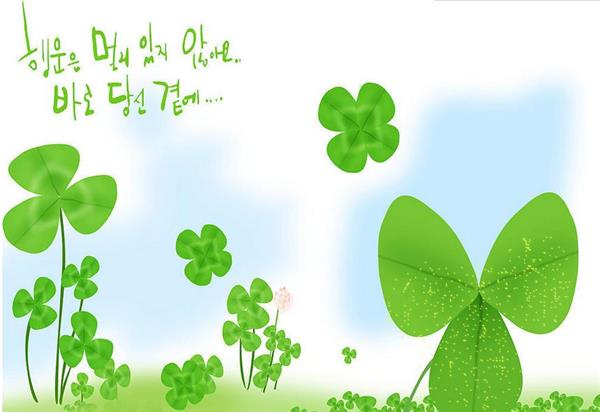
For a shamrock with one leaf, its flower meaning stands for prayer; for a shamrock with two leaves, its flower meaning stands for hope; for a shamrock with three leaves, its flower meaning stands for love; and for a four-leaf shamrock, its flower meaning stands for happiness.
The shamrock, an unassuming little white flower, countless slender petals gathered together, cautious, as if guarding something. On the petals is a touch of deep green, and on the leaves are a few streaks of snow-white.
The shamrock quietly keeps watch on sunny hillsides.
The Legend of the Shamrock
Legend one: It is said that the name "lucky clover" comes from Napoleon. Once, while leading his troops across a grassland, he found a four-leaf clover and thought it very strange. As he bent down to pick it, he just happened to dodge a bullet fired at him and escaped disaster. From then on he called the four-leaf clover the lucky clover. Passing down through the years, the four-leaf clover has been internationally recognized as a symbol of good luck. Its four leaves represent love, health, fame and wealth respectively, and owning it will bring you good fortune.
Legend two: Once there was a pair of lovers who truly loved each other and lived together in a very beautiful peach grove, but because of a very small matter they quarreled and neither would give in. Finally one day the goddess of love could not bear to watch any longer. She drifted down to the peach grove where they lived and quietly told a lie: she told them that each of them would face disaster, and that only by finding that four-leaf clover in the deepest part of the peach grove could they be saved. After hearing this they pretended to be totally indifferent, but in their hearts they still worried about each other. That night it rained, a torrential rain, yet they still secretly went to the deepest part of the peach grove to look for the four-leaf clover for each other. When they learned how much the other cared, they were both deeply moved and decided to let the four-leaf clover witness their love. The goddess of love smiled; this was a joke she had played, because she did not want happiness to come too easily. Only those who care for each other and cherish each other deserve to have happiness. The four-leaf clover, witness of love!

Shamrock Culture
1. In Ireland, on St. Patrick's Day every year on March 17, everyone wears a spray of shamrock. It is said that St. Patrick once used a shamrock to explain the Trinity to the freedom-loving Irish people. What St. Patrick originally used as a metaphor, whether it was the shamrock or the yellow-flowered blueweed, is unclear. However, the shamrock is a typically Christian symbol that has been inherited. Very early on it was already a symbol of the threefold unity of the three priestly ranks of the Celts. And the vigorous growth of the shamrock also made it a symbol of vitality. The Druids had long since given the four-leaf shamrock the same meaning it has today, that is, happiness.
2. Today, the shamrock has become a folk tradition in Western countries. Children take pleasure in searching for four-leaf clovers on the grassland, and every March in New York, at St. Patrick's Day, people wear green clothing and carry a mascot, a four-leaf clover ornament, as they parade.
3. In Irish folklore, the four-leaf shamrock can bring good luck and is Ireland's most famous national symbol. At traditional Irish weddings, the bride's bouquet and the groom's boutonniere must both include the lucky clover. The lucky clover is considered an indispensable third person at the wedding.
4. In Switzerland, every Christmas you can buy real potted four-leaf lucky clovers in shops. The lucky clover is considered the most creative Christmas gift. The good luck of the lucky clover, given to loved ones, means the recipient will from then on begin to be happy and have everything go smoothly in this world.
5. In Germany, a real four-leaf clover was found in 1190, and the lucky clover is considered a symbol of freedom, unity, solidarity and peace. They believe that nothing bad can happen if they possess a four-leaf shamrock.
6. In German idioms, if someone speaks well of you "on the green shamrock" (a German idiom meaning to praise someone or something excessively), that is something you should not listen to. This idiom dates back to the era when shamrocks were planted on graves, for one should never speak ill of the dead.
Legend says that whoever finds a shamrock with four leaflets will gain happiness. So people who see a shamrock by the roadside almost always keep it and press it flat, so that one day they can give it to someone else, expressing their good wishes to their friends.
That is all for today's introduction to the meaning of the shamrock and its legends. I hope you enjoy it!
So people who see a shamrock by the roadside almost always keep it and press it flat, so that one day they can give it to someone else, expressing their good wishes to their friends.
That is all for today's introduction to the meaning of the shamrock and its legends. I hope you enjoy it!